
The Japanese Motorcycle With A Serious European Identity Crisis
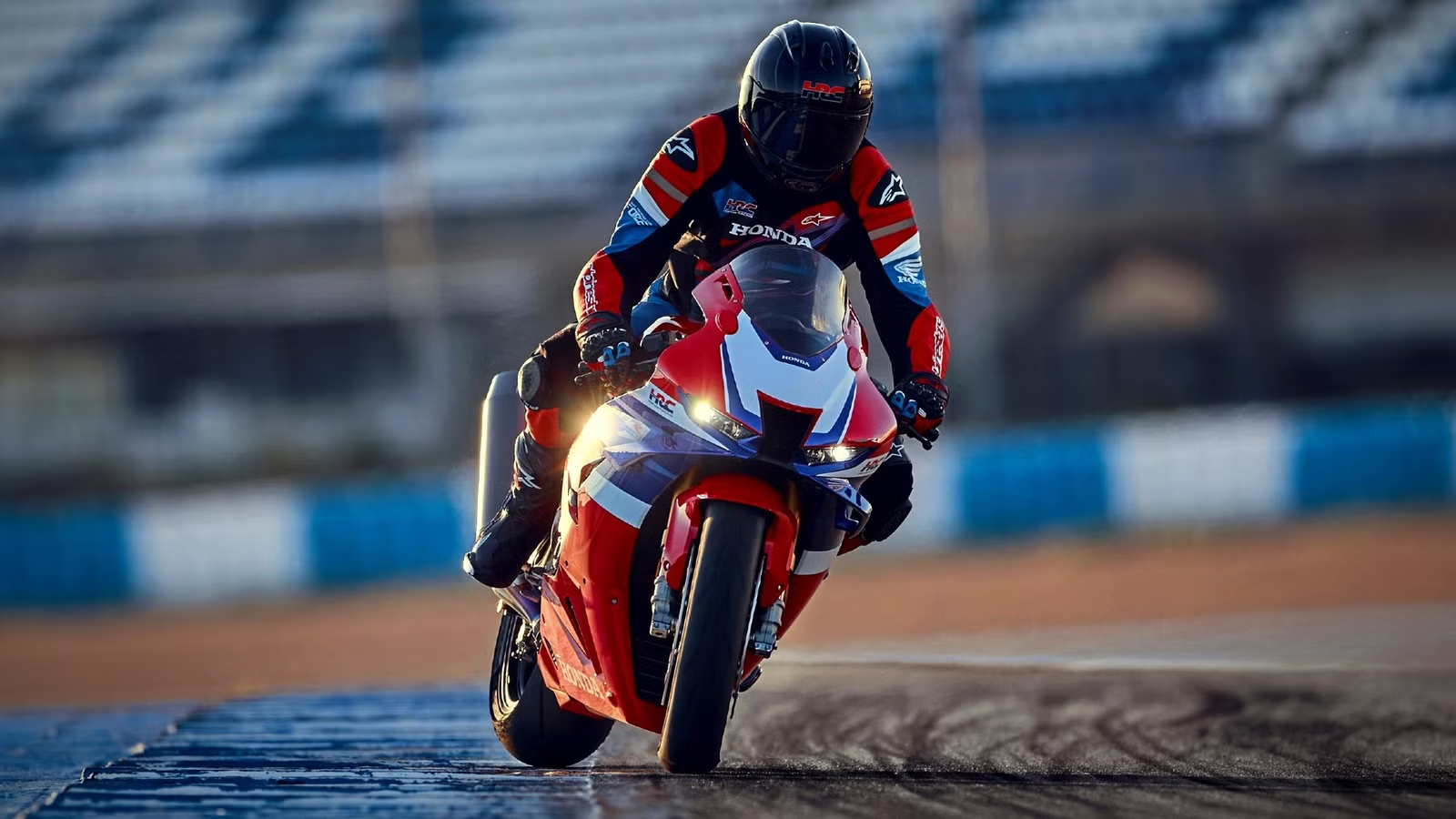
Japan isn’t known to innovate or chase after the latest tech anymore. And it isn’t without reason. Just look at the pinnacle of the motorcycle segment–liter-class superbikes–and you’ll quickly realize how sorry the state of Japanese bikemakers is. European bikes are simply in a different league, boasting the latest advancements in aerodynamics, suspension, brakes, and engine tech. There is an exception, though. It’s a Honda that beat Europe in certain aspects and showed the world just how premium a bike Japan can make if it puts its mind to it.
Playing It Safe Has Been Japan’s Approach In The Past Decade

15 odd years ago, Japan was going all guns blazing in the motorcycle segment. It not only challenged Western bikemakers, but it did so in nearly all segments. Massive cruiser bikes, tech-savvy tourers, and cutting-edge superbikes were all making headlines. This essentially left European bikemakers playing catch-up.
Today, the story is quite different. Japan has somewhat waved the white flag, shifting its focus to garnering massive sales numbers with simple bikes rather than setting new precedents in the two-wheeler world. This is noticeable in all kinds of segments, particularly superbikes. After all, all the popular examples have had minimal to no updates in the last decade.

The YZF-R1 merely gained wings; the ZX-10R has had two facelifts, but the core is largely unchanged; the GSX-R1000R has internal updates but keeps everything else the same. And the CBR1000RR is exactly the same as it was a decade ago. As a result, neither of these can keep up with modern-day European rivals or feel as premium as them. So is all hope lost? Well, a homologation-spec Honda keeps the fire burning for Japan.

The CBR1000RR-R Fireblade SP Is Japan’s Answer To Advanced European Machines

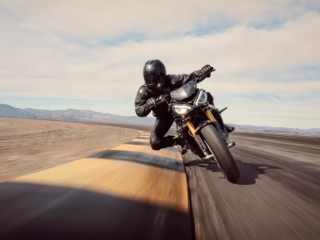
We’re talking about the CBR1000RR-R Fireblade SP–the freshest Japanese superbike money can buy. It debuted in 2021 as an all-new homologation-spec Honda superbike, and since then, the bikemaker has updated it twice already. In these updates, the bike has become thoroughly capable of not only keeping up with European flagships but also beating them. You’d also be surprised to know that it beat European brands like Ducati by debuting some of the latest equipment from brands like Ohlins and Brembo before Europe got its hands on them.
The Flagship Honda Debuted The Most Advanced Electronic Suspension

For the longest time, all new-age suspension tech was kept for European superbikes. Ducati had the bragging rights for debuting the Ohlins EC2.0 on the 2018 Panigale V4 S, while BMW brought chunkier 45 mm USD forks to the party. That changed with the 2024 CBR1000RR-R Fireblade SP. Honda’s flagship superbike became the world’s first motorcycle to have the Smart EC3.0 suspension.
This means the 43 mm NPX USD forks and TTX 36 monoshock offer full adjustability on the fly, and Öhlins Objective Based Tuning interface (OBTi) allows independent settings for each end. Individual and preset modes are both present for ease of use. To make matters sweeter, you get a new front/rear spring preload guide that suggests the correct setting for your weight. The electronic steering damper comes from Showa rather than Ohlins, though.
Brembo Stylema R Brakes Are Another Premium Touch

In a similar fashion, the brakes for the time were a cut above the rest. While all rivals had Stylemas or lower, the RR-R debuted the Brembo Stylema R calipers. You get the same setup today, paired with 330 mm dual front disc brakes–again a class-leading setup. 17-inch alloy wheels with Pirelli Supercorsa tires, an RC213V-derived swingarm, and an aluminum twin-spar chassis round off the package. Together, all of these promise a curb weight of 445 pounds.
Top-Drawer Rider Aids Have A European Touch As Well

Most superbikes from Japan feature dated electronics not on par with European machines. The RR-R, however, is very close to the sophisticated package from the West. Bosch’s six-axis IMU is at the center, allowing nine levels of traction control, five power modes, three levels of wheelie control, three engine brake control levels, and three levels of cornering ABS.
A three-level launch control, rear lift control, and an adjustable quickshifter come standard, too. It’s worth noting the 2024 RR-R had a new two-motor ride-by-wire system (one motor for cylinders 1 and 2, the other for 3 and 4) for finer traction control intervention. Honda claims “this makes the engine much easier to control and use through the lower rpm ranges.”

Rounding out the tech side of things is a five-inch TFT instrument cluster. Yes, we know it is way smaller than European rivals (particularly the new Panigale’s tablet-sized unit), but this isn’t too bad in the real world. It has day and night settings, along with easy-to-read layouts. Added convenience is courtesy of keyless ignition. There’s no cruise control, though–not even as an option!
Class-Leading Performance Almost Trumps European V4s

Finally, there’s the 1,000cc inline-four powerhouse. This is good for 214 horsepower, making the Fireblade SP the most powerful naturally aspirated production inline-four motorcycle. That figure not only beats the inline-four BMW S 1000 RR but it also means more power per liter than the V4s from Italy. As a refresher, the Panigale V4 has 216 horsepower from 1,103cc, while the RSV4 has 220 horsepower from 1,099cc.
Torque is where it lacks, though. While the near-85 LB-FT figure is on par with rivals, it arrives quite a bit later in the RPMs than rivals. So you’ll get a typical inline-four riding experience here where you’ll have to chase the redline. You can’t be lazy with the gearing and let the mid-range torque handle the rest.
Source: Honda Powersports

Related posts

Latest Post


No Comments