
Why The Last V6 Toyota Highlander Still Deserves Attention
The U.S. new SUV market is experiencing a practical powertrain recalibration, defined primarily by the rapid surge of hybrid technology. While pure battery-electric adoption has slowed due to high transaction prices and infrastructure concerns, conventional and plug-in hybrids are filling the gap as the preferred step toward electrification.
Automakers are expanding hybrid lineups across all vehicle segments, leveraging them to lower emissions while delivering lower total ownership costs for consumers. Pure internal combustion engines are not disappearing entirely. Instead, manufacturers are refining traditional gas engines with turbocharging and mild-hybrid systems to maximize efficiency without sacrificing everyday capability.
Toyota’s Realistic Approach To ICEs
Toyota has maintained a consistent drivetrain strategy over the past decade, refusing to commit exclusively to a single engine type. Rather than abandoning internal combustion engines, the automaker focused on optimizing modular thermal efficiency alongside continuous electrification. Central to this approach was the systematic replacement of older engine architectures with modular four-cylinder and V-6 designs engineered specifically to pair with hybrid electric systems.

Toyota expanded hybrid availability across virtually every market category, integrating electric motors directly into all-wheel-drive configurations and replacing larger naturally aspirated engines with downsized turbocharged variants. Parallel investments into hydrogen fuel cells, carbon-neutral synthetic fuels, and plug-in hybrid technology further reinforced this diversified philosophy. While competitor strategies shifted drastically toward pure battery-electric lineups, Toyota intentionally maintained a flexible, multi-solution approach designed to scale high-volume hybrid production, reduce manufacturing complexity, and meet varied global infrastructure realities.
The 2022 Toyota Highlander V-6 Is A Well-Rounded Used Family SUV

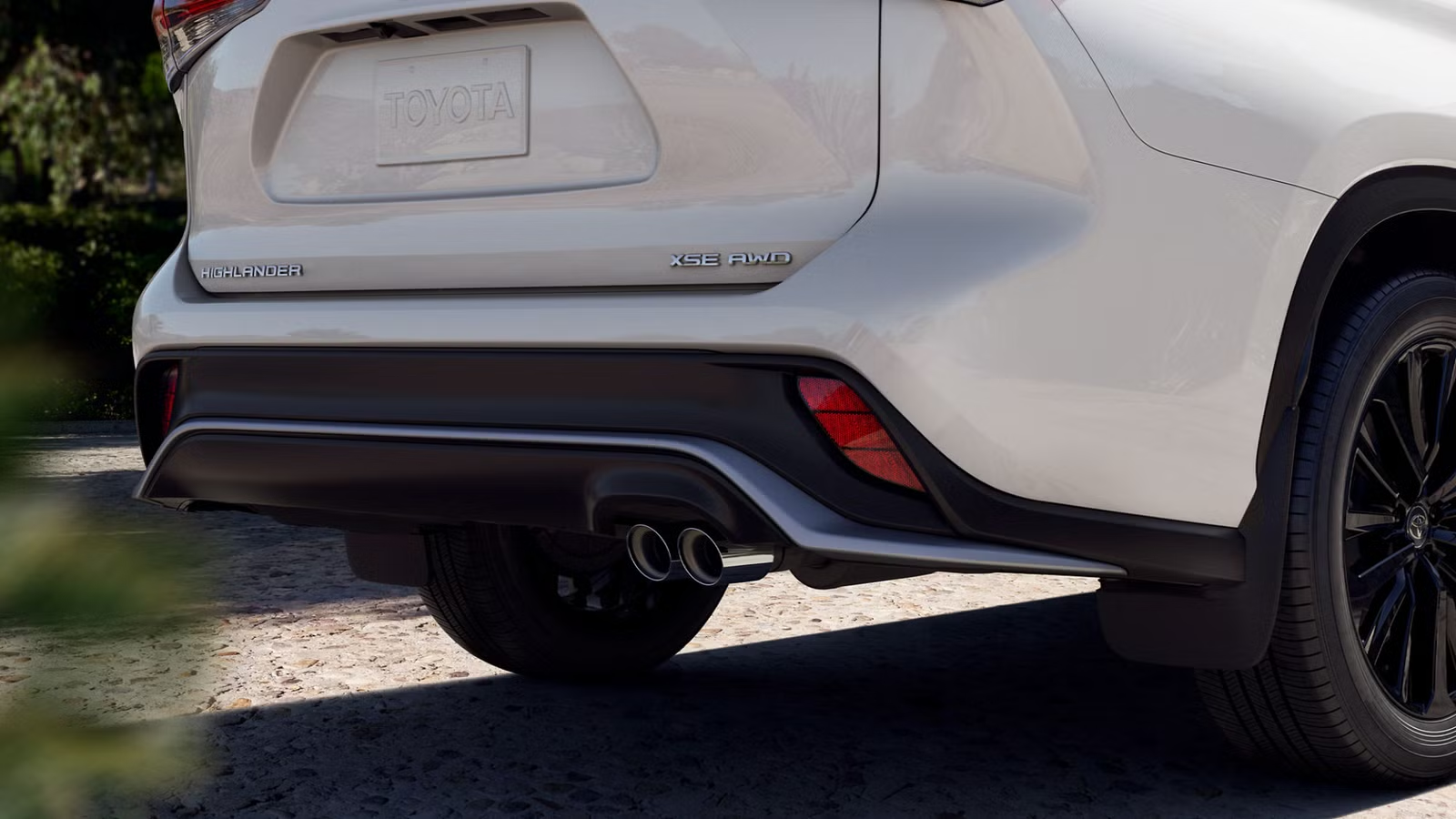
The 2022 model year marked a monumental transition point for the Toyota Highlander in the U.S. market. It represented the final appearance of the naturally aspirated 3.5-liter V-6 engine, a staple of Toyota’s midsize crossover lineup for decades. For the 2023 model year, Toyota systematically replaced this naturally aspirated six-cylinder with a 2.4-liter turbocharged four-cylinder engine. This engineering pivot was not an isolated event. It mirrored broader automotive industry trends shifting away from large-displacement engines toward downsized forced induction.
Evaluating the 2022 V-6 Highlander alongside its turbocharged successor reveals a fascinating study in engineering trade-offs. The shift forced buyers to weigh the smooth, high-revving nature of a long-standing, naturally aspirated powerplant against the low-end responsiveness and reduced tailpipe emissions of a modern turbo-four. While purists often reflexively mourn the departure of six cylinders, a balanced look at both powertrains shows that each offers distinct operational advantages depending on how the vehicle is used.
Impressive Torque And Power Outputs For A Naturally Aspirated Engine

On paper, the output figures reveal two completely different approaches to performance. The naturally aspirated 3.5-liter V-6 engine powering the 2022 Toyota Highlander generates an impressive 295 horsepower at 6,600 RPM and 263 pound-feet of torque at 4,700 RPM. In contrast, the subsequent 2.4-liter turbocharged four-cylinder produces 265 hp and 310 lb-ft of torque.
A surface-level comparison shows that the newer engine sacrifices 30 peak hp to the outgoing V-6. However, looking strictly at peak horsepower misses the most critical dynamic on the spec sheet: torque production. The turbocharged engine gains a substantial 47 lb-ft of torque over the six-cylinder. Crucially, that torque arrives much earlier in the rev range.
The 2022 V-6 requires the driver to spin the engine up to 4,700 RPM to access its maximum 263 lb-ft of twisting force. The forced-induction engine delivers its full 310 lb-ft of torque between 1,700 RPM and 3,600 RPM. This low-end torque advantage provides immediate, effortless thrust right off the line and during mid-speed acceleration, right where family hauling happens most.
The Highlander V-6’s Characterful Drive

These contrasting power curves dramatically alter how both vehicles behave on the road. The naturally aspirated V-6 in the 2022 Highlander builds power linearly and predictably. Under light and moderate throttle, it operates with extreme silkiness. However, when maximum acceleration is required, the driver must press hard on the accelerator. Such instances include merging onto a fast-moving interstate or executing a high-speed pass on a two-lane road.
The eight-speed automatic transmission must downshift two or three gears to climb into the upper reaches of the powerband above 4,000 RPM. The resulting acceleration is strong, accompanied by a refined, familiar intake note. The turbocharged four-cylinder alters this driving dynamic entirely. Because peak torque is available almost off idle, the forced-induction engine accelerates effortlessly without requiring aggressive downshifts. When climbing steep highway grades or carrying a full load of passengers, the turbo engine simply builds boost and pulls smoothly at lower engine speeds.
The transmission stays in higher gears longer, creating a more relaxed around-town driving experience. The compromise comes in acoustic refinement. Under hard throttle inputs, the smaller four-cylinder cannot replicate the sweet, balanced acoustic profile of the older V-6. It exhibits a noticeably coarser engine note and slightly higher levels of noise, vibration, and harshness under heavy loads, which some drivers find less premium.
Fuel Economy Is Its Weakest Point

The primary catalyst for Toyota’s shift to forced induction was meeting increasingly stringent corporate average fuel economy standards and tailpipe emission regulations. On paper, the transition yielded tangible, if modest, gains in overall fuel efficiency.
EPA ratings for the front-wheel-drive 2022 V-6 Highlander sit at 21 MPG in the city, 29 MPG on the highway, and 23 MPG combined. All-wheel-drive variants register slightly lower figures across the board. The 2023 turbocharged four-cylinder model achieves an EPA-estimated rating of 22 MPG city, 29 MPG highway, and 25 MPG combined in front-wheel-drive trim.
While a two-MPG gain in combined driving might appear minor on paper, the environmental impact is broader. The turbocharged engine significantly reduces nitrogen oxides and carbon dioxide emissions compared to the larger six-cylinder. In real-world driving, fuel economy for both engines depends heavily on driving style. Drivers who utilize a heavy foot will find that keeping the four-cylinder on boost consumes fuel at rates surprisingly close to the old V-6, while conservative drivers will realize the intended efficiency benefits of the smaller displacement.
This Is The Highlander That You Can Keep Forever

In the pre-owned vehicle market, the 2022 Highlander occupies a unique sweet spot. Because it represents the final iteration of Toyota’s proven 3.5-liter V-6, it commands exceptional residual values. Many pre-owned buyers deliberately seek out final-year V6 models, favoring the long-term track record of Toyota’s naturally aspirated engines. For buyers intent on keeping a vehicle past 150,000 miles, the relative simplicity of a non-turbocharged engine with fewer high-pressure components represents peace of mind.
Conversely, the turbocharged engine holds strong appeal for pre-owned buyers prioritizing daily drivability and lower emissions. The low-RPM pulling power makes it a superior option for urban stop-and-go commuting and routine errand running.
Ultimately, both powertrains maintain robust resale values typical of the brand. Used vehicle shoppers choosing between a late-model 2022 V-6 and a newer turbocharged model are not deciding between a superior or inferior engine. They are deciding between traditional mechanical simplicity with high-rpm peak power, or modern forced-induction tractability with superior low-end pull.
Sources: Toyota, and the EPA.

Related posts

Latest Post



No Comments