
Hybrid SUVs Are Outselling EVs By A Widening Margin — And The KBB Data Shows Exactly Why
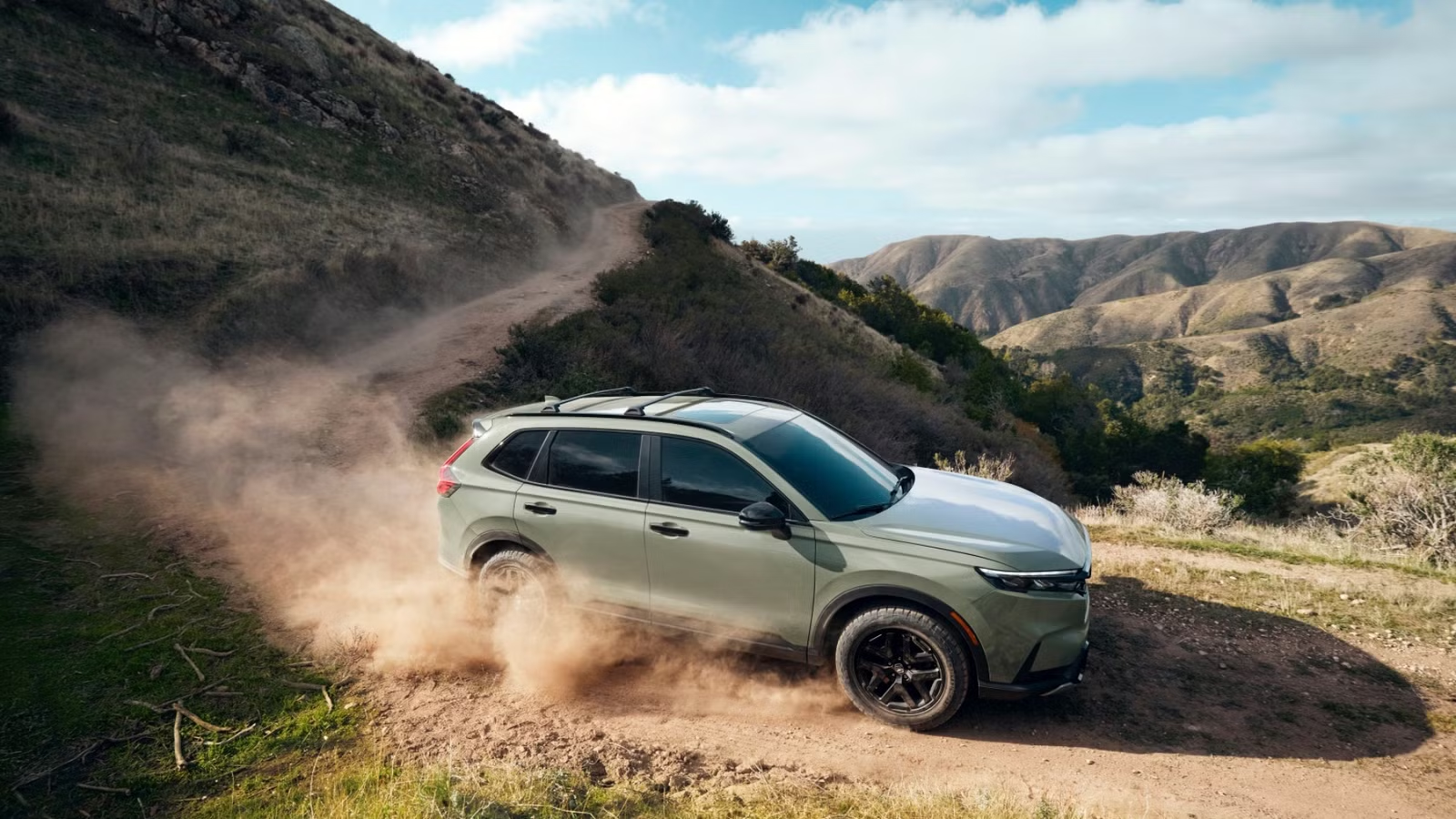
Kelley Blue Book’s H1 2026 Brand Watch survey, released this week, puts a number on something shoppers and dealers have been sensing for months: hybrids are pulling away from EVs, and SUVs are more dominant than ever. Hybrid consideration hit 22% in the first half of 2026, up from 20% a year earlier and a new record high. EV interest, meanwhile, slipped to 10% from 11% over the same period — meaning hybrids now draw more than twice the shopper attention of pure electrics.

The body-style story is just as stark. Non-luxury SUV consideration reached an all-time high of 71%, while sedan interest dropped to a record-low 25%. If you’ve been sitting on a decision between a hybrid crossover and an EV, the data suggests you’re far from alone — and the reasons buyers are landing on hybrids have less to do with EV skepticism than with what hybrids actually deliver on the things shoppers care about most right now.
Affordability and Fuel Economy Are Now Driving the Decision
For years, durability and safety topped the list of factors that moved buyers toward one vehicle over another. Those two still lead, but the KBB Brand Watch data shows affordability and fuel economy have risen steadily in importance over the past five years — and that shift is doing real work in the hybrid-vs-EV comparison.

Hybrids thread a needle that full EVs currently can’t: they deliver meaningfully better fuel economy than a conventional gas vehicle without asking buyers to restructure their lives around charging infrastructure. A Toyota RAV4 Hybrid or Honda CR-V Hybrid fits into an existing routine. You fill up at the same stations, on the same schedule, and pocket the fuel savings without worrying about range on a long weekend drive. For a household where affordability is already a pressure point — and the KBB data makes clear it is for many — that practical calculus matters more than zero-emissions promise.
Cox Automotive’s Vanessa Ton, senior manager of Market and Customer Research, framed it plainly in the Brand Watch release: “With affordability challenging many households, the strength of SUVs, which are typically more costly, was a surprise at first. But we recognize that value-oriented SUVs are the heart of the market right now, providing shoppers the right mix of attributes and usability.”
The SUVs and Hybrids Shoppers Are Actually Considering

The Honda CR-V and Toyota RAV4 sit at the top of the non-luxury SUV consideration rankings, and the RAV4’s hybrid variant is a significant part of that story. Toyota placed five models in the top 10 most-considered electrified vehicles for H1 2026 — every single one a hybrid, not a plug-in or battery-electric. The Honda Accord Hybrid and Mazda CX-50 Hybrid both cracked the top 10 for the first time this period, a sign that hybrid consideration is spreading beyond the established names.
The full non-luxury SUV top five, per KBB: Honda CR-V, Toyota RAV4, Toyota 4Runner, Ford Explorer, and Honda Pilot. Honda’s dominance runs deeper than the rankings — the brand led 9 of 12 consideration drivers tracked in the study, including affordability, durability and reliability, and driving performance. That’s a sweep that builds on Honda’s performance at KBB’s 2026 Consumer Choice Awards, where it took top honors in every non-luxury category including EV/hybrid brand.
Subaru and Kia Are the Brands Gaining Ground — Here’s Why

Most non-luxury brands held flat or lost ground in shopper consideration during H1 2026. Only Subaru and Kia improved — a detail that says something about where momentum is right now.
Subaru’s gains came specifically from the Crosstrek and Forester Hybrid, two vehicles that sit squarely in the value-oriented, fuel-efficient SUV space the market is rewarding. Kia’s improvement tracked with strong demand for its value-focused SUV lineup and growing interest in the Carnival minivan. In the luxury segment, Audi was the only top-10 brand to post a year-over-year gain, driven by rising consideration for the A3 and A5 sedans — a different story, but one that reinforces how concentrated shopper attention has become. When only three brands across the entire market are gaining ground, it signals that buyers know exactly what they want and aren’t easily swayed by anything outside that narrow target.

U.S. EV sales accounted for just 5.8% of new car sales in Q2 2026, according to Cox Automotive data — up from the prior quarter, but still a fraction of overall volume. Hybrids, by contrast, held roughly 18% of the U.S. market as of July, with Cox forecasting hybrid sales to grow about 9% for the full year. The consideration gap in the KBB survey — 22% hybrid vs. 10% EV — suggests that sales gap is likely to widen further.
For a buyer comparing a RAV4 Hybrid to a Tesla Model Y today, the practical picture looks like this: the hybrid costs less upfront in most configurations, requires no changes to your home setup, and delivers real-world fuel savings without range anxiety on road trips. The EV case is strongest for buyers who drive predictable daily distances, have home charging, and can absorb a higher purchase price. The KBB data doesn’t say EVs are a bad choice — it says most shoppers, right now, aren’t in that situation. Hybrids are winning because they meet buyers where they actually are.

Related posts




Latest Post


No Comments