
Why A Big-Bore Touring Motorcycle Isn’t Automatically The Best Choice For Long Trips
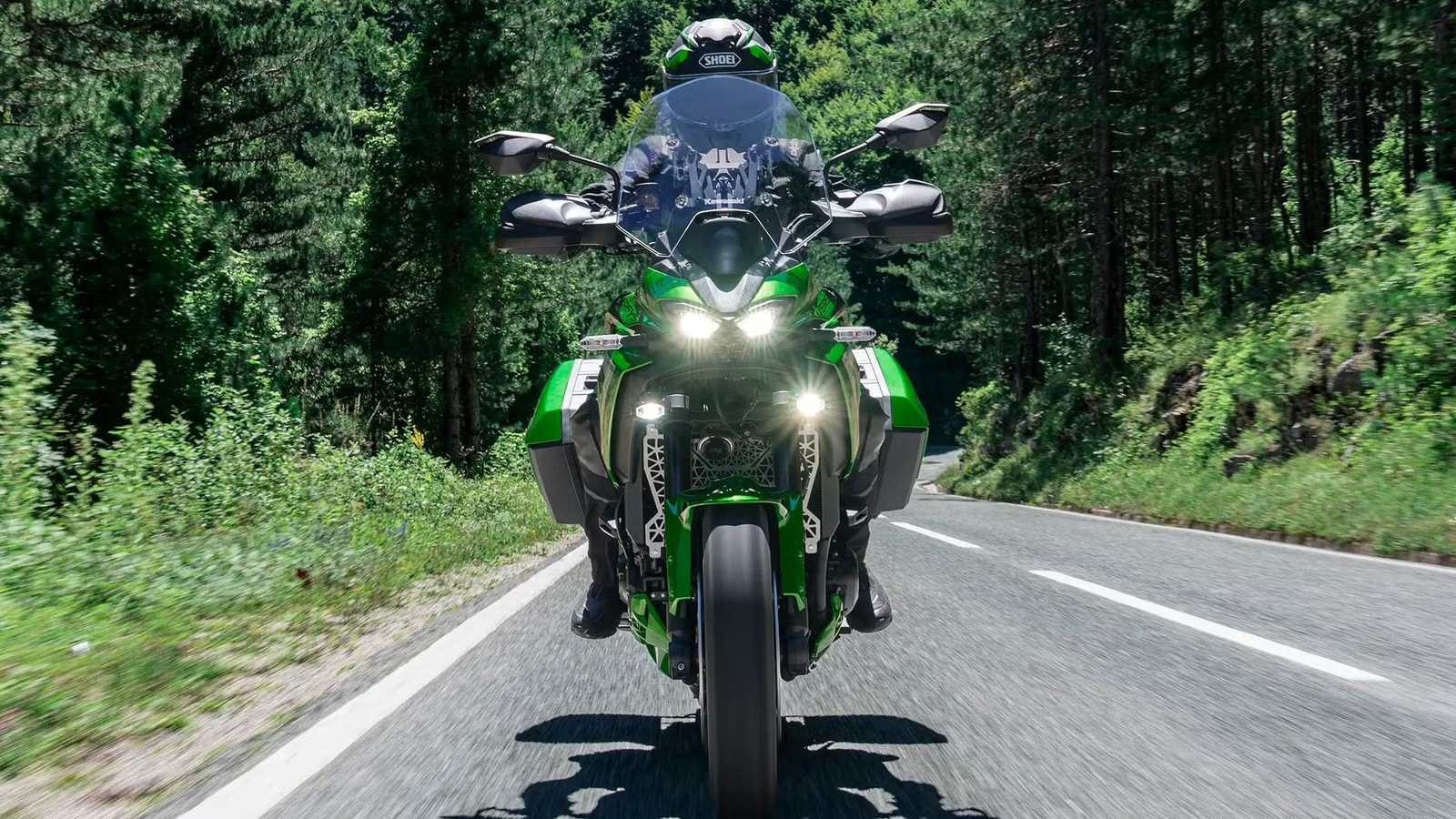
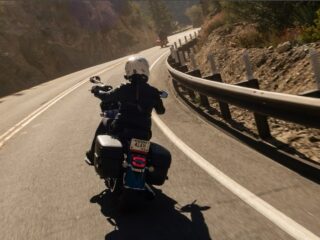
Touring motorcycles, as the name suggests, are purpose-built for covering serious distances while keeping you and your passenger comfortable as well as accommodating both your luggage. In the U.S., that can mean crossing from the Pacific Coast to the Appalachians, or from the Great Lakes to the Gulf Coast. And for journeys of that scale, big engines make perfect sense. But not every long trip is built around endless highways. A week away can also involve mountain passes, small towns, and long unpaved stretches such as Alaska’s Dalton Highway. On routes that vary, outright engine size is not automatically the best all-round solution. What matters more is how easy the motorcycle is to live with from dawn to dusk.
Big Touring Motorcycles Make The Most Sense On Highway-Heavy Trips

If your riding spends most of a day on interstates, the appeal of a full-size tourer becomes difficult to miss. The Honda Gold Wing Tour offers 32 gallons of integrated luggage capacity, plenty of room for a passenger, serious wind protection, and an engine that barely notices sustained highway speeds. BMW’s R 1300 RT does the same with less bulk, but it can still carry more than 500 pounds of rider, passenger, and luggage. These motorcycles are built around the assumption that you may be carrying quite a lot for quite a long time, and on well-surfaced roads.

The trouble with using distance as the deciding factor is that not every 2,000-mile trip looks the same. You might cover those miles in six days while working through mountain roads, stopping in small towns, crossing cities, and taking whatever interesting road appears along the way. Another rider might cover most of the same distance in three days on the interstate. Both are long trips, but they place very different demands on the motorcycle executing them.
Once your route includes a lot of slower riding, stopping, parking, and turning around, the nature of the journey changes and so do the requirements. You still need enough comfort and performance to cover the highway sections, but the motorcycle also has to be manageable everywhere else so as to not take away from the journey itself.

Heavy Touring Motorcycles Can Be Hard Work At Low Speed

A Gold Wing Tour weighs 845 pounds ready to ride, while a 2026 Road Glide comes in at 838 pounds in running order. Good chassis design keeps them from feeling like a near 900-pound motorcycle once you are moving, and Honda even provides reverse to make the Gold Wing easier to handle when maneuvering. But the keyword is “easier” and not “eliminate.”
A Lighter Bike Can Make The Destination More Enjoyable

Suzuki’s GSX-S1000GT+ is still a substantial 999cc sport-tourer, yet it weighs 498 pounds before its standard side cases are fitted. It has enough wind protection and performance for serious highway mileage without becoming something you have to think twice about every time the road narrows, or the parking space gets tighter.
The difference becomes even more noticeable if the trip includes a few days of riding after you reach your base. Once the luggage is in the hotel, you may want to spend the afternoon on a mountain road, explore a town, or follow a road simply because it looks interesting. A motorcycle that was superb while crossing three states can feel cumbersome with all its extras and weight on roads that need it to be narrow and agile.
Touring Equipment Doesn’t Always Equate To A Huge Motorcycle

The old argument for buying the biggest tourer was easier to make when smaller motorcycles meant giving up the luxuries that made long days tolerable. But a look at the equipment list on today’s adventure-tourers and one can expect the very latest and greatest in tech. Triumph’s Tiger 900 GT Pro has cruise control, heated grips, heated rider and passenger seats, an adjustable screen, and a 5.28-gallon fuel tank. Ducati’s 890cc Multistrada V2 S also brings cruise control and heated grips, while keeping its fuel capacity at just over five gallons.
Kawasaki pushes the point even further with the 2027 Versys 900 SE LT ABS. Hard saddlebags, heated grips, an adjustable windscreen, and Adaptive Cruise Control Lite are all standard. Of course, the outright luxury levels, especially for a passenger, cannot be matched or compared with a Gold Wing Tour, but they do remove much of the traditional lack of proper touring equipment for which a solo rider had to move into the heavyweight class.
Carrying Capacity Is Not Always Tied To Engine Size

Engine displacement can also be a poor guide to how much a motorcycle can actually carry. Kawasaki rates the Versys 900 SE LT for a 485-pound payload, the same figure it quotes for the larger Versys 1100. If you are traveling solo with camping gear or a week’s luggage, that is far more useful information than simply knowing which bike has the bigger engine. Buying substantially more capacity can be worthwhile when you regularly use it, but it should not be treated as a hard requirement.
Some Long Trips Need More Versatility Than Highway Comfort

Adventure-tourers complicate the big-tourer argument further. A Tiger 900 GT Pro may not isolate you from wind and weather like a Gold Wing, sure, but its 19-inch front wheel, longer suspension travel, upright riding position, and resultant off-road capabilities give you far more freedom when the pavement quality deteriorates. A Multistrada V2 follows on the same lines, albeit remaining very much a road-focused motorcycle. And you do not have to be planning a serious off-road expedition for those qualities to become useful. Forest-service roads, rough campground entrances, broken pavement, construction zones, and long gravel connectors are perfectly normal features of some touring routes.
Let The Route Decide How Much Motorcycle You Need

If your trip means repeated 500-mile days on well-paved highways with a passenger, full luggage, and changing weather, an Indian Pursuit Elite, a Gold Wing Tour, or a full-size Harley-Davidson tourer makes an excellent case for itself. You are using the space, protection, carrying ability, and effortless power that justify its size and engine capacity. However, a solo trip through mountain roads, towns, back roads, and occasional unpaved sections is not where they belong. These kinds of trips ask for something different.
Sport-tourers are a great solution. A Yamaha Tracer 9 can handle serious touring without becoming cumbersome away from the highway, while the Triumph Tiger Sport 660 and Suzuki SV-7GX show how much less motorcycle you can get away with when luggage and passenger demands are modest while still being able to cross states comfortably. Long-distance touring does not automatically demand the largest engine you can buy. It demands a motorcycle that suits the roads you intend to spend those miles on.
Source: Various Manufacturers

Related posts


Latest Post


No Comments