
The Perfect Alternative To The 1970 Chevrolet Chevelle SS 454
Few machines from the golden age of American muscle carry the cultural weight of the 1970 Chevrolet Chevelle SS. Mention it at any car show and watch heads turn — it’s that kind of car. Between its 454-cubic-inch V8, its aggressive styling, and its legendary straight-line performance, the Chevelle remains a true embodiment of an era when Detroit built cars with pure, unapologetic excess. It’s a classic muscle car that doubles as a cornerstone of American automotive history — and the American muscle car scene doesn’t get much more iconic than this.

The problem? Prices for the 1970 Chevelle SS have climbed to eye-watering heights — you’ll be lucky to find a 454-equipped example for less than $100k. While that puts the iconic muscle car well out of reach for most enthusiasts, it doesn’t mean you’re out of options. Back in the day, everyone from Ford to Oldsmobile had a stake in the muscle car market, and there are plenty of worthwhile alternatives that deliver a barrel-chested, tire-squealing big block muscle car experience at more attainable prices. The Chevelle SS 454 may represent the peak of the genre for many, but it’s far from the only path to comparable Chevelle performance.
With that in mind, we searched high and low for something Chevelle-like in spirit without the Chevy premium attached. If you’re shopping don’t want to spend the sums required for a 1970 SS with a 454ci big-block V8, here’s what we consider the perfect alternative.
The 1969 Oldsmobile Hurst/Olds 455 Is The Perfect Chevelle SS 454 Alternative

Although the Oldsmobile 4-4-2 is one of the more often-overlooked muscle cars of the era, it’s no less deserving of your attention. First introduced as an option for the Cutlass and F-85 models, the 4-4-2 name originally referred to the package’s four-barrel carb, four-speed manual, and twin exhausts. Oldsmobile later spun off the split the 4-4-2 off in 1968 as its own performance-oriented model in an attempt to field a competitor against the likes of Ford and Dodge.
Of course, the competition had some heavy hitters in the 429 and the 440, so a 400-cubic-inch engine wouldn’t cut it. Alongside the birth of the 4-4-2, Oldsmobile also released an even hotter version in the form of the 1968 Hurst/Olds. Hurst Performance shifters had featured in Oldsmobile cars for a number of years, and a collaborative model made for a natural evolution of the partnership.
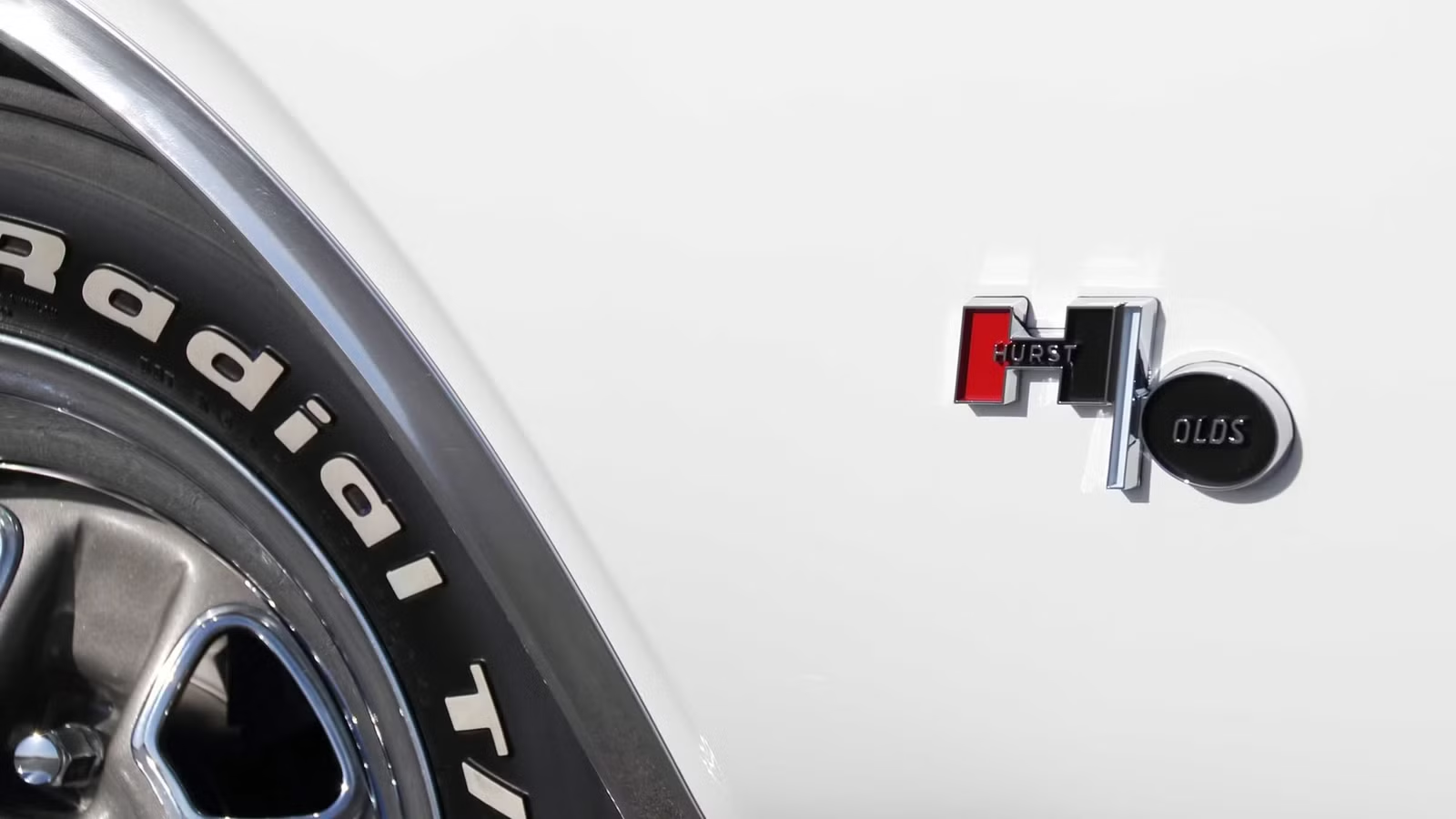
Along with a massive 455-cubic-inch (7.5-liter) V8, the Hurst/Olds 4-4-2 also received a variety of appearance modifications: exclusive paint, H/O badging, pin-striping, and bucket seats. As a limited model, just 515 examples rolled off the line in the first year of production.
Matching The Chevelle’s Muscle Car Looks
Look, muscle cars are head-turning vehicles, but Chevrolet was a trend-setter from a design standpoint. The 1970 Chevelle SS is the epitome of muscle car aesthetics, offering bold lines, flared wheel arches, and iconic badging. With its wide stance, flowing body curves, and imposing front grille, the Chevelle exudes a raw, unapologetic power that captures the essence of classic muscle car culture. Its sheer presence on the road demands attention, and its timeless design remains synonymous with the genre.
From where we’re sitting, the Hurst/Olds offers much of the same appeal but with its own underrated muscle car flavor. The dual-scooped hood, Hurst emblems, and rear wing give the car an unmistakable sense of go-fast purpose. At the same time, the 455’s one available paint scheme — white with Fire Frost gold stripes — is more understated than most bright muscle cars, and the subtle chrome accents lend it a more refined presence. The Chevelle’s boldness grabs your eye immediately, but the Hurst/Olds makes for a classier, slower-burning take on the traditional muscle car look: eye-catching without being over the top.
Oldsmobile’s 455: The Other GM Big Block
In 1963, General Motors introduced a ban across all of its divisions prohibiting race participation and limiting maximum engine sizes to 400 cubic inches. Though some full-size sedans, halo sports cars such as the Corvette, and loopholes like the Copo Camaro managed to find a way around things with the 427, it wasn’t until the ban was lifted in 1970 that larger engines like the 454 were offered from the factory. Ever under the radar, though, Oldsmobile figured out a way to fit the 4-4-2 with the 455 back in 1968.
To accomplish such a feat, Oldsmobile took a similar route to dealers like Yenko, claiming that the engine was not being offered from the factory — replete with its red paint and chrome valve covers — but rather installed by a third party: Demmer Engineering. The privately owned Michigan company did provide the special paint and badges, but Oldsmobile is rumored to have built the rest of the car in-house.
Because the 455 appeared in a wide variety of cars — including family-friendly options like the Delta 88 and even front-wheel-drive models like the Toronado — Oldsmobile tuned the engine differently for each application. In the case of the Hurst/Olds, the 1968 model benefited from a 10.5:1 compression ratio as well as a more aggressive camshaft and carb setup, making it good for 390 horsepower and a staggering 500 lb-ft of torque. While Oldsmobile made subsequent years a bit milder in tune, they still came with their fair share of performance-focused components.
Between forged connecting rods, aluminum pistons, and an aluminum intake, the Hurst/Oldsmobile 455 stood out as one of the worthier Chevelle competitors, but even base 4-4-2s could be ordered with the engine in the W30 package from 1970 onwards.
Why You May Want A Hurst/Olds Instead Of A Chevelle SS
Hurst/Olds 455 Vs. Chevelle SS 454 Performance Specs Comparison
|
1969 Oldsmobile Hurst/Olds |
1970 Chevrolet Chevelle SS 454 |
||
|---|---|---|---|
|
Engine |
455-Cubic-Inch Rocket V8 |
454-Cubic-Inch LS5 V8 |
454-Cubic-Inch LS6 V8 |
|
Horsepower |
380 Horsepower |
360 Horsepower |
450 Horsepower |
|
Torque |
500 lb-ft |
500 lb-ft |
500 lb-ft |
|
0-60 MPH |
5.9 Seconds |
~6 Seconds |
5.7 Seconds |
|
1/4-Mile Time |
14.03 Seconds |
13.8 Seconds |
13.4 Seconds |
Chevrolet, Oldsmobile, Hemmings
On paper at least, the Hurst/Olds and the Chevelle SS are close enough to make for an interesting drag race. With the 1969 model, Oldsmobile’s 455-cubic-inch Rocket engine was rated for 380 horses and 500 lb-ft of torque, giving it a few extra ponies compared to Chevy’s 360-horsepower LS5 454.
Though the hotter LS6 eclipses the Rocket from a power standpoint, it doesn’t make for as much of a difference in 0–60 mph times as you’d expect. Going by the lowest reputable figures available, the Hurst/Olds trails the Chevelle by only a few tenths of a second. Performance can vary based on testing conditions, and some publications suggested the two had comparable 0–60 mph sprints.
Beyond the souped-up Rocket engine, Oldsmobile fitted the Hurst/Olds with a number of other upgrades to make it worthy of its performance designation. In keeping with the functional forced-induction hood, the air filter assembly featured a metal “flapper” assembly. Moreover, all Hurst/Olds models came with power disc brakes, a four-core radiator, and a dual-gate Hurst Performance shifter.
The Hurst/Olds Featured Distinctive Interior Touches, Too
Like any self-respecting limited-production model, the Hurst/Olds came fitted with some special interior options to accompany its flashy paint. They included:
- A Hurst center console
- Rocket Rally-Pac tachometer, clock, and gauges
- Optional woodgrain-rimmed steering wheel and matching horn button
- Color-matched gold-painted headrests
- A Hurst/Olds glovebox decal
How Much The 1969 Hurst/Olds Costs Today

Oldsmobile built 10 different installments of the Hurst/Olds limited-production model, and the early years are an especially rare sight. 1969 saw 906 examples roll off the line for public sale — all hardtops — with three additional convertibles built for promotional use. Still, a search using Hagerty’s Valuation tool and a quick browse of Classic.com tell the same story: despite its rarity, the Hurst/Olds commands significantly less at auction than a comparable 1970 Chevelle 454.
Hagerty valued the Oldsmobile at $44,800 in ‘Good Condition’ compared to an LS6 Chevelle at $98,000 in ‘Good Condition.’ Even factoring in the LS5 and smaller-engined models for the 1970 model year (you can’t filter by trim on Classic.com), Classic.com puts the average Hurst/Olds sale price at $70,106 versus the Chevelle’s $102,686. For context, Chevrolet built some 4,475 LS6 Chevelles in 1970.
1969 Hurst/Olds Vs 1970 Chevelle Value
|
Model |
Hagerty ‘Good’ Valuation |
Classic.com Average Sale |
|---|---|---|
|
1969 Oldsmobile Hurst/Olds |
$44,800 |
$70,106 |
|
1970 Chevrolet Chevelle SS LS5 |
$61,500 |
$102,606 |
|
1970 Chevrolet Chevelle SS LS6 |
$98,000 |
Early Hurst/Olds Cars Are A Rare Sight
- Just 515 Hurst/Olds rolled off the line in 1968 and a further 906 were completed in 1969
- 1972 was the first year a convertible Hurst/Olds was offered for public sale; 150 were built
- 1973 was the first year black paint was offered as an option
The 1970 Buick GSX Is Another Excellent Chevy Chevelle Alternative

If you’re not sold on the idea of a Hurst/Olds, there is another GM option we’d suggest as an alternative to Chevy’s formidable Chevelle: the 1970 Buick GSX. Positioned higher up in the GM hierarchy (but still second fiddle to Cadillac), the GSX makes for a potent mix of raw power and American luxury. With just 678 units produced for the year, it’s an even rarer breed than the Hurst/Olds. Nevertheless, the car is worth the cost of admission. Under the hood, it packed a 455-cubic-inch Buick V8 producing 350 horsepower and 510 lb-ft of torque.
1970 Buick GSX Specs
|
Engine |
455-Cubic-Inch Buick V8 |
|---|---|
|
Horsepower |
350 Horsepower |
|
Torque |
510 lb-ft |
|
0-60 MPH |
6.5 Seconds |
|
1/4-Mile Time |
13.38 Seconds |
Hemmings
The Stage 1 Package Offered Even More Performance
- The upgrade gave the 455 a hotter cam, a slightly increased compression ratio, and 90 degrees of camshaft overlap
- Buick is widely recognized as misquoting GSX output; the real power figure is thought to be around 400 horses
Sources: Audrain, Classic.com, Drivingline, Hagerty, Hemmings, HurstOlds.com

Related posts
Latest Post


No Comments