
When Ford Built The Taurus SHO Enthusiasts Still Chase For Cheap
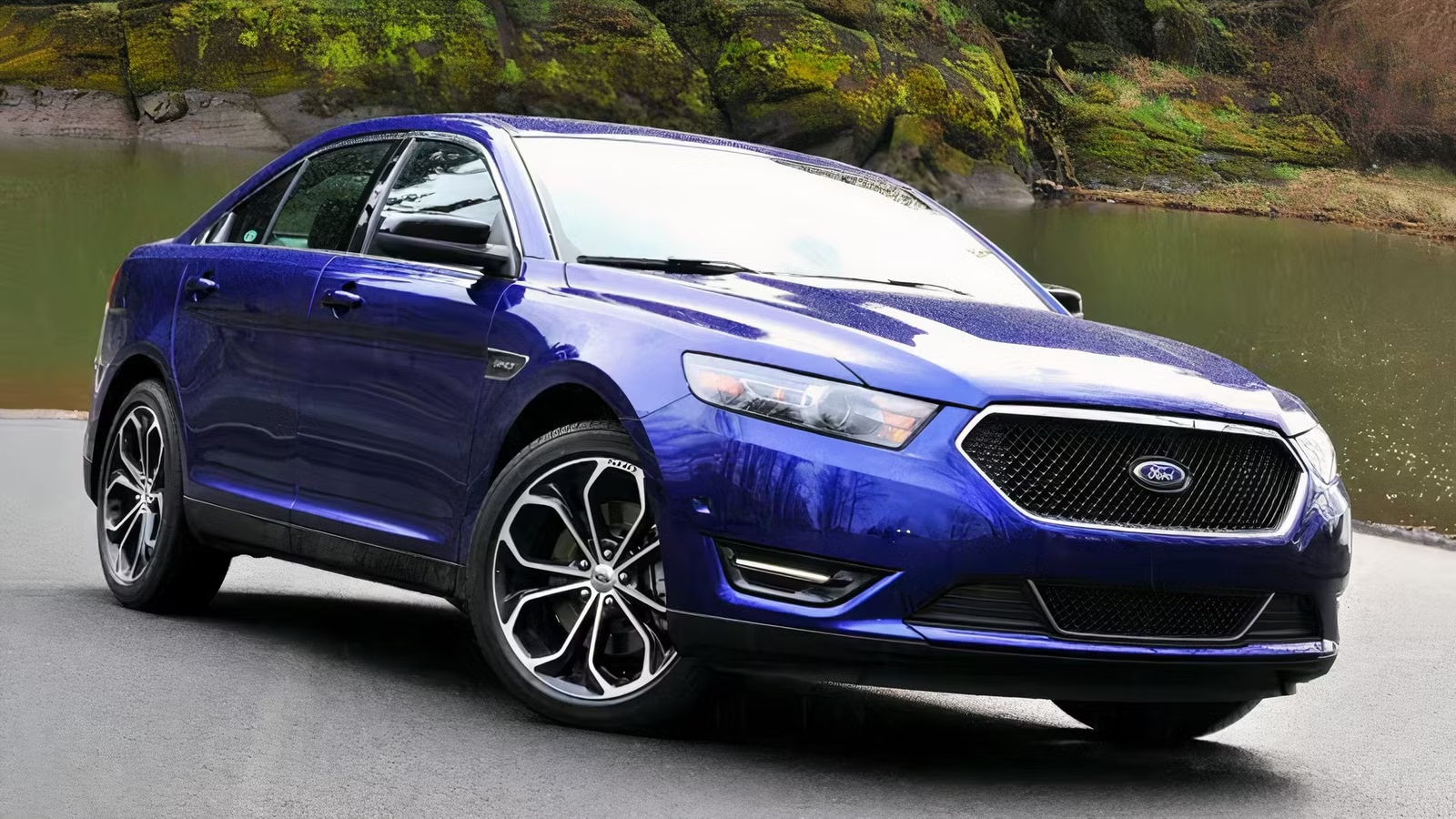
Pay collector money for an old Ford Taurus, and you might have some explaining to do. Buy the cheapest one because it has a Yamaha engine, and the repair bills could do the explaining for you. That is the tension behind the original Taurus SHO: an ordinary-looking sedan with extraordinary hardware, still affordable enough to tempt you into overlooking three decades of wear.

The attraction is easy to understand once you lift the hood. Ford and Yamaha created something more interesting than a family sedan with firmer seats, then paired it with a five-speed manual. Finding that experience cheaply remains possible. Finding it in a car that someone has properly maintained takes considerably more patience.
An Unlikely Partnership Put Serious Engineering Behind A Familiar Face
Ford Looked Beyond Its Own Engine Lineup
The Taurus already had an important job when it arrived for 1986: make Ford competitive in the family-car market. Turning that familiar shape into an enthusiast sedan required a different kind of engine, and Yamaha supplied the expertise. Its involvement went beyond dressing up an existing engine bay; Yamaha handled development and manufacture of the SHO V6.

Ford’s own engine history connects the program to its canceled GN34 mid-engine sports-car project. Whatever the abandoned sports car might have become, the Taurus gave the engine a production home. That is the useful part of the backstory: sophisticated performance hardware reached buyers inside a sedan that could disappear into a supermarket parking lot.
The Hardware Deserved More Attention Than The Bodywork

SHO stood for Super High Output, an unusually literal badge in this case. The 3.0-liter V6 produced 220 horsepower and 200 pound-feet of torque, using dual overhead camshafts and four valves per cylinder. In plain language, its cylinder heads were designed to move air effectively as engine speed increased.
The sweeping intake runners made the engine look special before it made a sound. Outside, revised bumpers, fog lights, and understated identification offered clues without announcing a spectacle. The restraint mattered: you could enjoy the engineering without buying the visual baggage of a conspicuous performance car.
The First-Generation Taurus SHO Made Every Buyer Shift For Themselves
The Five-Speed Was Central To The Formula

Every factory-built first-generation SHO, covering the 1989–1991 model years, paired that Yamaha V6 with a Mazda-supplied five-speed manual and FWD. There was no automatic option to avoid, and no rare manual package to decode. Today’s scarcity concerns surviving condition, originality, and maintenance rather than an elusive transmission option.
The engine’s 7,000-rpm redline gave you a reason to keep working through the gears. In a period comparison, Car and Driver recorded a 6.9-second run to 60 mph from a 1989 SHO, serious pace for the time. More lasting than that number is the interaction: choosing the gear, building engine speed, and discovering how much personality a sensible sedan could conceal.
The Automatic Arrived With A Bigger V6

The second-generation SHO arrived for 1992, retaining the 3.0-liter engine and manual transmission. For 1993, Ford added a four-speed automatic paired with a 3.2-liter Yamaha V6. That engine was a genuine production sedan offering, not a wagon-only curiosity or an enthusiast swap.
Horsepower remained at 220, while torque increased to 215 pound-feet of torque. The 3.0-liter manual continued alongside it through 1995, leaving buyers with two interpretations of the same idea. The automatic made the SHO more accessible, but the manual gave you more responsibility for extracting the engine’s character, which remains a substantial part of its appeal.
The SHO Gained Cylinders Before It Gained Turbos
The V8 Brought A Different Personality

For 1996, the third-generation SHO replaced the Yamaha V6 with a jointly developed Ford–Yamaha 3.4-liter V8. Its 235 horsepower and 230 pound-feet of torque represented increases of 15 horsepower and 30 pound-feet of torque over the original 3.0-liter. A four-speed automatic became the only transmission.
The V8 supplied its own reason to be interested, especially if an unusual engine matters more to you than having a clutch pedal. However, an automatic-only sedan with dramatically different styling could not reproduce the original combination simply by adding cylinders. When the V8 SHO ended after 1999, the name disappeared for a decade.
The Revival Delivered Speed Through A Different Route


The SHO returned for 2010 with a 3.5-liter twin-turbocharged EcoBoost V6 producing 365 horsepower and 350 pound-feet of torque. AWD and a six-speed automatic helped deliver that output in a larger, more substantial sedan. Yamaha was no longer part of the engine story.
You can appreciate the revival’s strength without expecting the same experience. If the original draws you in through revs, shifting, and mechanical novelty, the later car answers with boosted torque and easier speed. Neither preference requires declaring the other car illegitimate, but the badge alone cannot tell you which one you will enjoy owning.
Cheap Examples Still Exist, But The Sale Price Needs Context
Completed Sales Show Both Opportunity And Compromise

The under-$10,000 argument survives contact with actual transactions. A Canadian-market 1992 five-speed showing approximately 68,000 miles sold on Bring a Trailer for $7,100 in May 2025, before fees. It had service records and clean history reports, although its listing also disclosed chips, dents, and other cosmetic blemishes.
First-generation prices can fall considerably lower, with considerably more due diligence attached. A 1991 SHO sold for $4,500 in April 2026, but its history report flagged a potential odometer rollover. Another brought $4,000 that June with disclosed corrosion, accident history, leaks, and electrical faults. Those are evidence of affordable entry, not proof that pristine cars cost pocket change.
Later Cars Can Be Affordable Without Being Equivalent Bargains
Hagerty’s recorded auction results include a 1997 SHO at $7,700 in May 2026 and a 1999 at $5,500 in July 2025. Those third-generation transactions put V8 ownership within the headline’s budget, although the results alone cannot establish mechanical condition. Generation, history, and the work already completed still determine what you are actually buying.
The Yamaha Engine Rewards Care, And Punishes Wishful Thinking
Service Records Matter More Than The Engine’s Reputation

The V6’s durability reputation does not make its maintenance optional. SHO specialists still support the familiar “60K” service work, including valve-clearance checks, and any prospective purchase needs evidence of timing-belt maintenance, cooling-system attention, and leak repairs. Confirm the requirements for the specific year and transmission rather than assuming one interval covers every SHO.
The original SHO makes a compelling case because its personality lives beneath the familiar shape. You get an unusual engine and a manual transmission without a body that demands an audience. Find a sound example with receipts, and being overlooked becomes part of the reward. Buy a neglected one for the badge, and the cheap Taurus can become the most expensive car in your driveway.
Sources: Ford Performance, Yamaha, Car and Driver, Bring a Trailer, Hagerty, SHO Source

Related posts


Latest Post


No Comments