
The Discontinued Japanese Luxury Coupe That Refuses To Go Away
The luxury coupe market in the U.S. faces contraction as consumer demand prioritizes premium crossovers and utility vehicles. Traditional two-door body styles generate low total volume, prompting automakers to consolidate legacy lineups to protect profit margins. Overall sales performance remains constrained by high acquisition costs, rapid vehicle depreciation, and shifting buyer interests toward spacious luxury platforms.

The target demographic consists primarily of affluent enthusiasts, high-net-worth individuals, and mature buyers who prioritize personal style, brand status, and performance over daily utility. Electrification increasingly defines new developments, introducing high-output hybrid and battery-electric options alongside traditional internal combustion powertrains.
How Lexus Keeps Its Platforms Alive For Decades
Lexus maintains extended vehicle life cycles by prioritizing gradual refinement and long-term mechanical durability over frequent, ground-up redesigns. By deploying proven modular platforms and evolutionary powertrain engineering across its lineup, the brand minimizes unnecessary mechanical overhauls. This approach allows Lexus engineers to spend years perfecting component reliability, software integration, and vehicle noise, vibration, and harshness levels through incremental mid-cycle refreshes. Leveraging shared architecture from parent company Toyota provides deep economies of scale, making long production runs financially sustainable while maintaining high residual values for owners.

Lexus utilizes dedicated assembly facilities with rigorous quality control standards, including meticulous inspections by Takumi master craftsmen to guarantee built-in durability. Rather than chasing short-lived styling trends or unproven technologies that quickly age a vehicle, Lexus focuses on timeless design languages and heavily validated features. Frequent minor updates to infotainment systems, safety suites, and exterior lighting keep older platforms competitive in the marketplace. Consequently, Lexus minimizes financial risks, avoids high development costs, and upholds its industry-leading reputation for long-term dependability.
The Lexus RC Remains A Balanced GT Coupe

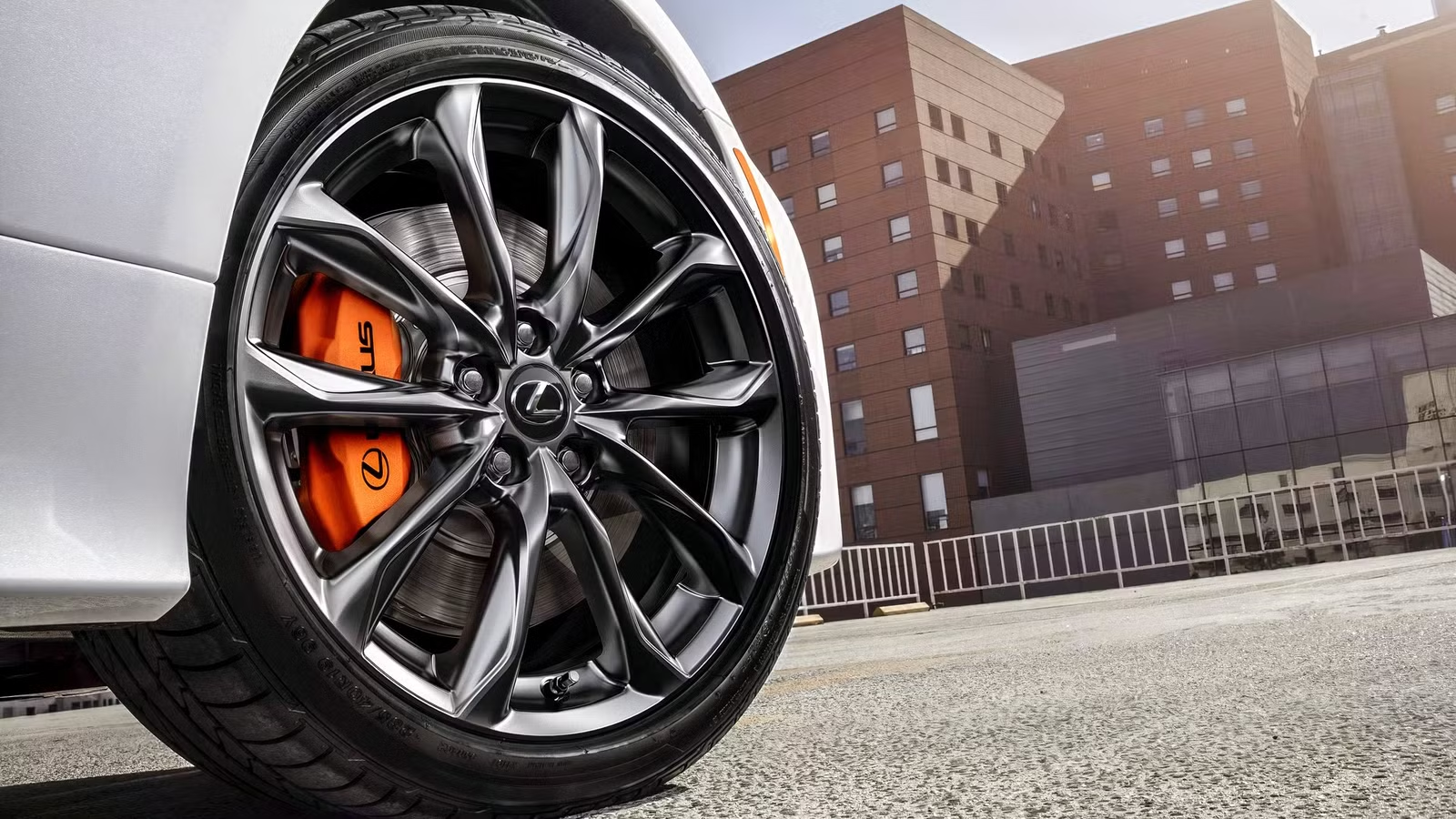
Before its discontinuation, the 2025 Lexus RC range served as the brand’s compact luxury sports coupe, positioned below the flagship LC grand tourer and alongside the IS sports sedan. The lineup ranges from the entry-level turbocharged four-cylinder RC 300 to the naturally aspirated V-8-powered RC F.
First introduced to the U.S. market in late 2014 as a 2015 model year vehicle, the RC gave Lexus a dedicated entry into the competitive two-door premium segment. Over its decade-long production run, the model has steadily aged as consumer preferences have shifted heavily toward luxury crossovers and SUVs.
As the model enters its final phase in the U.S. market, volume has declined significantly. Through 2025, Lexus has sold 1,349 units of the RC nationwide. This low-volume figure reflects broader segment contractions and diminishing dealer inventory as Lexus phases out legacy two-door platforms to prioritize electrified powertrains and utility-focused models across its core lineup.
The Best Reliability Standards In Its Class

The 2025 Lexus RC excels in long-term reliability metrics, benefiting directly from a decade of proven platform refinement. The line historically scores high marks in J.D. Power evaluations, contributing to Lexus consistently securing the top brand spot in annual dependability studies. According to iSeeCars analytics, the model earns an impressive 8.5 out of 10 overall reliability rating. This calculation reflects an expected average lifespan of 214,132 miles, or roughly 23.8 years. This positions it as the longest-lasting vehicle in the luxury small car classification.
Edmunds consumer reviews mirror this durability, averaging a near-perfect 4.5 to 5 stars out of 5 across various model years. Owners and test data consistently highlight its standout strengths: exceptional build quality, whisper-quiet cabin insulation, supple ride comfort, and bulletproof mechanicals. This is particularly noteworthy when paired with the naturally aspirated V-6 or the high-output V-8 engines.
A Balanced Range Of Engines

The Lexus RC lineup features four distinct powertrain configurations across rear-wheel-drive and all-wheel-drive layouts, balancing entry-level efficiency with track-focused performance. The base RC 300 RWD utilizes a 2.0-liter turbocharged four-cylinder engine producing 241 horsepower and 258 pound-feet of torque, mated to an eight-speed automatic transmission. This variant completes the 0 to 60 MPHsprint in 7.3 seconds before reaching a top speed of 143 MPH. Selecting the RC 300 AWD replaces the turbo-four with a detuned 3.5-liter naturally aspirated V-6 outputting 260 hp, routing power through a six-speed automatic to achieve a 6.3-second 0 to 60 MPH time and a 130 MPH top speed.
Stepping up to the RC 350 unlocks the full 311-hp iteration of the 3.5-liter V-6, dropping the 0–60 MPH time to 5.8 seconds in RWD form while retaining a 143 mph top speed. Anchoring the performance summit, the high-revving RC F packs a 5.0-liter naturally aspirated V-8 generating 472 hp and 395 lb-ft of torque. Sent through an eight-speed Sport Direct-Shift automatic with launch control, the RC F powers from 0 to 60 mph in 4.2 seconds, crosses the quarter-mile in 12.5 seconds at 114 MPH, and tops out at an electronically limited 168 MPH.
Timely Servicing Leads To A Reliable Ownership Experience

Lexus requires service for the 2025 RC every 5,000 miles or six months, alternating between safety inspections with tire rotations and 10,000-mile synthetic oil changes. Major maintenance occurs in 30,000-mile increments to replace brake fluid and air filters. Standard models cost around $400 to $800 annually for routine upkeep. In contrast, the high-performance RC F incurs higher maintenance costs due to specialized 5.0-liter V-8 fluids, larger brakes, and staggered performance tires.
The RC range has zero active safety recalls from the NHTSA. Common mechanical issues are rare due to the platform’s decade-long refinement, though known minor complaints include premature wear on front inner tires from soft factory control arm bushings, carbon buildup on the direct-injected 2.0-liter turbo engines if driven on short trips, and outdated infotainment software glitches. Overall ownership remains remarkably trouble-free, with average 10-year repair costs undercutting segment rivals by thousands of dollars.
Kitted Out With Gear Across The Range

Used values for the 2025 Lexus RC range remain strong, benefiting from the brand’s reputation for exceptional long-term reliability and low five-year cost of ownership. In the secondary market, one-year-old models experience an initial value retention of roughly 90 to 95 percent of their original MSRP, outperforming broader luxury segment averages. Entry-level RC 300 variants generally trade between $38,000 and $43,000 depending on mileage and condition, while mid-tier RC 350 and F Sport models retain private party values in the $45,000 to $53,000 range.
At the top of the lineup, the high-performance, naturally aspirated V-8 RC F continues to command a significant premium, fetching secondary market prices between $75,000 and $85,000 as collectors and enthusiasts seek out its increasingly rare powertrain layout. Across all trim levels, standard configurations with lower mileage hold strong resale stability due to limited new inventory and low overall production volumes.
Standard equipment inside the RC cabin emphasizes traditional luxury, entry-level comfort, and modern convenience. Drivers receive synthetic NuLuxe leatherette upholstery, eight-way power-adjustable front sport seats with heating and ventilation, dual-zone automatic climate control, and keyless passive entry with push-button start.

The infotainment hub features an 8.0-inch touchscreen display (upgradable to a 10.3-inch unit) with standard Apple CarPlay, Android Auto, Amazon Alexa integration, and a ten-speaker premium sound system. Safety equipment remains standard across all trims through the Lexus Safety System+ 2.5 suite, which bundles adaptive cruise control, lane-keeping assist, automated emergency braking with pedestrian detection, and blind-spot monitoring with rear cross-traffic alert.
The Premium Package adds memory settings for the driver’s seat, power tilt-and-telescoping steering column, rain-sensing wipers, and a heated steering wheel. The Navigation Package upgrades the display to a 10.3-inch screen with voice-command navigation, while combining it with the audiophile Mark Levinson 17-speaker 835-watt Surround Sound Audio System. Performance buyers can equip the F Sport Handling Package on qualifying trims, adding an Adaptive Variable Suspension, variable gear-ratio steering, sport-tuned dampers, dynamic rear steering, and active noise control.
Sources: Lexus, iSeeCars, J.D. Power, and Edmunds.

Related posts



Latest Post


No Comments