What RAV4 Hybrid Owners Now Pay To Replace A Traction Battery
8 minutes reading
Sunday, 27 Sep 2026 20:00 0 66 autotech
Like any other vehicle, buying a hybrid SUV or crossover involves evaluating real long-term operating expenses. Those who look at the exclusively hybrid 2026 Toyota RAV4 often hesitate when it comes to the possibility of having to replace the high-voltage traction battery pack. Misinformation surrounding electrification leads buyers to assume that a failed battery forces an immediate out-of-pocket expenditure that can set you back by thousands of dollars.
The truth is that Toyota’s hybrid battery packs actually last for well over a decade. Understanding the real mechanical lifespan, factory warranty protections, and current market replacement pricing helps clarify whether this component poses a genuine risk to daily ownership costs.
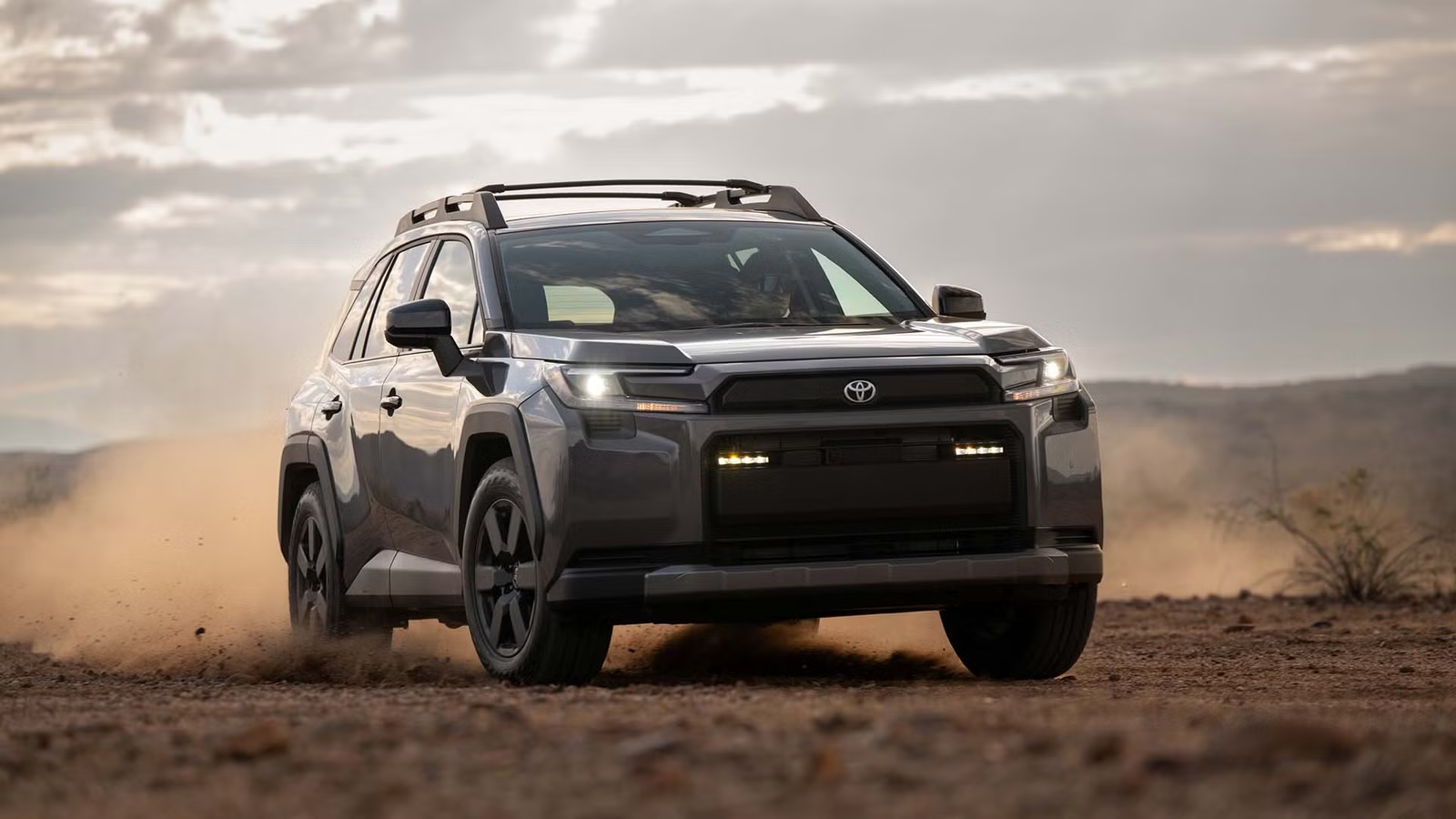
Static front 3/4 shot of 2026 Toyota RAV4 HybridToyota
Despite their improved reliability, HEVs are still subject to wear, with the battery pack being the most expensive component that you’ll find yourself replacing, typically after 200,000 miles. An advantage of modern hybrids is that the replacement battery technology is substantially more affordable compared to when these hybrids first arrived on the U.S. market. This remains true even if you factor inflation into the equation. Most brands that have focused on full electrification these past few years have incorporated their battery technology down into their hybrids, resulting in better efficiency, reliability, and combined performance. If your hybrid has passed 200,000 miles, you may encounter some issues.
Toyota shields buyers against early battery failures through extensive factory warranty coverage. Since 2020, the Japanese brand has provided a standard 10-year or 150,000-mile high-voltage battery warranty across all U.S. regions. Earlier models from the 2016 to 2019 model years carry an eight-year or 100,000-mile factory threshold, which is starting to reach the end of coverage. In California and other states adhering to California Air Resources Board emissions standards, specific low-emission vehicles receive extended coverage parameters that protect owners up to 10 years or 150,000 miles even on older generations. This coverage guarantees repair or complete replacement of any battery component exhibiting factory defects or total module failure.
Various Costs Involved With Replacing A Battery
Static rear 3/4 shot of 2026 Toyota RAV4Toyota
Out-of-warranty replacements require evaluating various possible service paths. Purchasing a brand-new factory replacement battery directly from a Toyota dealership costs between $3,000 and $8,000 including local labor rates. Regional labor rates alter total dealership repair estimates significantly. Fourth-generation RAV4 Hybrids built between 2016 and 2018 utilize nickel-metal hydride chemistry. This costs around $3,000 to $4,500 for total replacement. Fifth-generation models from 2019 onward predominantly feature lithium-ion packs, pushing total dealership hardware and installation fees toward the $5,000 to $8,000 ceiling due to raw component costs.
Independent hybrid repair specialists present lower-cost alternatives to dealership services. Reconditioned and remanufactured hybrid battery packs cost between $1,500 and $4,500 fully installed. Reconditioned units replace damaged internal cell modules while balancing healthy remaining cells to restore pack voltage. These units feature shorter warranties, typically spanning one to three years. Independent shops charge lower hourly labor fees than franchise dealerships, reducing total installation expenses regardless of whether the vehicle uses nickel-metal hydride or lithium-ion chemistry. Choosing an independent specialist allows owners to extend the operational life of an older crossover without incurring extreme costs.
How This Compares To The RAV4 Hybrid’s Biggest Rival
Front 3/4 action shot of 2026 Honda CR-V Sport Touring Hybrid driving on roadHonda
The Honda CR-V Hybrid is the RAV4’s most noteworthy rival. Similarly, it features lithium-ion battery technology with dealer replacement costs ranging from $4,000 to $7,000 out of warranty. The smaller Toyota Corolla Cross Hybrid utilizes similar lithium-ion packs, resulting in dealer replacement prices ranging between $3,500 and $6,000. The RAV4 Hybrid matches these figures directly while maintaining superior aftermarket component availability due to its high sales volume.
Service expenses for the RAV4 Hybrid remain lower than those for traditional gas-only crossovers. Mechanical wear items like brake pads last longer on hybrid variants because regenerative braking handles initial deceleration forces. The hybrid drive system eliminates traditional starters, alternators, and drive belts, reducing recurring routine maintenance fees. Over a 10-year period, these routine maintenance savings offset a substantial portion of potential post-warranty battery replacement costs.
Low Running Costs Balance Out The Battery Replacement Cost
2027 Toyota RAV4 front shotTopSpeed | Michael Frank
Data indicates that hybrid battery failure represents an outlier event rather than a certainty. Most Toyota traction batteries perform reliably for eight to 10 years or 150,000 to 200,000 miles before cell degradation impacts performance. Many original battery packs outlast the vehicle’s operational lifecycle without experiencing mechanical defects.
The financial risk remains minimal for buyers who plan to sell their vehicle within the 10-year factory warranty window. High-mileage owners facing post-warranty replacement can utilize reconditioned packs to control overall costs. The RAV4 Hybrid remains an efficient, cost-effective vehicle choice, with fuel savings and lower brake wear continuously balancing out potential long-term battery expenses.
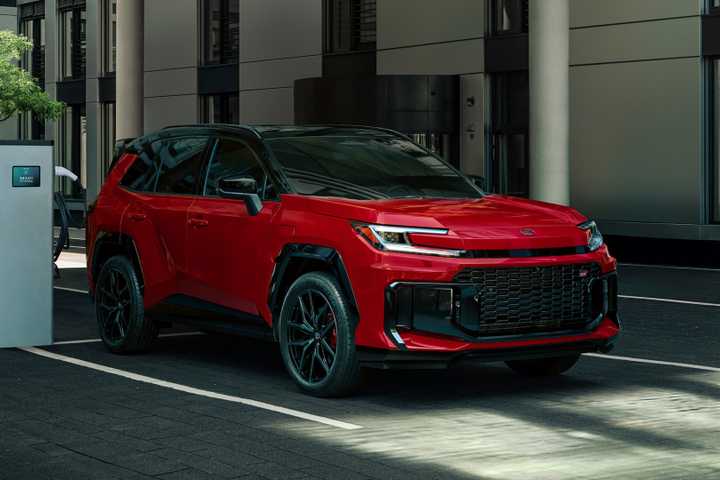
Rear 3/4 shot of a 2026 Toyota RAV4 HEV XLE Premium Ruby Flare PearlToyota
According to CarEdge, the Toyota RAV4 will cost you $6,005 for maintenance and repairs during its first 10 years of service, which is to be expected considering its strong brand reputation, high consumer demand, and proven long-term reliability. According to Edmunds, you can expect to spend $45,506 over the course of five years and 60,000 miles on the base Toyota RAV4 LE. $5,672 accounts for maintenance, $887 for repairs, $11,709 for depreciation, and $9,464 for fuel.
J.D. Power‘s latest valuation of the RAV4 consists of a reasonably positive overview, resulting in a 79/100 overall score. Joining this is a 78/100 score for the driving experience and 82/100 for resale, with a 77/100 grade for the dealership experience. iSeeCars backs this with an 8.7/10 reliability score, citing that an average RAV4 will benefit from a 13.8-year lifespan and cover 169,545 miles without any reliability issues. Expect a 29.1 percent probability of reaching 200,000 miles as well.
Toyota Remains The Leader In Hybrid Technology
2020 Toyota Avalon HybridToyota
When it comes to gasoline-hybrid technology, it’s very difficult not to think about the Toyota brand first. While Honda technically was the first company to introduce the technology with the first-generation Insight, Toyota led the way for the HEV developments. The Japanese brand has always maintained a high level of commitment to hybrids, led by the Prius, but popularized by models like the Corolla, Camry, and RAV4.
Toyota’s philosophy has always been to incorporate multiple fueling methods, including hydrogen, diesel, and electricity. Hybrid models have increasingly become the driving force of its modern catalog, with the 2026 Toyota RAV4 and Camry being available exclusively with its new-generation HEV drivetrains. Toyota backs its technology with a comprehensive warranty that covers all hybrid components for eight years and the battery for 10 years. Consumers recognize the brand’s dedication to the more efficient drivetrains and have responded favorably. Over the last few quarters, the brand has reported considerable interest in its hybrid models, and more car owners seek to lower their monthly fuel bill.
We notice this level of trust in Toyota when looking at its monthly sales performance. For August 2026, the American arm of the Japanese brand confirms that it has sold 34,232 units of the RAV4, leading to a 219,472 unit sales result for the year so far. Admittedly, this does reflect a 31.4 percent sales decline over the course of a year. Toyota confirms that this is due to supply constraints and factory retooling procedures rather than a lack of demand. Subsequently, the Camry has been breaking sales records, with the brand confirming 235,344 units sold this year so far, reflecting a 12.1 percent year-on-year sales increase.
Toyota’s Trusty HEV Drivetrain
2026 Toyota RAV4 engine shotChris Chin | TopSpeed
The 2026 Toyota RAV4 is only available with hybrid powertrains. The HEV lineup introduces Toyota’s fifth-generation hybrid system, which features an improved transaxle, battery, and power control components to refine performance. The all-wheel-drive model produces a combined 236 horsepower, while the front-wheel-drive model churns out 226 horsepower. Toyota also improves the towing capacity of some of the all-wheel-drive models, including the XLE, Woodland, SE, XSE, and Limited grades to 3,500 pounds. All front-wheel-drive and LE all-wheel-drive models can pull up to 1,750 pounds.
Efficiency Estimates Are Among The Best
Front 3/4 action shot of 2026 Toyota RAV4 towing a smokerToyota
According to the EPA, the front-wheel-drive model is the most efficient, achieving 49/42/45 MPG on the city/highway/combined cycle. Installing the optional all-wheel drive system worsens this result to 46/39/42 MPG, which is not too much of a sacrifice. The Woodland’s larger tires and all-wheel-drive-only configuration achieve a 41/35/38 MPG result. The XSE’s sporty wheel configuration changes the RAV4’s consumption to 43/37/41 MPG.
The base front-wheel drive model returns the most favorable fuel savings. The EPA estimates it will cost $4,000 less to refuel over five years when compared to the average new vehicle sold in the U.S. Overall costs include $1,500 in fuel costs every year, $2.31 to drive 25 miles, and $63 to fill the 14.5-gallon tank. The Woodland’s savings are also impressive, despite it being the least-efficient model. The EPA estimates that you’ll save $3,000 over five years, spend $1,700 on fuel every year, and $2.84 to drive 25 miles.
Base Trim Engine
2.5L Inline 4 Hybrid
Base Trim Transmission
CVT
Base Trim Drivetrain
Front-Wheel Drive
Base Trim Horsepower
183 HP @6000 RPM
Base Trim Torque
163 lb.-ft. @ 3600 RPM
Make
Toyota
Model
RAV4
Segment
Compact SUV
Sources: Toyota, Edmunds, CarEdge, iSeeCars, and the EPA.












No Comments