
What It Really Costs To Replace A Toyota Hybrid Battery
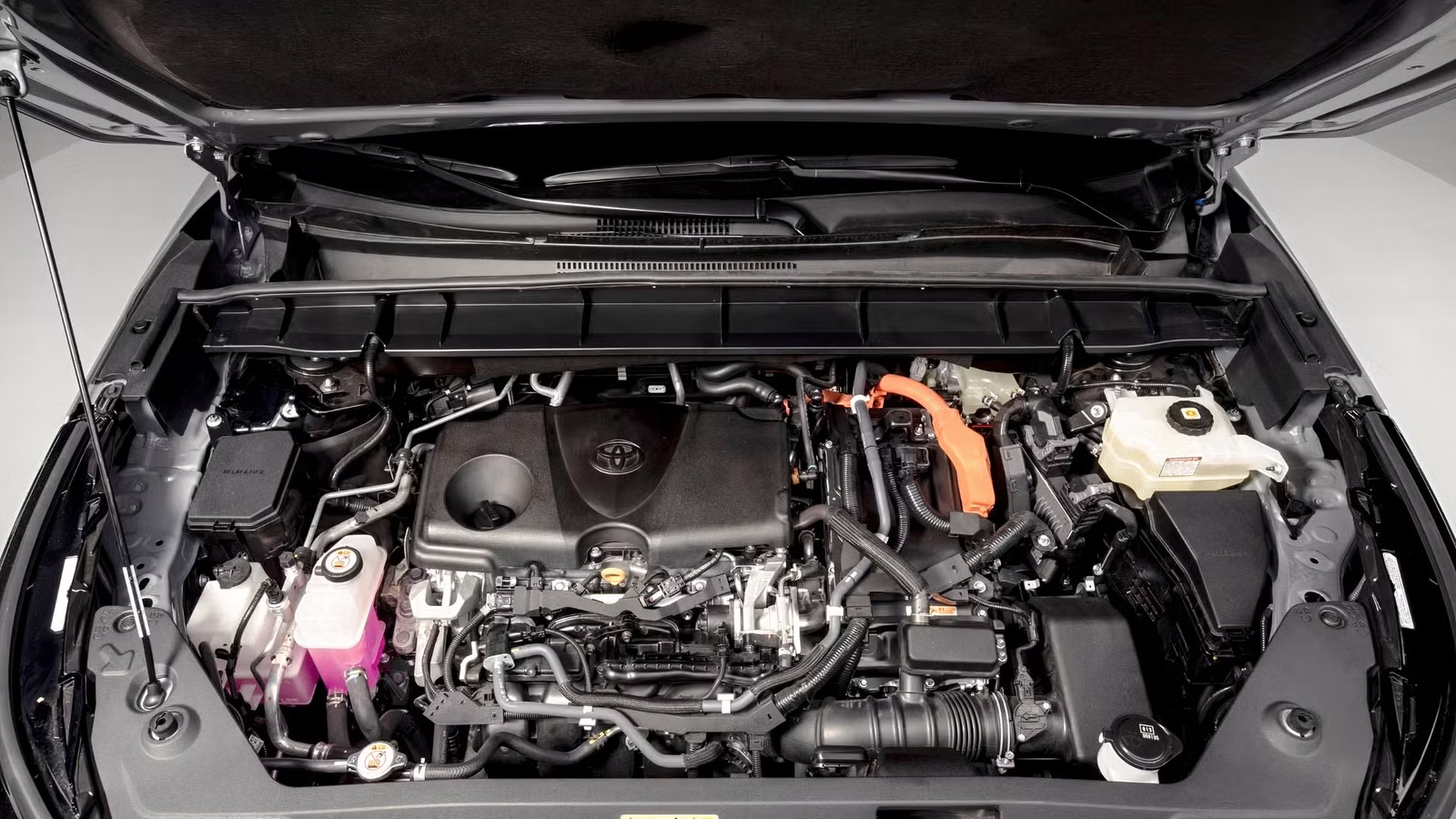
Toyota hybrids have long earned an industry reputation for bulletproof engineering and exceptional efficiency. However, the high-voltage traction battery remains a central point of concern for prospective and long-term owners facing aging vehicles. Understanding the realities of hybrid ownership requires looking past initial fuel savings to evaluate long-term maintenance expectations.

From factory warranty coverage and early mechanical warning signs to the physical installation procedure and actual out-of-pocket replacement expenses, maintaining a hybrid involves specific financial and technical considerations. This breakdown examines the true end-to-end costs, processes, and service timelines associated with replacing a Toyota hybrid battery in the U.S. market.
Toyota’s Full Dedication To Hybridization
Toyota pursues a multi-pathway electrification strategy in the U.S., prioritizing hybrid gasoline-electric vehicles and plug-in hybrid electric vehicles alongside battery electric vehicles. Rather than committing exclusively to full electric powertrains, the Japanese brand promotes hybrid technology to achieve balanced carbon reductions across high-volume market segments.

This hybrid-first approach centers on standardizing these setups across core product lines, including the 2026 Toyota RAV4, Camry, and Sienna, which operate exclusively as hybrids. High-volume utilities like the Tacoma and Land Cruiser include hybrid powertrains as base or primary configurations. These powertrains combine internal combustion engines with electric motor generators to improve fuel economy without requiring external charging infrastructure.
To support this deployment, Toyota invests heavily in North American manufacturing. A key focus is the Toyota Battery Manufacturing facility in North Carolina, designed to supply lithium-ion batteries for both hybrid and full-electric vehicles built in domestic assembly plants.
While expanding its hybrid lineup, Toyota maintains a gradual fully electric vehicle rollout. This balanced portfolio protects the brand from shifting regulatory frameworks, infrastructure limitations, and varying consumer demand, positioning hybrid technology as the central driver of Toyota’s long-term electrification goals in North America.
How Much A Toyota New Hybrid Battery Costs In 2026

According to Toyota dealership networks, replacing the traction battery pack in an average Toyota hybrid generally costs anywhere from $2,000 to $4,500, depending on the type of hybrid you’ve opted for. The exact total also depends on whether the owner selects new OEM parts, refurbished alternatives, or third-party replacements.
The physical high-voltage battery unit constitutes the primary expense. A factory-new original equipment manufacturer pack from an authorized dealership typically costs between $2,000 and $4,000, depending on vehicle size and chemistry. Selecting a refurbished pack reduces the hardware outlay to roughly $1,200 to $2,000.
Labor expenses account for the remaining balance. Dealerships and specialized independent hybrid repair shops charge between $500 and $1,500 for installation, testing, and disposal fees. The process requires qualified technicians due to safety protocols associated with high-voltage electrical circuits.
Most Toyota owners avoid out-of-pocket replacement costs entirely during initial vehicle ownership. Toyota provides factory coverage for hybrid batteries lasting 10 years or 150,000 miles in model year 2020 and newer vehicles in the U.S. Consequently, full out-of-pocket battery replacement costs typically apply only to aged, higher-mileage pre-owned models operating outside active warranty windows.
Replacing The Battery Is A Technical Process

Replacing a high-voltage hybrid battery pack in a Toyota is a technical process that involves a safety-focused procedure at specialized locations. Technicians first power down the vehicle and disconnect the auxiliary 12-volt battery to isolate low-voltage electronic control systems. The critical safety step requires pulling the orange high-voltage service plug. Removing this physical interlock disconnects internal battery relays, isolating high voltage within the pack. The technicians have to wait a mandatory period for high-voltage capacitors inside the inverter to discharge fully before proceeding. Workers then remove interior cabin trim, carpet sections, or rear seats to access the battery compartment.
Once exposed, technicians detach metal high-voltage safety shields, disconnect heavy-gauge wiring harnesses, and unclip cooling air ducts. Removing the retaining floor bolts allows technicians to lift out the heavy battery enclosure using specialized hoist equipment or dual-person lifts. Installing the new battery follows the reverse procedure. Technicians secure the new battery module, reconnect high-voltage terminals using precise torque specs, reattach cooling ducts, and refit interior paneling. Reinserting the service plug and reconnecting the 12-volt battery restores power. Finally, diagnostic scan tools clear residual error codes and verify full battery management system integration.
How To Spot A Worn-Out Hybrid Battery

When a Toyota hybrid traction battery expires, its energy storage capacity gradually degrades. This loss of capacity initiates a sequence of noticeable mechanical, electrical, and behavioral symptoms across the vehicle. Initial warning signs will result in reduced vehicle efficiency. The engine consequently operates more frequently, taking control of propulsion even during low-speed driving or idle stops.
Because the electric motor receives less power from the high-voltage pack, the engine absorbs the performance load, leading to a sharp drop in fuel economy. Drivers also experience sluggish acceleration and erratic movements on the digital state-of-charge gauge, which rapidly fluctuates between full and empty.
Additionally, the battery cooling fan runs constantly at high speed to manage elevated thermal levels from degrading internal cells. If the owner ignores these symptoms, dashboard warning lights trigger, such as the “Check Hybrid System” message or the red master warning icon. The vehicle’s control unit eventually initiates a fail-safe mode, restricting electric assist to protect internal components.
Should the battery suffer complete module failure, the vehicle may be unable to start. Because Toyota hybrids rely on high-voltage motor-generators powered by the main pack to start the gasoline engine, a total hybrid battery failure renders the car completely inoperable.
ToyotaCare’s Warranty Offers Extensive Coverage For Hybrid Components

Toyota provides a standard factory warranty suite and complimentary maintenance plan for its hybrid models in the U.S. market. The included ToyotaCare program delivers no-cost factory-scheduled maintenance for two years or 25,000 miles. Covered routine services include engine oil and oil filter replacements, tire rotations, fluid level inspections, and multipoint vehicle checks. ToyotaCare also incorporates 24-hour roadside assistance for two years with unlimited mileage, supplying emergency battery jump-starts, fuel delivery, lockout service, tire changes, and towing.
Factory warranty protection covers basic vehicle components for three years or 36,000 miles, while the powertrain warranty extends to five years or 60,000 miles. Dedicated hybrid coverage expands these terms significantly. Hybrid-related components, including the hybrid control module, inverter and converter, and battery control module, carry an eight-year or 100,000-mile warranty.
The high-voltage hybrid traction battery features a 10-year or 150,000-mile warranty for 2020 and newer model year vehicles. This coverage transfers automatically to subsequent owners, protecting against manufacturing defects and premature capacity loss throughout the primary ownership cycle.
How Long You Can Expect Toyota’s Hybrid Battery To Last

Toyota designs its high-voltage hybrid traction batteries to last the lifetime of the vehicle. On average, a factory hybrid battery provides reliable performance for 10 to 15 years or between 150,000 and 200,000 miles under normal operating conditions. Many well-maintained units exceed 200,000 miles on the original factory cells.
Several environmental and mechanical factors dictate overall longevity. Extreme temperature exposure accelerates cell degradation. Sustained operation in consistently hot climates places greater thermal stress on internal chemistry, whereas moderate climates preserve overall capacity. Maintaining clean hybrid cooling system air ducts and internal fans prevents dangerous heat buildup that leads to premature module failure. Driving patterns also exert influence. Routine highway driving distributes wear more evenly, whereas continuous short trips and extended periods of non-use degrade cell chemistry faster.
Battery composition plays a secondary role. Modern lithium-ion packs offer higher energy density and improved cycle life compared to traditional nickel-metal hydride units found in older models. Overall, Toyota’s robust electronic management software keeps the battery operating strictly within an optimal state-of-charge window, allowing most initial owners to sell or trade in their vehicle long before a total battery pack replacement becomes necessary.
What Toyota Has In Store For Future HEV Battery Tech

Toyota is advancing next-generation battery technologies designed to extend operational lifespans dramatically while driving down future replacement expenses. Central to this roadmap is the commercialization of solid-state batteries. Replacing liquid electrolytes with solid material provides superior thermal stability, faster charging capabilities, and significant degradation resistance.
Engineering targets for these solid-state packs focus on extreme longevity, aiming to retain 90 percent capacity after 40 years of typical use. This extended durability effectively outlasts the vehicle chassis itself, eliminating out-of-pocket battery replacements for typical owners and creating opportunities to reuse modules across multiple vehicle life cycles. Commercial introduction remains scheduled for the 2027 to 2028 timeframe.

Toyota also addresses short-term battery costs through manufacturing scale and chemistry variations. The automaker is developing bipolar lithium-iron-phosphate batteries aimed at reducing production costs by 40 percent compared to current liquid-based units, alongside popularizing standardized modular cell designs.
These modular architectures simplify maintenance by allowing technicians to replace individual damaged cell blocks rather than discarding entire high-voltage assemblies. Combined with localized battery production facilities in North America, Toyota aims to drastically reduce long-term hardware expenses and logistics costs for mainstream hybrid and electric consumers.

Available Models
Toyota
- Founded
-
August 28, 1937
- Founder
-
Kiichiro Toyoda
- Headquarters
-
Aichi, Japan
- Owned By
-
Publicly Traded
- Current CEO
-
Koji Sato
Sources: Toyota, RepairPal, and KBB.

Related posts




Latest Post


No Comments