
Tesla’s New Roadster Looks Like Sh*t, And No, It Cannot Fly
Tesla fanboys, rejoice! Elon Musk has finally unveiled the second-generation Roadster, and naturally, it’s being celebrated like humanity’s greatest achievement since the invention of the wheel. Never mind that the original Roadster concept debuted in 2017, with production promised for 2020. What’s another eight years between friends?

The latest version apparently flies, drives upside down, and accelerates faster than your brain can process what’s happening. It also looks suspiciously like someone asked the Cybertruck design team to build a supercar using the same ruler. But hey, who needs beautiful styling when you’ve got rocket thrusters?
Tesla Built A Flying Supercar That Doesn’t Actually Fly
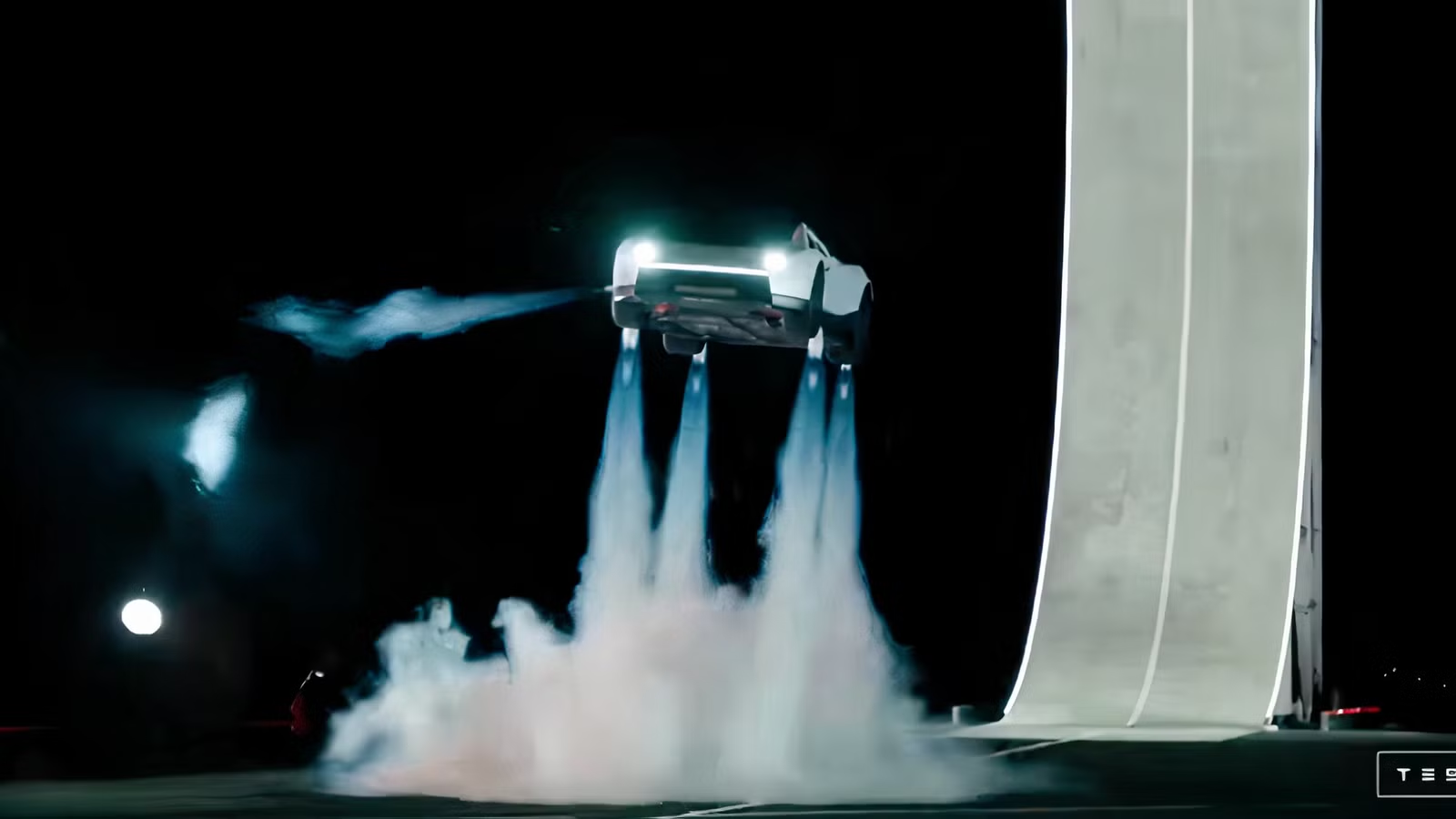
Here’s where things get properly ridiculous. Tesla has equipped its new Roadster prototype with SpaceX-inspired compressed-air thrusters and a fan-based suction system.

During its demonstration, the car reportedly launched itself into the air, performed aerial maneuvers, and even drove upside down on a specially designed ramp.
Naturally, Tesla enthusiasts are probably already explaining how this makes every Ferrari, Lamborghini, and Porsche completely obsolete.
There’s just one tiny problem. Launching a car into the air isn’t the same as sustained flight. And even if Tesla perfects its rocket-assisted party tricks, there’s no indication that regulators will allow owners to perform them on public roads.
Imagine explaining to your insurance company that your Roadster landed on someone’s roof.
Zero To 60 MPH In 0.81 Seconds, Because Apparently 2 Seconds Is Embarrassing

Tesla demonstrated a mind-bending 0-60 mph time of just 0.81 seconds. That’s genuinely astonishing, assuming the technology actually makes it into a production car. The company also claims a top speed exceeding 230 mph and has outlined three versions called Performance, Thrust, and Rocket.
The Rocket is reportedly an invite-only single-seater designed for the most extreme aerial antics. Because apparently, the natural evolution of the sports car involves removing a passenger seat and installing equipment that belongs at Cape Canaveral.
To Tesla’s credit, the engineering is fascinating. But prototype demonstrations and manufacturer claims aren’t quite the same thing as delivering an independently tested, road-legal supercar.
Tesla Promises The Roadster For 2028, And We’ve Definitely Heard That Before
Production is now targeted for 2028, almost a decade after Tesla originally promised this thing. Musk has suggested annual production of around 2,000 cars, although final pricing remains unconfirmed. The Roadster could genuinely become an engineering marvel. Or it could join Tesla’s growing collection of spectacular promises that take considerably longer to materialize than anyone originally suggested.
Either way, Tesla fans have another shiny machine to worship, even if its Cybertruck-inspired styling looks like an unfinished stainless-steel kitchen appliance. At least this one might be able to jump over the criticism.

Related posts
Latest Post


No Comments