
What Driving a 430-HP BMW ALPINA B12 6.0 Feels Like Today
Article Summary
- The BMW ALPINA B12 6.0 uses a 6.0-liter, 430-hp V12 built on the E38 7 Series, with fewer than 100 units hand-built between 1999 and 2001.
- It hits 0-60 in under six seconds and tops out around 290 km/h (181 mph), despite a speedometer marked to 330 km/h.
- Clean, low-mileage examples are scarce today, with good cars starting around €110,000 and higher-mileage ones from €70,000.
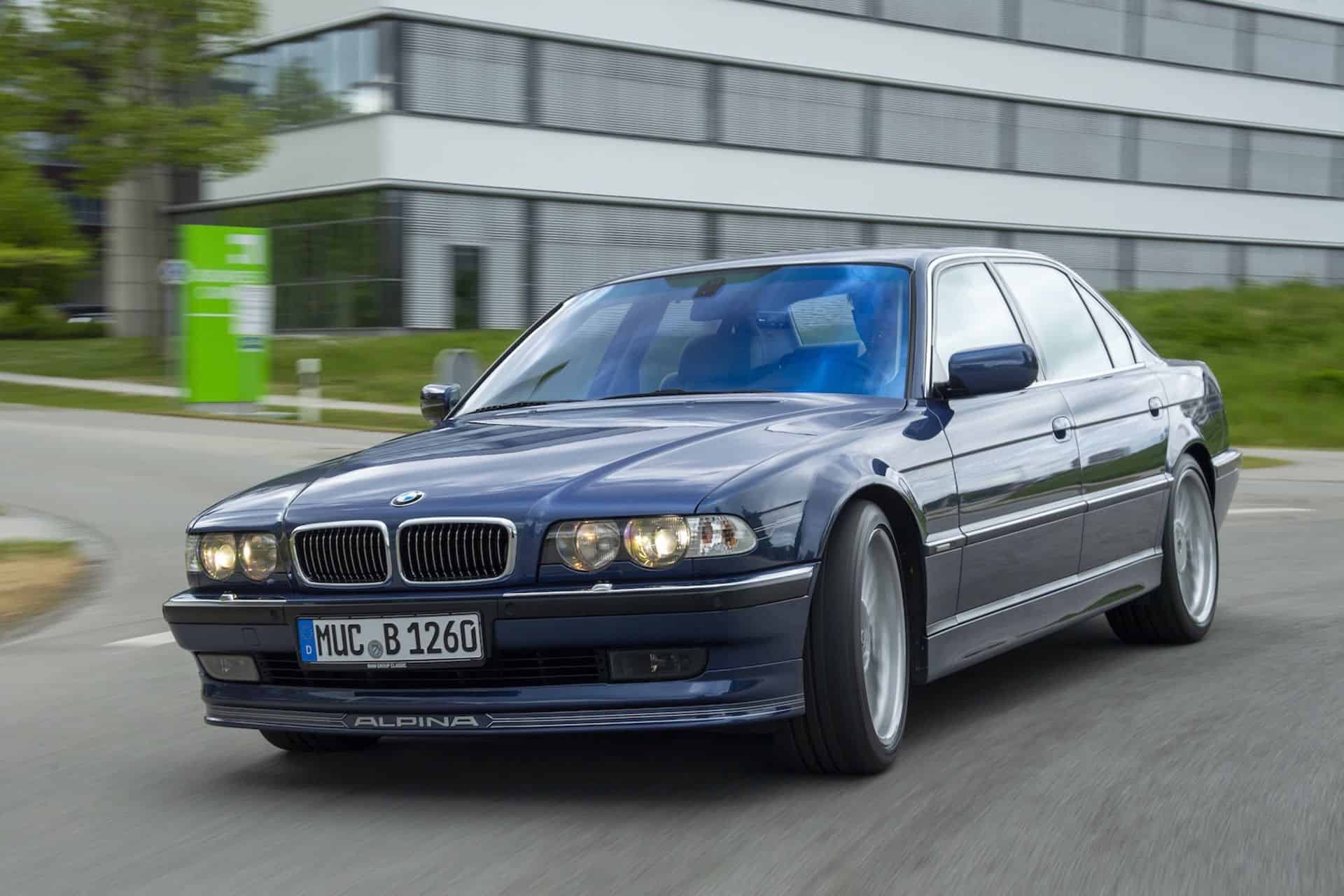
You simply cannot get more BMW, or more power, in a luxury sedan than in the E38-generation ALPINA B12. In the late 1990s, this elegant, oversized machine from the Allgäu region offered the sportiest way to drive a 7 Series. Today, just as it did nearly three decades ago, the B12 impresses with boundless long-distance comfort in the fast lane.
BMW ALPINA B12 6.0: The Ultimate E38 7 Series

ALPINA has since come under the BMW Group umbrella, and everyone is awaiting the first production models: highly exclusive versions of the BMW 7 Series and X7, slated to make their public debut in late 2027. Aside from a few ultra-exclusive one-offs, BMW has never been able to bring itself to build a genuine M7, so in the late 1990s the ALPINA B12 6.0 represented the ultimate option for the well-heeled executive.
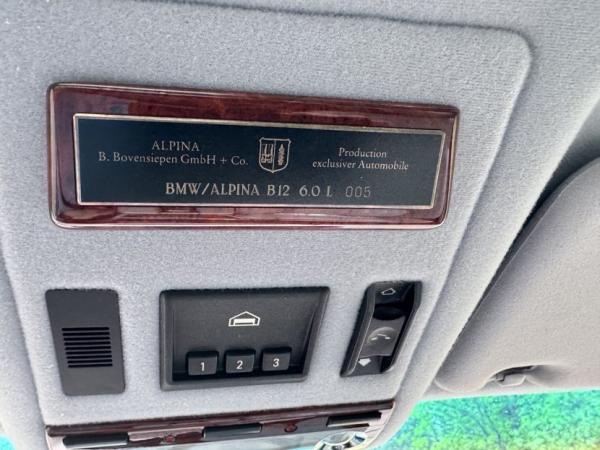
This blue four-door, bearing production number 005, features controls for the garage door opener and electric steel sunroof, plus a burl-wood-framed plaque serving as a certificate of origin: “ALPINA B. Bovensiepen GmbH + Co, Production of Exclusive Automobiles.” Decked out in full ALPINA regalia, including wheels with hidden valve stems and the signature “Fischer Ski” livery wrapping the body, this blue example is an extensively modified E38-generation B12 6.0 in original condition, with a mere 135,000 kilometers on the clock.
Why BMW Never Built A Real M7

Anyone searching for a B12 on the incredibly scarce used-car market will find very few examples, and most of those carry more than 150,000 miles. For most customers, the largest ALPINA model, based on the BMW 750iL, was an exclusive long-distance cruiser built to deliver maximum comfort at high speed on the endless highways of Europe or the US. Following the BMW 7 Series facelift in 1998/99, the car received a significant power boost: the previously offered 5.7-liter V12, producing 285 kW / 387 hp, was replaced by a newly developed engine.
Inside The 6.0-liter V12: Specs And Performance
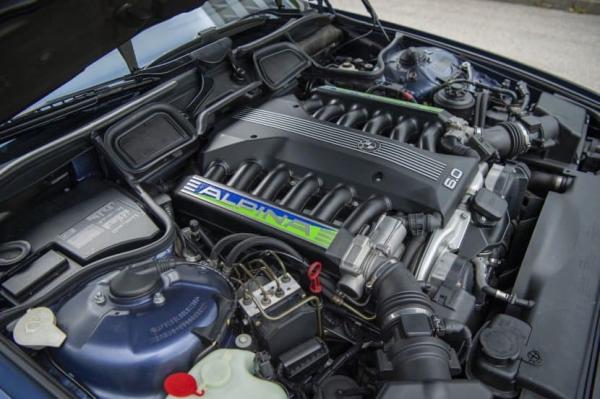
By increasing the displacement of the M73-generation BMW V12 from 5.4 to 6.0 liters, ALPINA raised output to 316 kW / 430 hp, so it’s no surprise the blue-faced instrument cluster carries a scale extending to 330 km/h. The ZF five-speed automatic could be shifted not only via the selector lever on the wide center console but also through the extensively modified leather steering wheel; the Switch-Tronic system allowed manual gear changes, a feature that was, in practice, more than superfluous given the engine’s massive displacement and 600 Nm of torque.
How Fast Is The BMW ALPINA B12 6.0 Really?
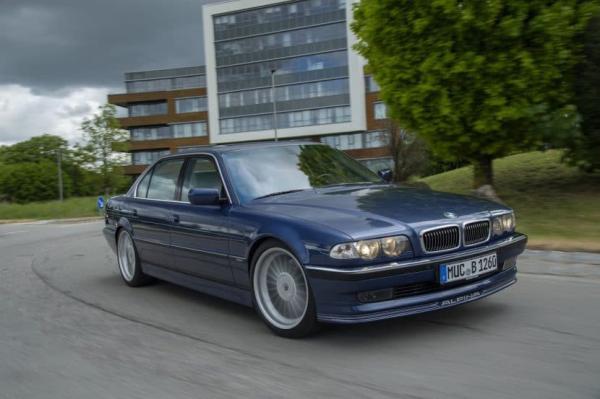
The BMW ALPINA B12 6.0 doesn’t quite reach the top speed suggested by its speedometer, even after the displacement increase and power boost. This exclusive ALPINA 7 Series model, of which fewer than 100 units were reportedly hand-built between 1999 and 2001, tops out at a genuine 290 km/h (181 mph), so the analog needle crossing the 300 km/h mark on the dial likely reflects a built-in margin of error rather than actual capability.
Despite the lack of turbocharging, which was simply not part of the equation at the time, the car pulls hard from the mid-range up; thanks to its torque, the Bavarian sedan gets from 0 to 100 km/h in under six seconds, accompanied by a deep, resonant exhaust note. At the turn of the millennium, that performance was just as impressive as the base price of 220,000 Deutsche Marks, a figure that could climb considerably higher with custom options.
Interior And Comfort Features Of The E38 ALPINA
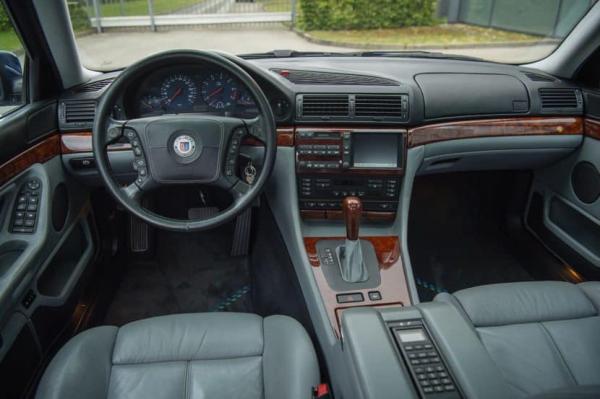
Luxury amenities were never the main focus of this particular car; despite its extended wheelbase, it lacks features like individual rear seats or massage functions. Occupants also face the small navigation screen typical of the era, a Philips Carin system that was state of the art at the time but looks dated now. On the plus side, the car has a grey full-leather interior that suits the blue metallic paint well, along with a car phone, partially electric rear seats with extendable headrests, and re-upholstery work by ALPINA’s specialists in Buchloe that noticeably elevates the E38 cabin. The rear side window sunshades are manually operated even in this long-wheelbase model, since unlike the E65 that replaced it, only the rear window blind here was ever electrically controlled.
Design Details: Taillights, Exhaust, And ALPINA Stripes
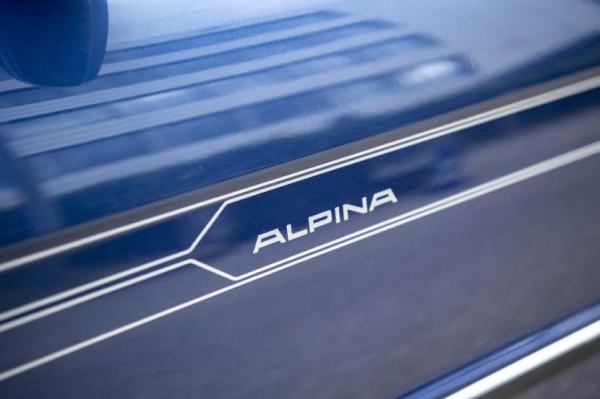
At the rear, this car skips the usual ALPINA B12 lettering. Instead, in the timeless view framed by the sharpened E38 taillights, you get subtle ALPINA stripes around the license plate and a four-pipe exhaust system, a rarity in this class and a treat for both eyes and ears. The level of comfort the BMW ALPINA B12 6.0 still delivers after almost three decades is genuinely impressive.
Despite the insulating glass and excellent, well-adjustable front seats, sportiness isn’t entirely absent, though the 4,600-lb curb weight makes itself felt on fast, winding roads. Servotronic power steering was available even then, as was carefully tuned suspension; despite riding on aggressive 20-inch wheels (245-section front, 275 rear), the sportiest 7 Series of its day behaved like an impressive cruiser, not one you’d want to challenge in the passing lane.
Driving the B12 6.0 On The Autobahn
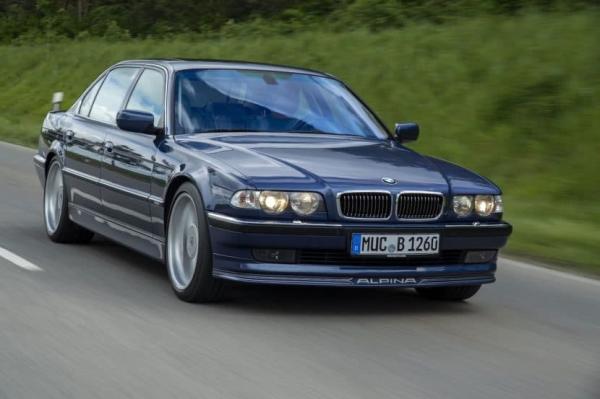
Even sports cars like a Porsche 993 Turbo or Ferrari F355 couldn’t shake the 5.13-meter-long ALPINA B12 on the highway if their drivers tried to make a run for it. And while the drivers of those Zuffenhausen and Maranello machines had engine noise roaring through the cabin and gripped the wheel tightly past 250 km/h, the B12’s driver heard little more than a gentle rush of wind, with the third act of Mozart’s opera The Abduction from the Seraglio playing through the bass-heavy sound system. That was maximum luxury in 1999.
Buying A BMW ALPINA B12 6.0 Today: Prices And Availability
Anyone looking for a car like this today needs good contacts and a lot of patience. Genuinely well-preserved European examples with under 125,000 miles and a complete service history are hard to find, partly because many cars ended up in the USA or, especially, Japan. Expect to pay at least 110,000 euros for a good one. Higher-mileage cars in average condition start around 70,000 euros.
[Text: Stefan Grundhoff; press-inform / Photos: BMW]

Related posts

Latest Post


No Comments