
This New Hypercar Wants You To Ride It Like A Superbike
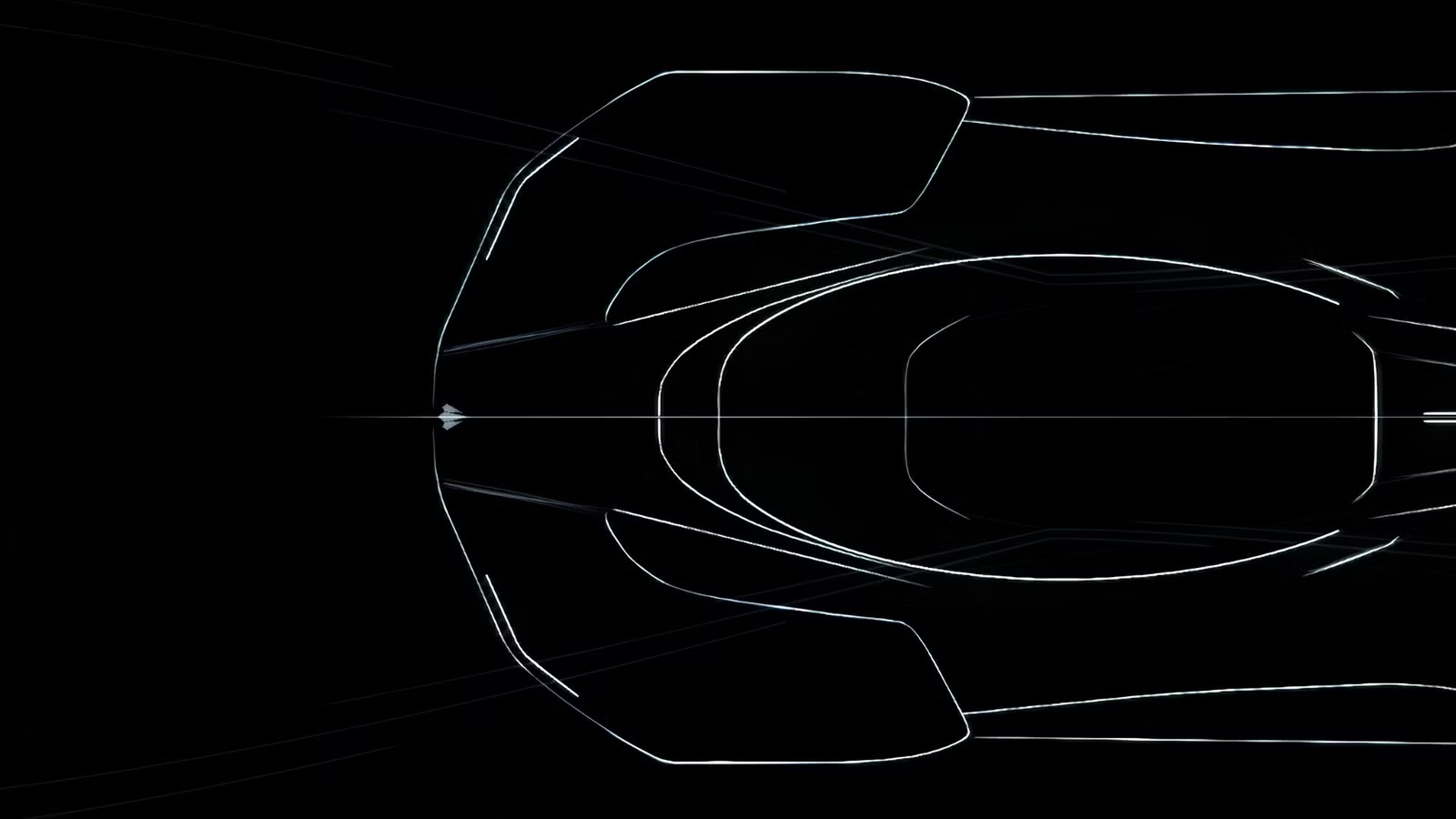
A Dutch startup called Sanrivatti revealed more of its hypercar concept designs this week, and the first thing you notice isn’t the power figure or the bodywork — it’s where the driver sits. Or rather, how. There’s no conventional bucket seat. Instead, the driver straddles a central platform in what Sanrivatti calls the Apex Position: a forward-leaning, motorcycle-style riding posture that puts the body prone and the head low, closer to a superbike racer than anything you’d find in a Huracán or a 720S.

The reveal landed June 24, and it’s already splitting opinion across the enthusiast world. Is this a genuine engineering philosophy — a logical endpoint for driver-focused hypercar design — or a startup fishing for headlines? The answer, based on what Sanrivatti has laid out, is more nuanced than either camp wants to admit.
What the Apex Position Actually Does to the Car
The engineering case for the Apex Position starts with center of gravity. A conventional reclined seat places the driver’s mass high and rearward. Straddle the car instead — torso pitched forward, weight distributed low across a central spine — and that mass drops significantly. In a mid-engine hypercar where every kilogram’s placement is deliberate, moving the heaviest single component (the driver) closer to the car’s rotational center isn’t a gimmick. It’s the same logic that drives Formula 1 teams to obsess over ballast placement to the gram.

The aerodynamic argument follows directly. With the driver prone rather than upright, the frontal cross-section shrinks. A lower roofline becomes structurally possible, which means a cleaner, lower drag coefficient and more predictable airflow to rear downforce elements. Sanrivatti’s design language — shown in teaser imagery released ahead of the full reveal — reflects this: the car sits dramatically low, with a profile that reads more like a closed-cockpit prototype racer than a road-legal supercar.

This New Supercar Weighs Less Than A Mazda Miata But Hits With 600 HP
This new supercar weighs less than a Mazda Miata and delivers 600 HP with raw feedback, instant response, and true driver-first engineering.
Gimmick or Genuine Innovation — And Who’s Done This Before

The motorcycle riding position isn’t entirely without precedent in four-wheeled machinery. The Acabion GTBO and various enclosed recumbent prototypes explored prone or semi-prone driver positions decades ago, largely in the context of land-speed efficiency rather than track performance. What Sanrivatti is attempting is different: applying that ergonomic philosophy to a full hypercar architecture with downforce, lateral grip, and road legality as the design targets.
The skeptic’s case is real, though. A straddled position introduces questions that conventional seating has already solved. Lateral support under hard cornering — the kind of g-loading that pins a driver into a carbon bucket — works very differently when you’re not surrounded by a seat. Ingress and egress in a low, enclosed cockpit becomes a genuine engineering problem. And the sensory feedback loop that makes a great driver’s car — the way a well-tuned chassis communicates through the seat — is fundamentally altered when there’s no seat in the traditional sense. Autoblog’s coverage noted the “sitting like Batman” quality of the position, which captures both the appeal and the absurdity simultaneously.
The counterargument is that every radical driver interface looked absurd until it didn’t. The McLaren F1’s central driving position was dismissed as impractical theater in 1992. The F1’s layout is now considered one of the greatest packaging decisions in road car history.
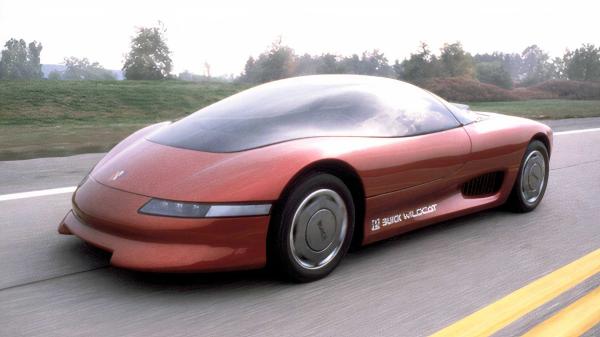
Buick Almost Turned The Wildcat Into A Mid-Engined Spaceship For The Road In The ’80s
In the 1980s, Buick nearly unleashed a carbon-bodied AWD supercar powered by a McLaren-tuned V6.
What Sanrivatti Is Really Saying About Hypercar Design

Strip away the novelty and Sanrivatti’s thesis is actually a coherent one: that the hypercar segment has optimized everything except the driver’s physical relationship to the machine. Suspension geometry, tire compounds, aerodynamic surfaces — all of it has been refined to extraordinary levels. But the driver still sits in roughly the same reclined bucket that road cars have used for decades, a compromise between comfort, visibility, and crash structure.
The Apex Position is a bet that there’s meaningful performance left on the table by rethinking that compromise entirely. Whether Sanrivatti can actually build a road-legal car around it — one that passes crash regulations, provides adequate visibility, and doesn’t destroy the driver after twenty minutes — is the question that separates a design philosophy from a production hypercar. Gearheads deserve to see that question answered with hardware, not just renders. The startup has earned attention. Now it needs to earn credibility.
Source: Sanrivatti

Related posts



Latest Post


No Comments