
BMW iX5 vs iX3 Photo Comparison: Neue Klasse, Two Sizes
Article Summary
- The new BMW iX5 and iX3 look closely related at first glance, but the larger iX5 gets unique lighting, a wider stance, and more X5-like proportions.
- Inside, both EV SUVs use BMW Panoramic iDrive, but the iX5 adds more space, higher-end materials, an opening sunroof, and an available passenger screen.
- The iX5 60 xDrive brings more power than the iX3 50 xDrive, while the iX3 should remain the lighter, more compact Neue Klasse SUV choice.
It has been half a decade since BMW launched its first SUV, the BMW iX. Today, BMW launches their third electric SUV ever, the iX5, which will run concurrent with the iX3 to satisfy most, if not all, EV SUV shoppers’ size requirements. The iX5 borrows liberally from the iX3 design — after all, they’re both part of the Neue Klasse family and the design very obviously illustrates that — but are they more different than they first appear? We compare the iX3 and iX5 in photos to find out.
Exterior Design

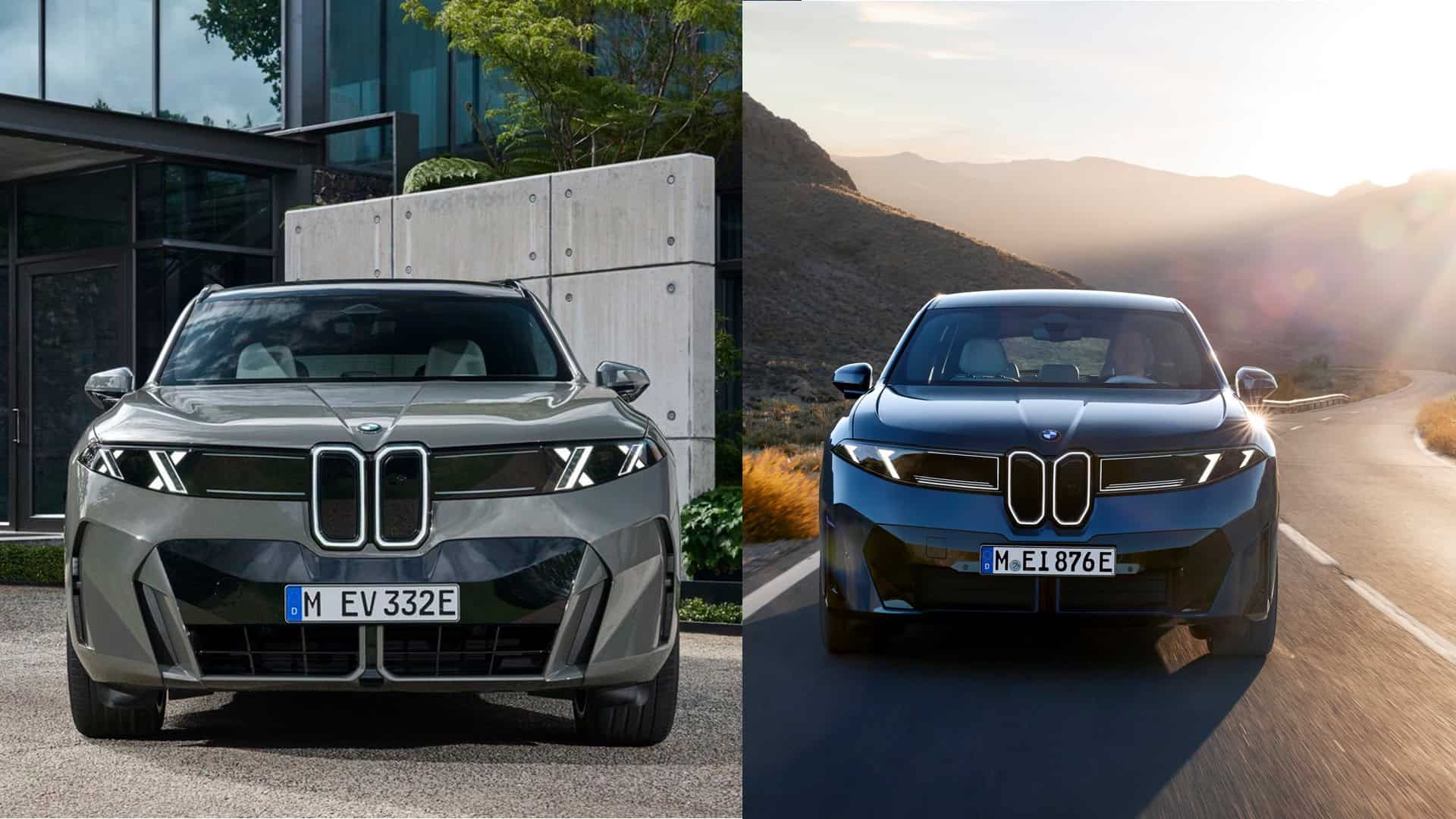
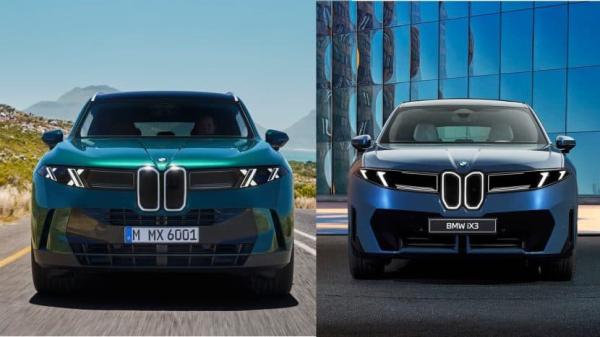
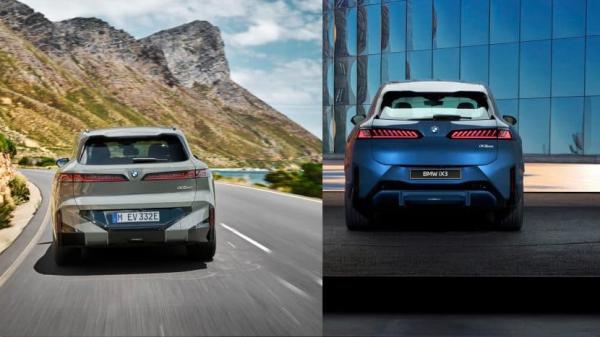
The NA5 BMW iX3 and G65 BMW iX5 are, at first glance, nearly identical. Key differences start in the front, where the iX5’s X-motif headlights denote it as the big brother. A slightly less angular kidney grille and proportionally increased angle on the hood’s character line are two other subtle tweaks that give the iX5 just a little bit more serious look. From the back, the iX5 enjoys a different lighting signature. There are slight differences in how BMW handles the rear bumper and diffuser area, too. The iX5 will offer larger wheels, which will help distinguish it from the side, but it’s also clearly a larger vehicle.
How much larger? We’ll break it down for you. The BMW iX5 measures 196.6 inches (4,994 mm) long; compare to the iX3, which measures 188.3 inches (4,783 mm). The iX5 stands 68.8 inches (1,748 mm) tall, while the iX3 stands 64.8 inches (1,646 mm). The iX5 is, predictably, wider at 78.7 inches (1,999 mm) compared to the iX3’s 74.6 inches (1895 mm). The iX5 gets about three inches (76 mm) additional front and rear track width, which is consistent with the difference between the last generation X3 and X5. So, while there’s a lot to see, in many ways the iX5 is exactly what BMW promised. An electric X5, little more, nothing less.
Interior Design
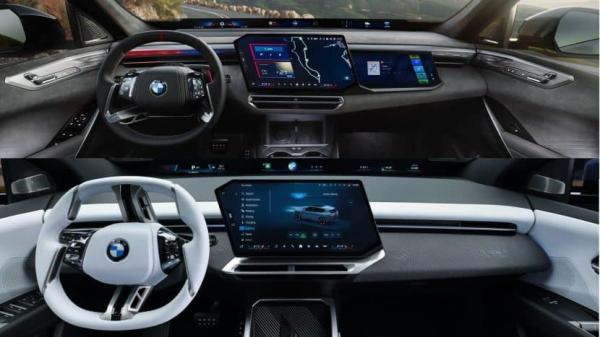

Moving inside, we again see small differences. While at their heart, both the iX3 and iX5 use pretty much identical running gear in the cockpit, the iX5’s is clearly roomier and looks to step things up a little bit in terms of material quality. Pictures only do so much for that, but BMW says fancier materials like slate are on the way to the iX5’s cabin. You won’t find that in the iX3. Typically, the X5 always feels a little bit more solid than the X3. But we’ll have to wait for production to ramp up before we can fairly assess build quality. Huge win: the iX5’s sunroof will actually open. That’s certainly one advantage over the iX3.
Performance
The iX3 is certainly no slouch. The iX3 50 xDrive debuts with 469 hp and 476 lb-ft (645 Nm) of torque. A lighter model, the iX3 40, is available in Europe offering slightly less power. All we have for reference currently is the iX5 60 xDrive, which occupies a similar space as the iX3 50 xDrive does. It’ll do everything just a smidge quicker, with 578 hp and 593 lb-ft (805 Nm). We expect the iX3 and iX5 comparison to remain true to their lineage here. While the iX5 will be larger and more powerful, we expect minimal losses in agility and handling areas. What can we say? BMW knows a thing or two about making large heavy objects feel fast.
Technology
There’s even less to discuss here than with the interior. Functionally identical tech serves drivers in either SUV. BMW Panoramic iDrive and Panoramic Vision work together to give drivers most essential information fairly immediately. The iX5 does offer a passenger screen, which the iX3 omits from its option list. But other than that, expect the usual beeps and boops here. Thankfully, that includes Apple CarPlay and Android Auto integration.
What do you think? Did BMW deliver a slam-dunk of an electric X5? Or do you think the iX3 pulls off the Neue Klasse design better? No matter how you compare the two, one thing is clear: Neue Klasse design is spreading throughout the BMW lineup. It’s beginning to look like only sharp-eyed enthusiasts will be able to readily tell apart some of BMW’s most iconic models. That isn’t necessarily a bad thing.

Related posts



Latest Post




No Comments