
This Honda Kei Car Hid Its Turbo Engine Like A Bugatti Chiron
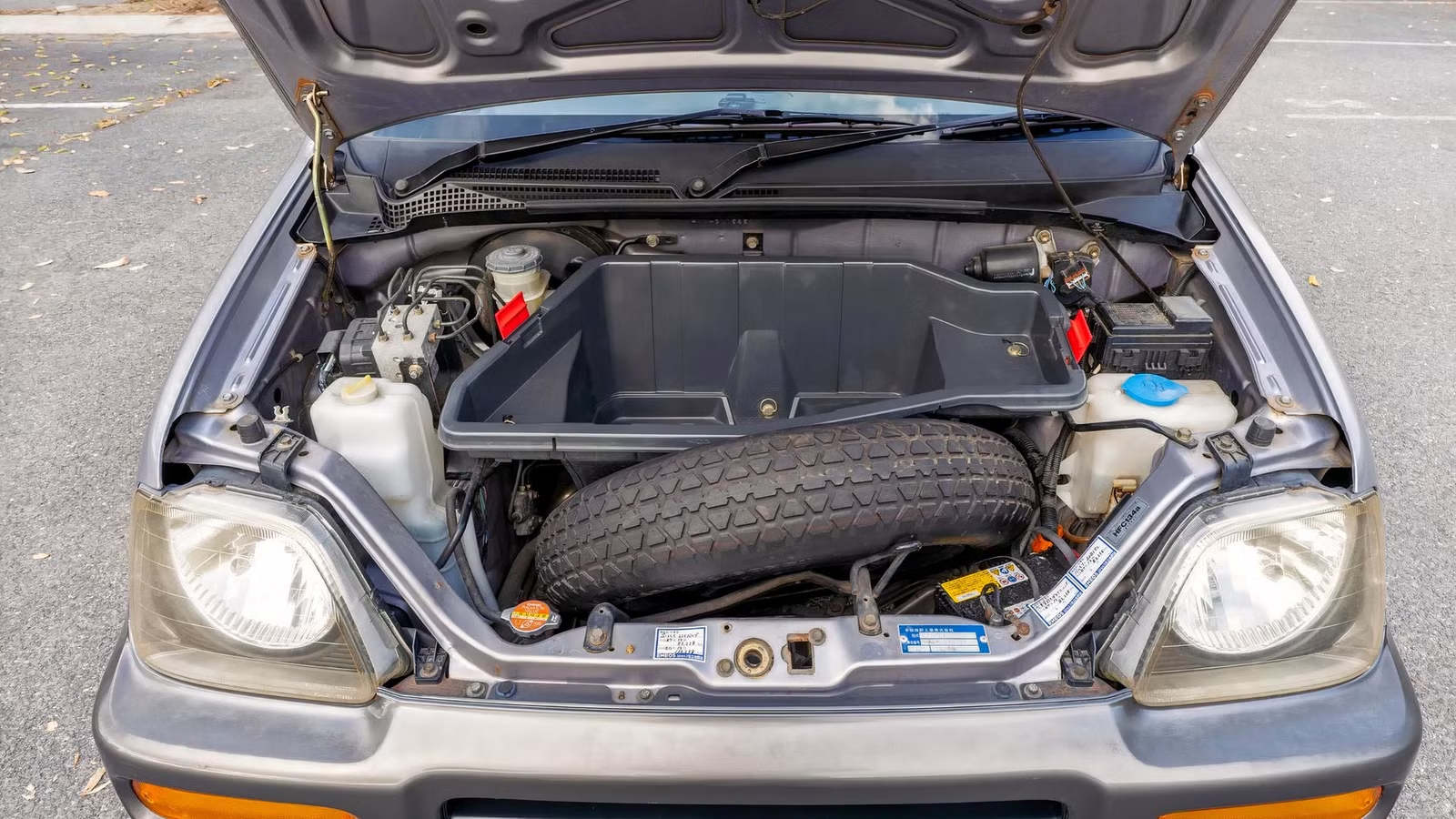
The Bugatti Chiron puts its engine behind the driver and ahead of the rear axle. So does the Honda Z UM4 — a turbocharged, all-wheel-drive kei hatchback that just became available to US buyers and weighs less than a modern economy car’s engine alone. That’s not a joke. It’s a genuine mid-engine layout, buried inside a sub-1000 kg package that costs a fraction of a used Civic.

The second-generation Honda Z, designated UM4, is one of the more quietly radical things Honda ever built. While the rest of the kei-car world was stuffing small engines under hoods or over rear axles for packaging simplicity, Honda relocated the powertrain amidships — a decision that makes almost no financial sense for a budget-class microcar, and makes complete engineering sense for anyone who cares about weight distribution and handling balance. It’s now on US soil, and the sleeper-build crowd is paying attention.
Mid-Engine In A Kei Car Is Genuinely Absurd Engineering
Most kei cars follow one of two layouts: front-engine front-wheel-drive for packaging efficiency, or rear-engine rear-wheel-drive for simplicity. Mid-engine placement — where the powertrain sits behind the front axle but ahead of the rear — is reserved for cars where handling is the entire point. Think Porsche Cayman, Ferrari 296, the Chiron. The reason is weight: centering mass between the axles lowers polar moment of inertia, which means the car rotates more predictably and responds faster to steering inputs. It’s physics that costs money to implement, which is why virtually no budget car has ever bothered.

Honda bothered. The Z UM4 uses a turbocharged inline-engine mounted mid-ship, driving all four wheels. In a car this small and light, that layout isn’t just unusual — it’s borderline absurd in the best possible way. The weight distribution benefits that Ferrari pays dearly to achieve are present here in a machine that fits in a parking space with room to spare.
The Mid-Engined, Turbocharged, 4WD Honda You Can Buy For $5,000
Packing supercar features in a small package, this might just be Honda’s most outlandish car ever.
The Specs That Make This Thing A Sleeper Cult Object

The Z UM4 runs a turbocharged kei-spec engine displacing 660cc — the legal ceiling for the Japanese kei-car class — paired with all-wheel drive. Kei regulations cap output at 64 horsepower, but that number lands in a car that tips the scales well under 1,000 kg. Power-to-weight math in a sub-tonne package with AWD traction and a mid-engine chassis is a very different conversation than the same 64 hp in a front-heavy econobox.
The turbo is the other piece. Naturally aspirated kei engines are fine for city use; a turbo changes the character entirely. Boost fills in the displacement deficit, and in a car this light, even modest peak power translates to genuine urgency off the line. Combine that with the AWD system putting power to all four corners and the mid-engine balance keeping weight centered, and you have something that behaves nothing like its displacement or its price tag would suggest.
What Is A Kei Car? History, Rules, And Buying Guide
Japan’s tiny kei cars feature 660cc engines, strict size limits, and are becoming popular imports in America despite regulatory hurdles.
Where US Buyers Can Actually Find One

The Honda Z UM4 has crossed the 25-year import threshold that governs most JDM gray-market sourcing in the United States, making it legal for road registration in most states under the federal exemption for vehicles 25 years old or older. That’s the same rule that opened the floodgates for R32 Skylines, first-gen NSXs in cleaner configurations, and a long list of JDM hardware that never saw an American dealer.
Specialist JDM importers are the primary sourcing channel — outfits that handle compliance, shipping, and documentation for exactly this class of car. Pricing varies by condition and mileage, but the Z UM4 remains well below the cost of a comparable used domestic hatchback, which is part of what makes it compelling. For the money a buyer might spend on a tired Civic hatch, a UM4 in solid shape represents a genuinely different kind of driving machine.
Only Two Were Made: Dodge’s Rarest Hemi Muscle Car Ever Built
It’s not a Challenger or a Charger. It’s the other Mopar muscle car that got the ball rolling. Today, this unicorn is worth millions.
Why Kei Engineering Has Become A Sleeper-Culture Obsession

The kei-car tuner scene has been building momentum in the US for years, driven by the same logic that made the AE86 and the EF Civic cult objects: light weight is a performance multiplier that money can’t easily replicate. A 900 kg car with 64 hp outruns its numbers on a back road in ways a 1,500 kg car with 200 hp simply doesn’t. Enthusiasts who grew up on Initial D and USDM JDM culture understand this instinctively.
The Z UM4 fits that tradition and then goes further. Most kei tuner cars are front-drive hatches or rear-drive kei trucks — the UM4’s mid-engine AWD layout puts it in a different category entirely. It’s the kind of car that rewards the person willing to dig into obscure Honda engineering history, and it represents exactly the sort of forgotten-model discovery that keeps the JDM import scene alive. Honda built something genuinely weird here. Gearheads are just now catching up to it.
The Z UM4 won’t show up in any mainstream conversation about performance cars. That’s precisely the point. It’s a 660cc turbocharged mid-engine AWD kei hatchback that Honda built decades ago for a domestic market that barely noticed it — and it’s now sitting in the sweet spot of US import eligibility, waiting for the right buyer to figure out what they actually have.
Source: Cars&Bids

Related posts





Latest Post


No Comments