
This Cheap Honda Cruiser Makes A Used Harley Look Like A Maintenance Gamble
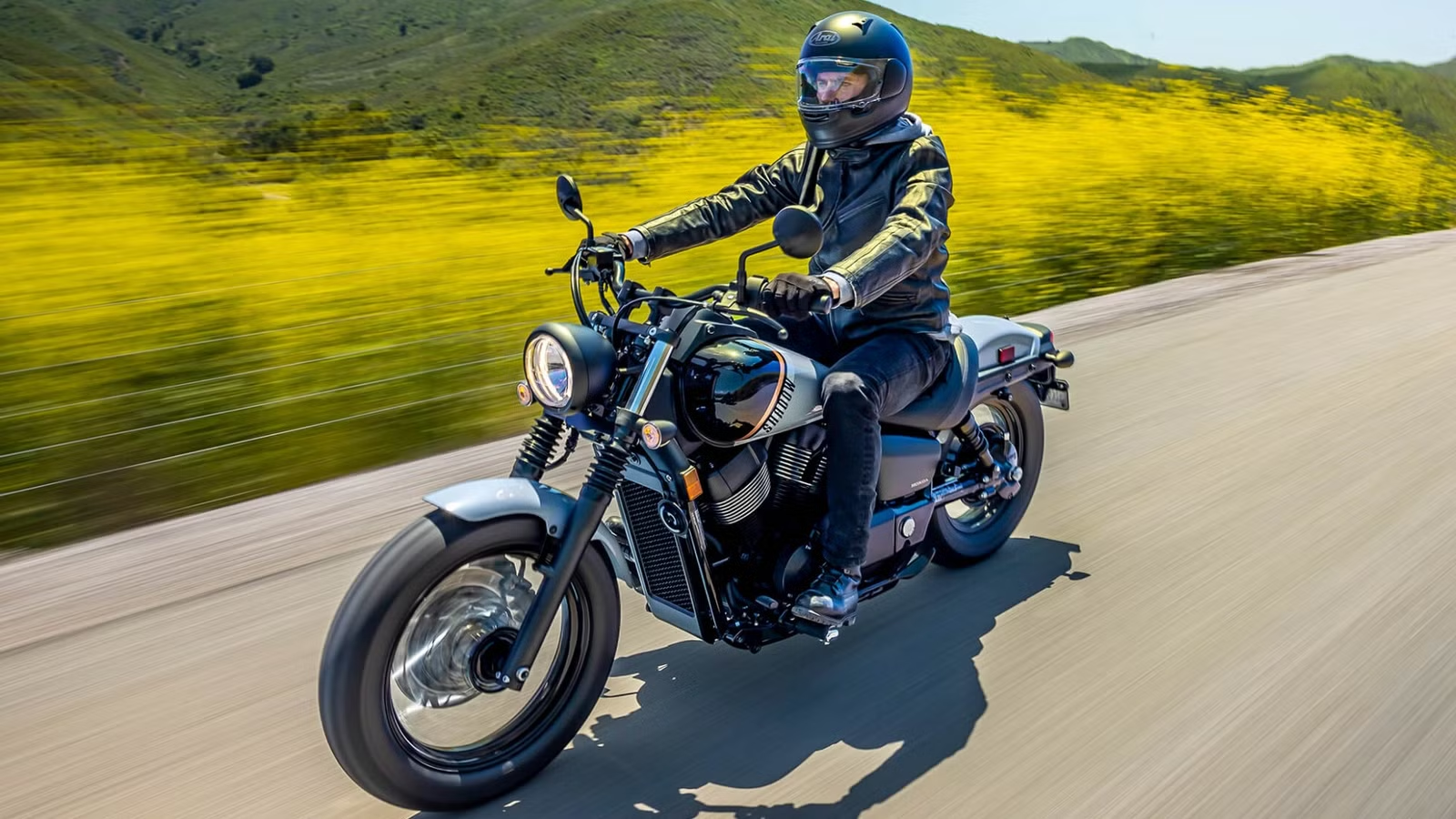
Buying an inexpensive cruiser usually means buying an old one. A limited budget can put a Harley-Davidson Sportster within reach, but it may also mean looking at a motorcycle that has passed through several owners, accumulated years of modifications, and gone through maintenance that is difficult to verify. The purchase price is only the beginning of the calculation.

Honda offers another way into a traditional V-twin cruiser for similar money. The alternative isn’t particularly exotic, and that is generally the point. It uses relatively simple mechanicals, has been around long enough for used examples to be plentiful, and removes some of the routine drivetrain maintenance that comes with other inexpensive cruisers.
Cheap Used Cruisers Can Get Expensive After The Purchase
A low asking price doesn’t necessarily make a motorcycle inexpensive to own. Tires, fork seals, wheel bearings, brake components, batteries, neglected fluids, and old rubber parts can add up very quickly when you get a cheap bike. Age can matter just as much as mileage, particularly when a motorcycle has spent long periods sitting in less than ideal conditions.

Modifications introduce another variable. Cruisers are commonly fitted with different exhaust systems, intake components, handlebars, lighting, seats, and suspension parts, and older motorcycles don’t always come with documentation showing who performed that work. None of those things automatically makes a used bike a bad purchase. They simply give the buyer more to inspect before deciding whether a $4,000 motorcycle is actually a $4,000 motorcycle.
An Older Harley-Davidson Comes With More Questions About Its Past

An Evolution-powered Sportster is a useful example because the motorcycles are plentiful and mechanically straightforward by Harley standards. They also have several drivetrain service points worth checking on an older example. Harley’s maintenance schedules call for inspection and adjustment of the rear drive belt, checks of the primary chain, clutch inspection or adjustment, and replacement of transmission lubricant in addition to normal engine-oil service.
That doesn’t make a Sportster unreliable, and a well-maintained example can make an excellent used cruiser. The uncertainty comes from buying one after somebody else has been responsible for all of those items for 10, 15, or 20 years. Harley’s documentation specifically warns that an incorrectly adjusted primary chain can accelerate chain and sprocket wear, for example. Service records therefore become particularly useful when evaluating a cheap older bike.
The Honda Shadow 750 Is The Boring Alternative In The Best Possible Way

The Honda Shadow 750 approaches the same basic cruiser job with very little mechanical drama. In later Aero and Phantom form, it uses a 745cc liquid-cooled 52-degree V-twin, programmed fuel injection, a five-speed transmission, and shaft final drive. Honda has kept that basic combination in production for years rather than continually chasing larger engines or substantially higher output.
That conservatism makes more sense on the used market than it does on a specification sheet. There is no six-speed gearbox, huge displacement figure, or particularly impressive horsepower number to advertise. Instead, the Shadow combines a conventional SOHC engine with a 9.6:1 compression ratio and three valves per cylinder. Honda itself emphasizes the fuel injection and shaft drive when discussing the model’s ease of ownership.
Its 745cc V-Twin Was Built For Miles Rather Than Horsepower

The Shadow 750 was never intended to be a high-output cruiser. The 745cc V-twin uses a modest 9.6:1 compression ratio, three valves per cylinder, and liquid cooling, with later models adding programmed fuel injection. The result is a reliable engine designed around predictable power delivery and everyday road use. That relatively conservative design is a big factor in what makes an older Shadow appealing when the priority is just to put down a lot of miles.
That also means there isn’t much reason to judge the Shadow against a Sportster 1200 on outright performance. The larger Harley has a substantial displacement advantage and offers a different riding experience. The Honda makes its case by asking relatively little of someone who primarily wants to commute, ride back roads, or spend a weekend cruising without turning ownership into another hobby.
Shaft Drive Removes One More Maintenance Job

The Shadow’s shaft final drive is particularly useful on an inexpensive used motorcycle. There is no exposed drive chain requiring regular cleaning, lubrication, and tension adjustment, and there is no rear drive belt to inspect and adjust as specified in Harley’s Sportster maintenance schedule. Power simply travels through the enclosed shaft assembly to the rear wheel. Honda continues to use the arrangement on the Shadow Phantom and Aero today.
Shaft drive isn’t maintenance-free, and that distinction is important. The final-drive assembly still contains lubricant, seals, bearings, and mechanical components that can eventually require attention. It does, however, remove a recurring external-drive maintenance item from the owner’s list. On a motorcycle being bought specifically because it is inexpensive and uncomplicated, that is a meaningful advantage.
The Shadow Still Needs Regular Service, Just Not Much Drama

The rest of the Shadow still needs normal motorcycle maintenance. Honda’s 2015 Shadow Phantom schedule, for example, specifies engine-oil replacement every 8,000 miles or 12 months after the initial service. Valve clearance is also an inspection item, along with spark plugs, coolant, brakes, fuel lines, and the other components expected on a liquid-cooled motorcycle.
That is worth remembering when looking at particularly cheap examples. The Shadow’s simple mechanical layout doesn’t compensate for old tires, leaking fork seals, contaminated brake fluid, neglected coolant, or an owner who ignored valve inspections. Its advantage isn’t that nothing ever needs servicing. Honda simply gave it a conventional maintenance schedule without adding much complexity to the ownership experience.
Used Shadow 750s Can Be Remarkably Cheap

Depreciation is where the Shadow becomes especially interesting. JD Power currently places a 2014 Shadow Aero at $3,465 average retail and $2,635 low retail, while a 2015 Aero sits at $3,995 average retail. A 2015 Shadow Phantom is similarly valued at $4,085 average retail. These aren’t asking prices from one unusually optimistic or desperate seller, but standardized valuation figures for motorcycles that originally listed for considerably more.
Spending more doesn’t necessarily mean buying something dramatically different underneath. A 2020 Aero carries a $5,820 average retail value according to JD Power, while the equivalent Phantom is $6,435. Even a 2022 Aero is valued at $6,660 average retail. The Shadow therefore covers a broad part of the used-cruiser market without forcing a buyer into a particularly old motorcycle just to get the price down.
Aero, Phantom, And Spirit Models Give Buyers Several Versions To Choose From

The Aero is the traditional-looking member of the family, with deeper fenders, more chrome, and styling aimed squarely at the classic American cruiser formula. The Phantom takes the same basic 745cc engine and shaft-drive layout in a darker and somewhat leaner direction. Both therefore provide substantially different appearances without changing the basic ownership proposition.
For buyers willing to shop for older models, Honda also offered the Shadow Spirit 750. The Spirit C2 took the same basic cruiser formula in a different direction, with a narrow 21-inch front wheel, less bulky fenders, and a leaner profile than the more traditional Aero. That makes it worth considering for riders who like the Shadow’s mechanical simplicity but don’t necessarily want its full classic-cruiser styling. Earlier examples can be carbureted, however, so buyers specifically looking for fuel injection will need to pay attention to the model year
The Shadow 750 Makes The Most Sense For Someone Who Just Wants A Cruiser

There are plenty of reasons someone might still choose the Harley. A Sportster offers a different engine character, an enormous catalog of parts, and decades of Harley-specific culture behind it. Someone who wants to modify the motorcycle extensively may even view an older Sportster’s long list of available components as an advantage rather than a liability.
The Shadow makes the stronger argument when the motorcycle itself isn’t supposed to become a project. A used example can cost around $3,000 to $5,000 depending on year and condition, while still providing a fuel-injected V-twin and shaft drive. For someone who wants an inexpensive cruiser to ride rather than another machine to constantly think about, being the boring choice starts to look pretty cool.
Source: Honda, Autotrader, JD Power, Harley-Davidson

Related posts


Latest Post


No Comments