
Harley Built A 120-HP Cruiser That Outpowered The Indian Scout Bobber
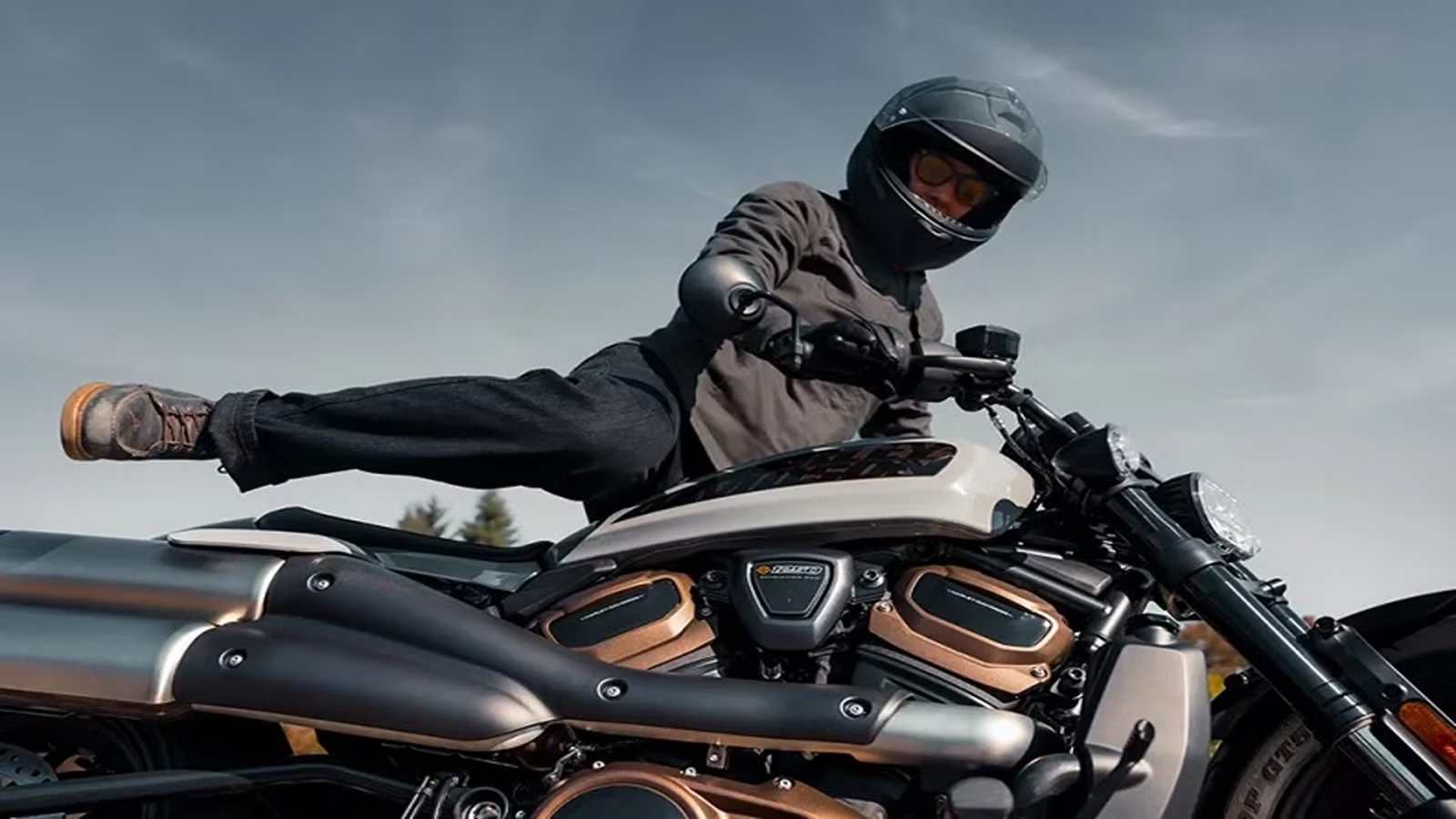
For years, the American middleweight cruiser fight looked one-sided. Indian Motorcycle had a modern, liquid-cooled V-twin that revved freely and made real power, while Harley-Davidson kept faith with the air-cooled formula its smaller cruisers had used for generations. Riders loved the heritage, but the spec sheets told an awkward story for Milwaukee. Harley’s answer took years to arrive. When it did, it didn’t just close the gap on Indian’s stripped-back bobber. It blew straight past it, and it shed weight while doing so.

How Indian’s Scout Bobber Set The Middleweight Benchmark

The Indian Scout Bobber took the liquid-cooled Scout and stripped it to the essentials, with chopped fenders, a slammed stance, and blacked-out hardware. Its original 1,133cc V-twin made 100 hp and 72 lb-ft. Strong numbers for a bike this low, this simple, and this easy to throw a leg over.
Indian updated the formula for 2025 with the new SpeedPlus 1250. Boring the cylinders from 99 mm to 104 mm took displacement to 1,250cc, and output climbed to 105 hp and 82 lb-ft at 6,300 rpm. Indian called the engine at least 70% new, and it weighs 10 lbs less than the unit it replaced. Indian quotes 542 lbs in running order and a 25.6-inch laden seat height, and the bike still starts at just $12,999 for 2026. Modern engine, low seat, low price. A tough combination to beat.
The Harley-Davidson Sportster S Outmuscles The Scout Bobber

The result was the Harley-Davidson Sportster S, launched for 2021 as the first liquid-cooled bike to wear a nameplate that had used air-cooled V-twins since 1957. Harley’s smaller cruisers had always been stripped-down motorcycles powered by air-cooled V-twins. That simplicity built a loyal following, but the old formula struggled to keep up on outright power. The fix came from a strange place for a cruiser maker. Harley had developed an all-new liquid-cooled V-twin platform for its first-ever adventure bike. Rather than develop yet another air-cooled engine, Harley borrowed that new platform, retuned it for a cruiser, and built a low, muscular bike around it.
Its Revolution Max 1250T V-twin makes 121 horsepower at 7,500 rpm and 93 lb-ft of torque at 6,000 rpm. Against the 2025 Scout Bobber, that is a 16 HP and 11 lb-ft advantage, and the gap was wider still against the older 1,133cc bike. The Sportster S also hits peak torque 300 rpm sooner than the Indian, so the extra shove lands lower in the rev range, right where a cruiser spends its day. Harley now lists it from $15,999 before fees, which makes it the pricier bike by a clear margin.
The Revolution Max 1250T Engine Behind Harley’s Power Advantage

The Revolution Max 1250T shares its 1,250cc displacement with the engine in Harley’s Pan America adventure bike. For cruiser duty, Harley tuned it to make less peak horsepower and a broader spread of torque, trading some top-end rush for stronger midrange pull.
It still revs like a modern engine, with peak power arriving at 7,500 rpm.
Power is half the story. The Sportster S weighs 502 lbs in running order, 40 lbs less than the Scout Bobber, so every one of its extra horses has less bike to move. That works out to about 4.1 lbs per horsepower for the Harley, against roughly 5.2 lbs for the Indian. Up front, it uses a 320 mm disc with a radially mounted Brembo monoblock four-piston caliper and cornering ABS. The Scout Bobber makes do with a 298 mm disc and a two-piston caliper.The suspension gap is just as wide. The Sportster S runs a 43 mm inverted fork and a piggyback rear shock, both fully adjustable. Since 2025, its rear wheel travel has grown from 2.0 inches to about 3.2 inches, while the Scout Bobber sticks with 2.0 inches at the rear.
Where The Scout Bobber Still Fights Back

The Indian claws back on price and approachability. The Scout Bobber undercuts the Sportster S by $3,000. Its seat sits at 25.6 inches laden, against 28.9 inches laden on the Harley, which matters for shorter riders. The Indian’s 3.4-gallon tank also outsizes the Harley’s 3.1 gallons. Owners chasing more power can have a dealer flash the Scout Bobber with the 101 Scout’s 111-hp tune for just $12,999, though that still leaves it 10 HP short of the Harley.
The Scout Bobber’s front fork offers more travel, too, at 4.7 inches against the Sportster S’s 3.6 inches. Its narrower 130/90 front tire avoids the wide 160 mm radial that testers found makes the Harley a chore at low speed. For years, Indian had the more modern middleweight engine. Harley overturned that with a 121-hp twin borrowed from an adventure bike, and it shed 40 lbs in the process. The Scout Bobber’s answer now is a lower seat and a smaller bill, not a bigger number.
Sources: Total Motorcycle, Harley-Davidson, Rider, Harley-Davidson, Indian Motorcycles.

Related posts


Latest Post


No Comments