
1977 Datsun 620 King Cab: 11 Years Ahead of Chevy
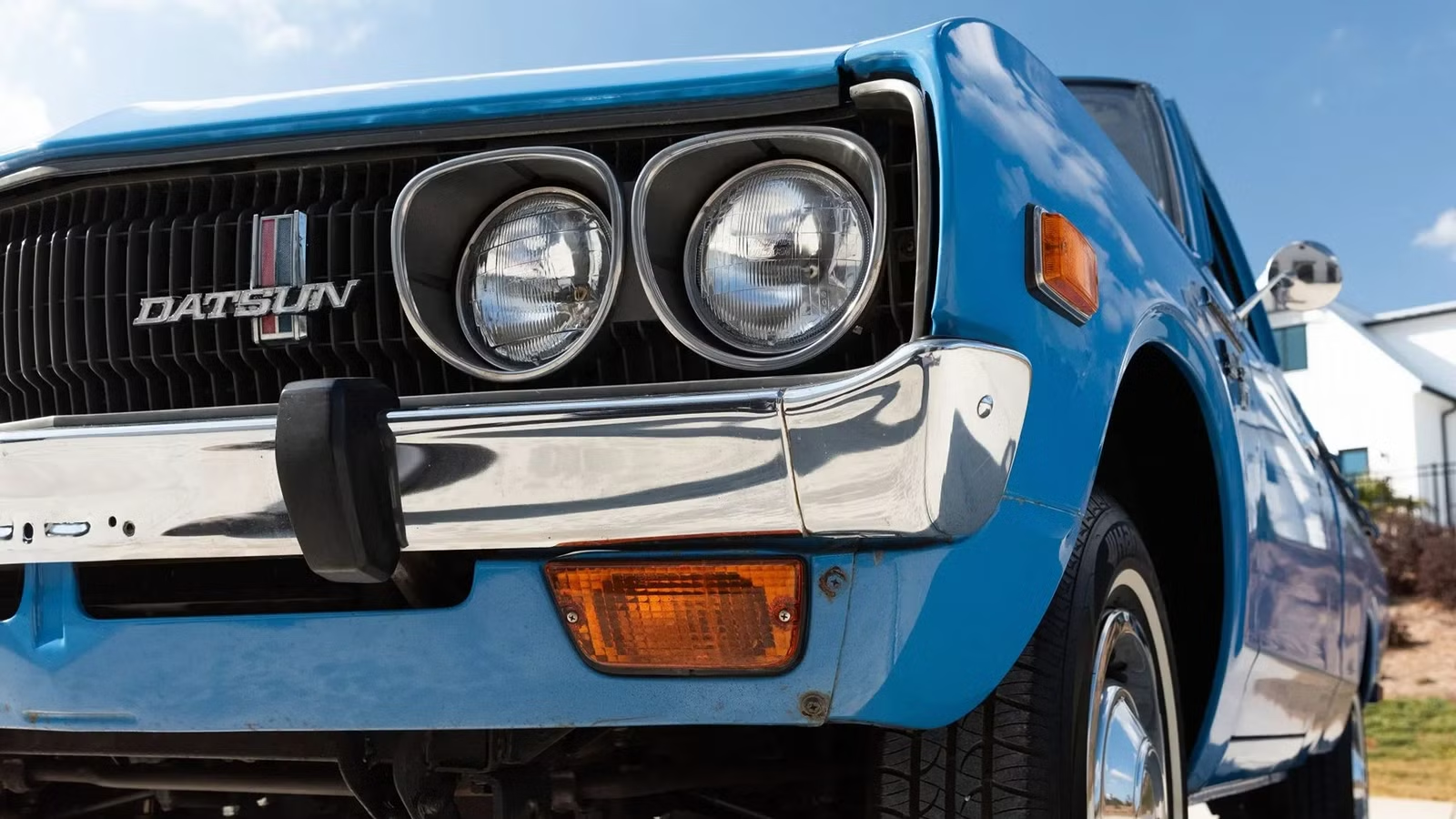
For decades, Detroit ruled the American truck market. Whether it was a truck to haul lumber, a truck to tow a trailer, or a workhorse on a job site, the domestic pickups got the job done. No questions asked. But in the 1970s, the American automotive landscape hit a major fuel crisis. Buyers wanted a cheaper-to-run option to save every penny they could.

Believing small trucks were merely cheaper, bare-bones tools no one would want, General Motors made a fatal mistake. An overseas competitor took advantage and pioneered a feature so practical it transformed the compact pickup segment. The real humiliation wasn’t that Chevrolet got beaten by an underdog, but how long it took to come back once the dust settled.
The Fatal Flaw in U.S. Truck Strategy
During the mid-1970s, fuel economy became a priority for American drivers almost overnight. Fuel prices skyrocketed, making massive domestic V8s a financial liability because of their heavy fuel consumption rather than a status symbol. At the same time, small Japanese pickups were ideally positioned to capture rapidly shifting market sentiment: they were light, well-constructed, and, most importantly, very frugal to run.

Despite the writing being clearly on the wall, Detroit refused to let go of the formula that made it successful in the past and reduced compact pickups to a primary family vehicle or a work truck. American executives saw the imported mini-trucks as low-margin utilitarian necessities built for economic reasons rather than anything else; they saw these trucks as having cramped, fixed seats and practically no interior storage space.
While Dodge introduced its full-size Club Cab in 1972 by adding 18 inches of extra cab space, and Ford followed with the full-size SuperCab in 1974 by adding 22 inches to the conventional cab, Detroit still reserved these vehicle classes for full-size trucks. Detroit reserved extended cabs exclusively for massive, gas-guzzling, full-size trucks meant for heavy-duty work. The idea of a budget-conscious buyer paying more for extra cabin space or added comfort in a tiny economy pickup was way out of the question for Detroit.
The Oversight That Left GM Vulnerable

That narrow vision by domestic manufacturers created a massive opening for an agile competitor from across the ocean, leaving Chevrolet, in particular, in an embarrassing position. Instead of engineering its own compact truck, General Motors relied on its imported, Isuzu-sourced Chevy LUV to capture the entry-level buyers.
GM treated the LUV as a bare-minimum placeholder purely to satisfy the corporate fuel standards. GM assumed that people would work around cramped spaces and rigid seats as long as the truck returned 30 miles per gallon. Because GM invested little in the LUV’s cabin, it offered no upgrades and kept the same interior layout until the 1980s. GM was already fighting an uphill battle against the 25 percent “Chicken Tax” import tariff on light trucks. Datsun, by contrast, swept the market with its compact truck.
The 1977 Datsun King Cab: The Tiny Truck That Disrupted The Industry

In 1977, Datsun rewrote the rules for compact pickups in the American market with its introduction of the Datsun 620 King Cab, marketed as the “Li’l Hustler,” instead of copying Detroit’s full-size formula or leaving the cabin cramped. Datsun stretched the back of the 620’s cab slightly to yield maximum interior space.
For the first time in compact truck history, owners could enjoy 11.3 cubic feet of dry, lockable interior storage behind the seats for toolboxes, luggage, and weather-sensitive equipment. As the rear cab was pushed back, Datsun replaced the standard rigid bench with reclining seats, offering comfort unheard of in the small-truck segment. Under the hood, a 2.0-liter L20B inline-four engine with an overhead-cam setup made a respectable 112 horsepower, delivered bulletproof Japanese reliability, and offered a 1,440-pound payload capacity.
That said, Dodge and Ford introduced the extended cab first; Datsun followed suit later. However, Datsun pioneered extended-cab packaging in the compact truck segment during the crisis era. Datsun recognized that small-truck buyers were using these vehicles as everyday primary transportation, not just throwaway fleet tools.
How Datsun Fixed The Compact Cab Problem

What made the King Cab special was that, from an engineering standpoint, it was a highly efficient package that solved real-world driver complaints without increasing the truck’s overall footprint, weight, or price tag. While most standard 1977 compact pickups offered a basic cab layout, the 1977 Datsun 620 King Cab featured an extended rear cab section with extra side glass, adjustable reclining bucket seats, and enough sheet metal behind the doors to create a highly usable space. Datsun transformed the compact pickup from just a work tool into a comfortable, versatile daily driver.
Datsun’s engineers subtly lengthened the wheelbase and tuned the suspension so that drivers no longer absorbed every road impact directly through their spines. Instead, the re-engineered cab geometry transformed bouncy, unrefined utility runs into a smooth, surprisingly composed highway ride.
American commuters, outdoor enthusiasts, and tradespeople rushed to the Datsun dealerships for a taste of it, and the 620 King Cab instantly became a favorite across the country. Datsun showed that driver ergonomics didn’t have to be sacrificed for fuel economy or utility, forcing a permanent shift in how small trucks were designed and sold in North America.
The 11-Year Advantage That Cemented Datsun

The ultimate proof of Datsun’s foresight was how long it took Chevrolet to respond to this shift and come up with its competitor. General Motors didn’t just miss the boat in 1977; it set the pattern for the entire next decade. Chevrolet didn’t offer any compact truck with an extended cab that could go head-to-head until 1988.
GM finally introduced an extended-cab configuration with a redesign of its full-size GMT 400 C/K pickups and the compact S-10 line for the late-1980s model year. Datsun dominated the market up to that point and captured an entire generation of buyers who became loyal customers while Chevrolet was still figuring things out.
The 1977 Datsun King Cab proved that small trucks didn’t have to be uncomfortable, and that Japanese automakers understood the evolving American lifestyle far better than Detroit did. By recognizing a simple human need and the desire to recline a seat and keep gear safe from the elements outside, Datsun executed one of the greatest packaging triumphs in automotive history, leaving Chevrolet to play catch-up for eleven long years.
Source: Datsun truck, Bring a Trailer, DatsunTrucks.com.

Related posts




Latest Post


No Comments