
Specialists Cut Apart 857 Mustangs To Make 1969 NASCAR Engines Fit
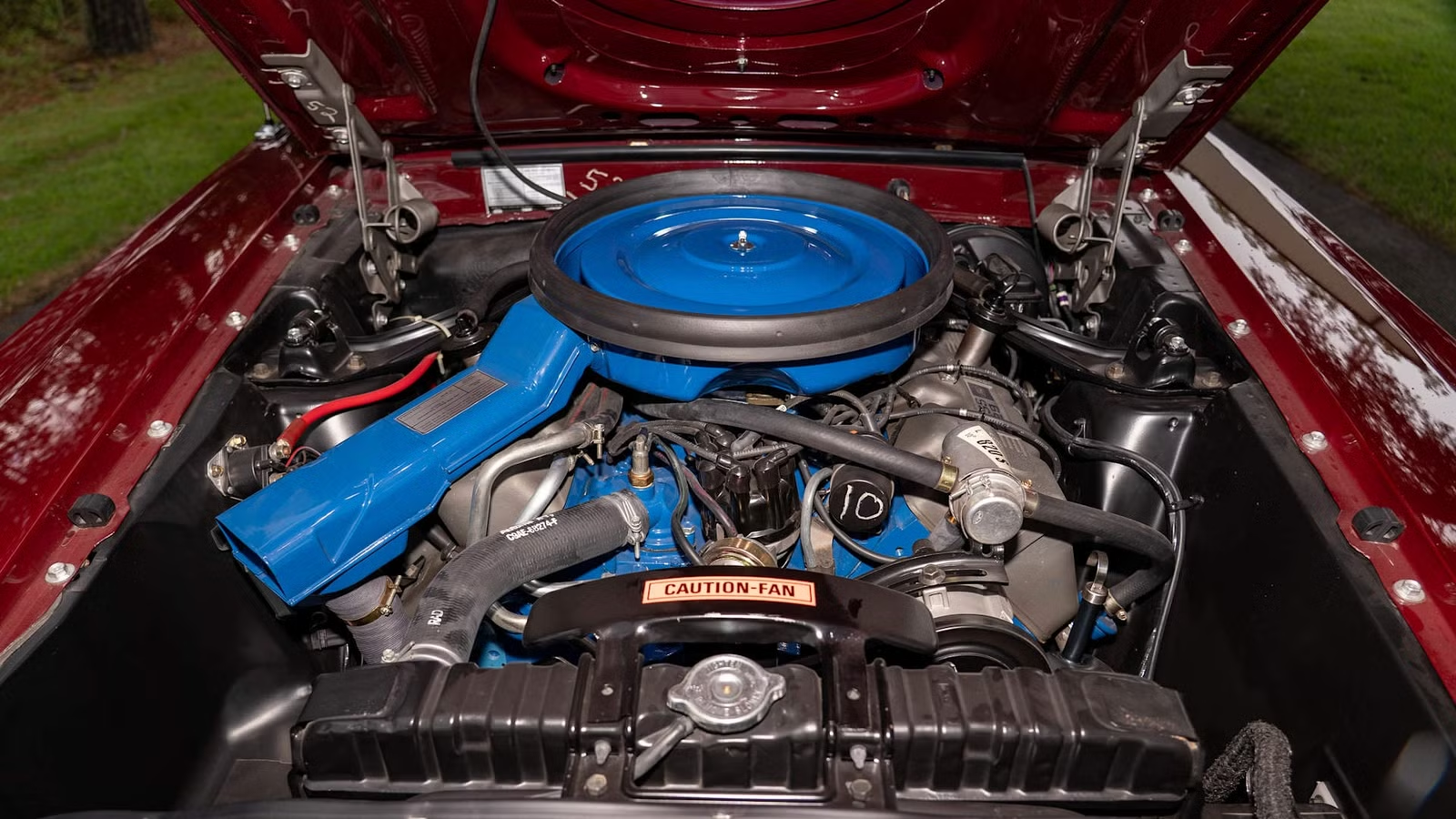
Ford built millions of cars during the 1960s, but some of its most important vehicles took an unexpected detour through a small shop in Brighton, Michigan. Kar Kraft helped develop machines ranging from Le Mans-winning GT40s to Trans-Am Mustangs, serving as a sort of private skunk works for Ford’s strangest engineering problems. Then Dearborn handed it perhaps the strangest assignment yet: prepping a few hundred Mustangs with NASCAR engines.
Kar Kraft Built Some Of Ford’s Wildest Race Cars

Every American schoolchild knows the story: Ford revolutionized mass production. From the Model T assembly line to the first mass-produced V8—Ford’s 1932 flathead—to the Mustang pioneering the pony car segment, Ford specialized in churning out millions of vehicles at a time. But what about the Blue Oval products that required less sledgehammer and more scalpel? Kar Kraft grew out of Ford’s advanced vehicle team and served as a private skunk works operation, developing some of its most legendary vehicles of the 1960s and early ’70s.
Kar Kraft was deeply involved in the 427-powered GT40 Mk II program that produced Ford’s 1-2-3 Le Mans finish in 1966, then the American-developed Mk IV that won Le Mans in 1967. It later pivoted to the high-revving, suspension-focused Boss 302 Trans-Am Mustangs. It excelled at endurance racers, road racers, and prototypes. It wasn’t the private shop Ford pawned projects off on to save a buck; Kar Kraft was one of the best in the business during Ford’s Total Performance era.
Ford’s New NASCAR Engine Created One Enormous Problem


By 1969, Ford had a new racing V8. The 429 was an “all-out competition design” with aluminum cylinder heads and semi-hemispherical combustion chambers. The street version would be rated at 375 horsepower and 450 lb-ft, but the architecture itself was created for NASCAR. The only problem: NASCAR homologation rules required Ford to sell the engine in a road car first.
The intermediate-size Torino was the Blue Oval’s NASCAR stock car. But somewhere between the racing engine designers and the boardroom, Ford decided to homologate the 429 in a production version of its iconic Mustang. A reworked hood and fenders would not be enough. The 429’s huge cylinder heads made the powerplant too wide for the Mustang’s shock towers that flanked the engine bay. Wrapping Mustang sheet metal around a 429 would essentially require reengineering the front of the car, starting with the suspension. So Ford called Kar Kraft.
The Boss 429 Was Ford’s Most Ridiculous Mustang Yet

Ford advertised the Mustang Boss 429 with 375 horsepower at 5,200 rpm and 450 lb-ft at 3,400 rpm. The production cars needed a heavy-duty drivetrain, 3.91:1 Traction-Lok rear differential, engine-oil cooler, competition suspension, and F60x15 tires to put all that power to the pavement. And it got power front disc brakes to bring it to a stop. Ford made another interesting choice, pairing the huge engine exclusively with a four-speed manual transmission. Considering what an overbuilt machine the Boss 429 was, its styling was the most understated aspect of the car. No billboard letters, just small fender decals. A Boss 429’s biggest giveaway is its massive hood scoop. But that’s a fully functional unit.

The other Boss Mustang demonstrates just how extra the 429 really was. The Boss 302 was ahead of its time, with the high-revving character and handling focus of a European sports car. Its extensive suspension work reflected its Trans-Am road-racing mission, and it featured a high-revving 302-cubic-inch V8 rated at 290 horsepower. If the Boss 302 was Ford’s mild-mannered “Dr. Jekyll,” the Boss 429 was the monstrous Mr. Hyde. Its single-minded mission: acceleration above all else.
It Took All Kar Kraft’s Know-How To Finish The Boss 429

Ford’s racing programs had been picking fights with shock towers for years. When Dearborn Steel Tubing turned ordinary Fairlanes into the 1964 Thunderbolt, the little intermediate needed its front shock towers heavily modified simply to swallow Ford’s 427 FE. By 1966, Ford had redesigned the Fairlane around FE big-block power and even built a tiny batch of factory R-code Fairlanes with dual-quad 427s. Factory access openings in the shock towers made servicing the tightly packed FE possible. The Boss 429 may have given some Ford engineers déjà vu.
The 429 required so much reworking that it was essentially a two-factory car. Each Boss 429 began life at Ford’s Dearborn operation but was completed by Kar Kraft in Brighton, Michigan, with finished cars receiving unique KK identification numbers. The car required a widened engine compartment, special front-suspension geometry, and bracing. The finished package also featured a trunk-mounted battery, rear stabilizer bar, staggered shocks, and other Boss-specific hardware before the cherry on top: a giant 429 and four-speed.
Ford Built Just 1,356 Boss 429 Mustangs Before Pulling The Plug

Mecum documents 857 Boss 429 Mustangs for 1969 and 499 production Boss 429 Mustangs for 1970, for a total of 1,356 production Mustangs across the two model years. An often-printed “859” figure comes from the 1969 Kar Kraft program but includes two Boss 429-powered Cougars.
And then, almost as quickly as Ford had created this elaborate solution, the world that justified it melted away. Rising insurance prices, gas prices, and a switch to lower-octane fuels forced Chevrolet to cancel drag-racing specials like the LS6 Impala and Mopar to finally cancel the Hemi.
Ford pulled out of all factory-sponsored motorsports after 1970; the Boss name survived for one final season on the 1971 Boss 351 before changing corporate priorities, and pressure on the performance-car market, ended the original Boss era. Ford built the Boss 429 for only 1969 and 1970, but rarity alone does not explain the car’s stature today. The engine had been created for NASCAR, the Mustang had to be re-engineered around it, and every finished Boss Nine took a detour through Ford’s tiny but mighty private engineering shop: Kar Kraft.
Sources: Ford Motor Company, Simeone Foundation Automotive Museum, Mecum Auctions

Related posts
Latest Post


No Comments