
This Buick Muscle Car Had More Torque Than A 426 Hemi
The muscle car horsepower wars resulted in legendary engines with appeal that still holds up today. Detroit’s Big Three were putting increasingly capable V8s into cars that were ostensibly intended for driving to work and back, so bragging rights were a pretty big part of the equation.

Still, it turns out that one of the biggest names in 1960s performance was quietly bested by a brand better known for building comfortable cars for grandparents. At least when it comes to torque.
The 426 Hemi Was The Engine To Beat
Chrysler’s 426 Hemi was one of the defining engines of the era. If car engines went on bedroom posters, it would have been on plenty.

The 426 was originally developed for racing, but of course it found its way into street cars, including iconic Dodge and Plymouth models like the Charger, Challenger, Road Runner, and ‘Cuda. With hemispherical combustion chambers and dual four-barrel carburetors, the 426 Hemi was rated at 425 hp and 490 lb-ft of torque. These were truly outrageous numbers at the time, fodder for a reputation that has endured for six decades.
Plenty of competitors were coming for it. Chevrolet had its 454 big-block, and Ford had the 428 Cobra Jet and Boss 429. Except there was one other engine that didn’t match the Hemi’s horsepower rating, but surpassed it in torque, and it came from an unlikely corner of the General Motors portfolio.
Buick Had A Different Approach To Muscle

Buick’s position in the market at the time was straightforward: comfortable, semi-upscale vehicles for people who wanted something nicer than a Chevrolet but weren’t ready for a Cadillac.
But that doesn’t mean the brand didn’t make some surprising moves, especially during the muscle car era. The Skylark Gran Sport arrived in 1965 with a 401-cubic-inch V8, and Buick would continue developing the Gran Sport with increasingly larger engines as the decade progressed. By ’67, there was a new family of V8s that would ultimately top out at 455 cubic inches.
Buick engineers weren’t just chasing horsepower, though. They stayed firmly in the company’s chosen lane, favoring high torque at low engine speeds for the sake of effortless acceleration and comfortable cruising.
That said, when GM lifted the engine size restriction on its midsize cars in 1970, Buick was ready to capitalize on the opportunity.
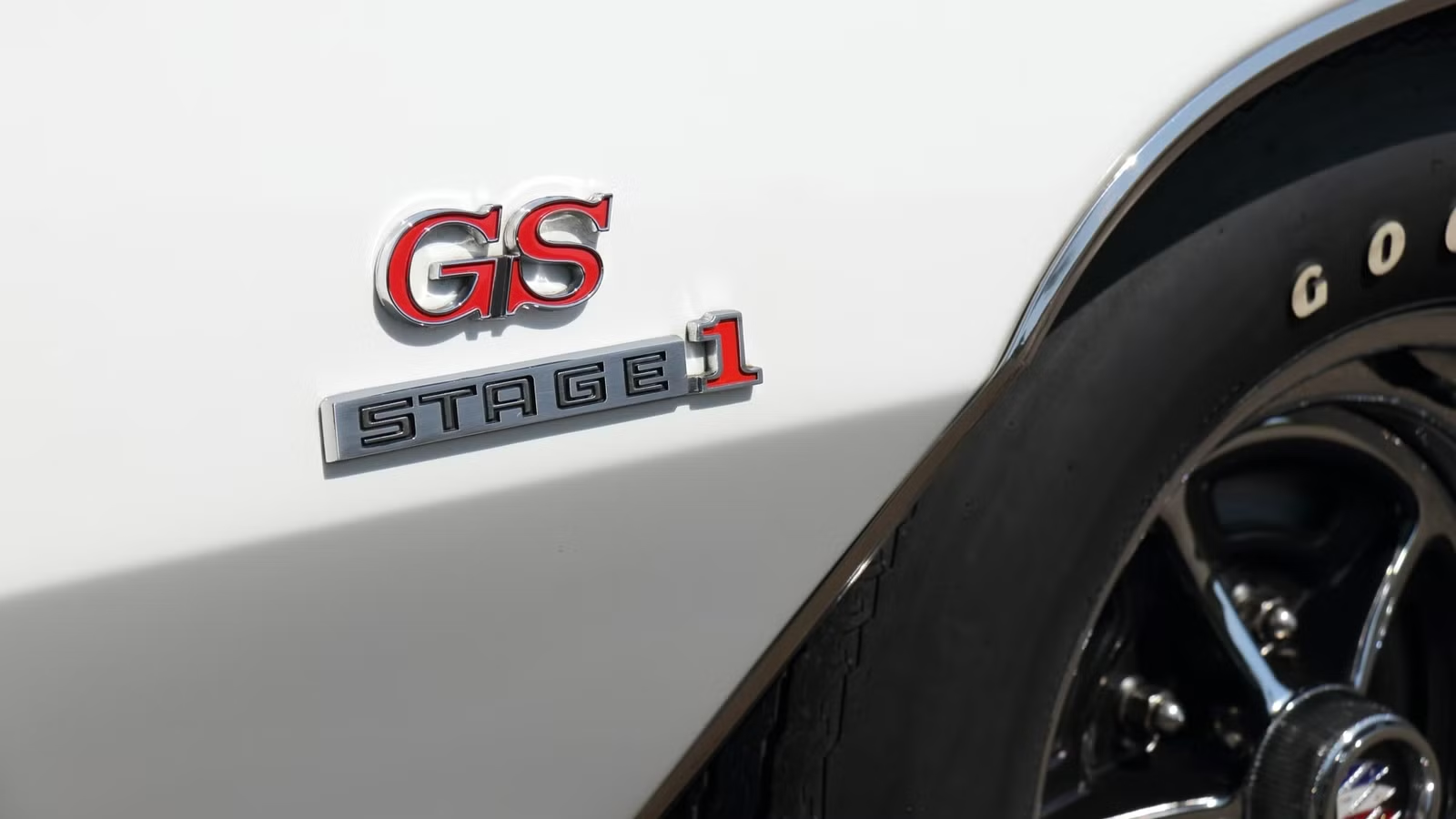
The 1970 Buick GS 455 Made 510 LB-FT Of Torque

The result was the 1970 Buick GS 455, with a 455-cubic-inch V8 producing a respectable 350 hp and a remarkable 510 lb-ft of torque. This was more than the 490 lb-ft that could be wrung out of the 426 Hemi, but the difference is actually even more interesting than the numbers suggest.
An optional Stage 1 package included bigger valves, different cylinder heads, a more aggressive cam, and a higher 10.5:1 compression ratio. It didn’t increase torque, but it did nudge output up to 360 hp, encroaching slightly more on the Hemi’s territory.
The Buick produced its peak 510 lb-ft at just 2,800 rpm, while Chrysler’s 426 Hemi produced its 490 lb-ft at 4,000 rpm. Both engines’ figures were measured using the SAE gross rating system of the era, making their advertised numbers a reasonable contemporary comparison, although neither should be confused with modern net horsepower and torque ratings.
More Torque Didn’t Necessarily Mean A Faster Car

To be clear, the tremendous torque of the Buick GS 455 didn’t necessarily make it faster than something packing a 426 Hemi. Instead, it made for a Buick that did Buick things extraordinarily well while giving its owners something to brag about to the competition or, maybe more importantly, their Chevy-driving neighbors.
The GS 455 didn’t become the icon that other muscle cars of the era did, and it certainly didn’t change the trajectory of Buick’s reputation then or now. But for one glorious moment in 1970, a company known for delivering peaceful Sunday drives to the mild-mannered and elderly managed to out-torque one of Detroit’s most celebrated V8s.
Sources: Buick, Chrysler, Mecum Auctions

Related posts




Latest Post



No Comments