
This Adventure Bike Strikes The Perfect Balance Between Power And Versatility
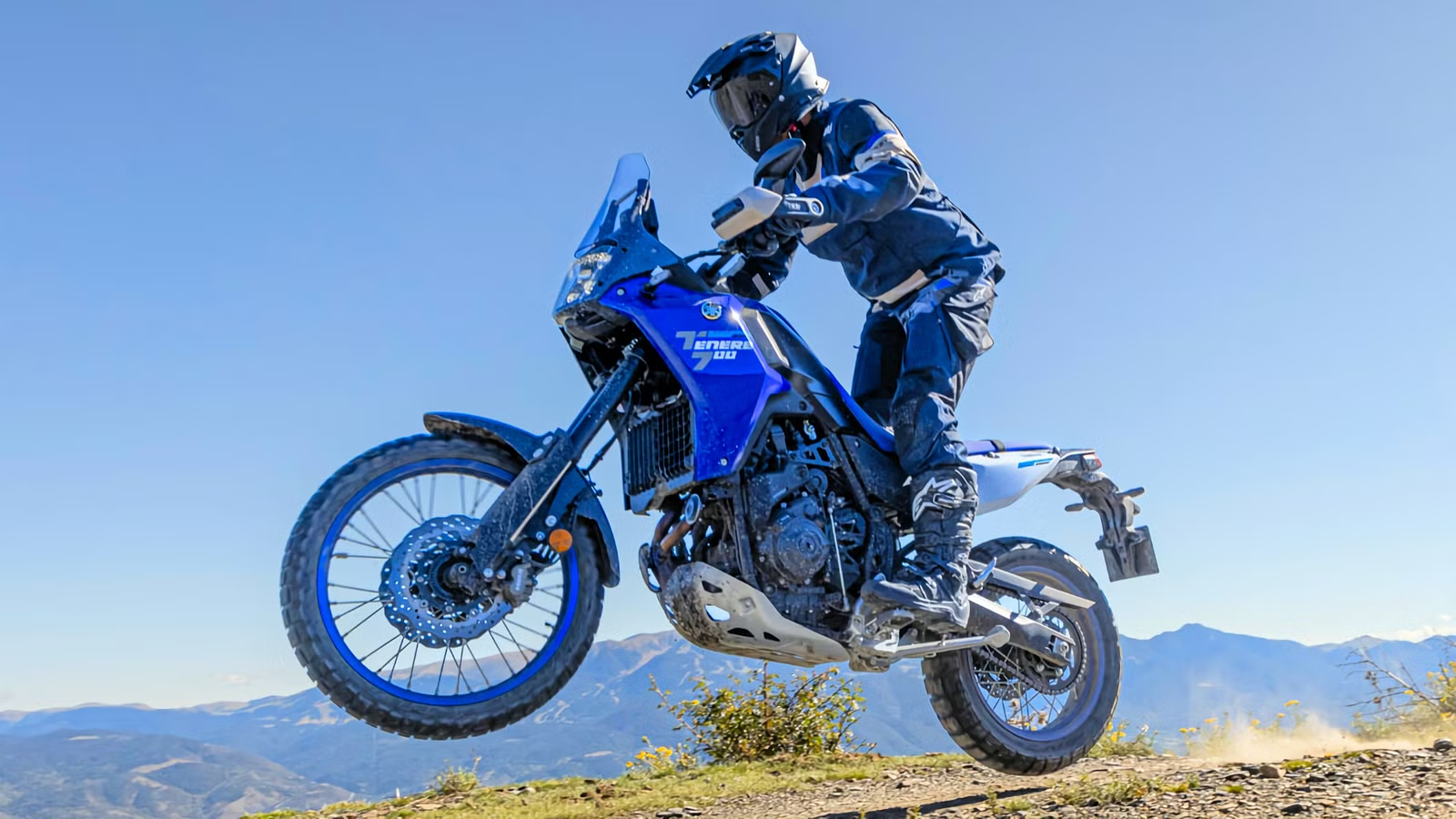
If you want proof that one motorcycle can reshape an entire segment, look no further than the Yamaha Ténéré 700. When it finally reached U.S. shores, the middleweight adventure bike market was already buzzing — and the Ténéré was the reason why. Rivals have since flooded in from every direction, yet Yamaha’s benchmark machine has held its ground with quiet confidence. Years on, it remains the bike that every new contender is measured against.
The Yamaha Ténéré 700 came out fairly late in the U.S., but it is fair to say that it was well worth the wait. Few bikes blend off-road ability and on-road performance like the Ténéré. While there are most certainly better, more powerful touring-focused adventure bikes on the market, and a handful that will have their number off-road, none are able to strike a balance between power and versatility like the Yamaha.
The 2026 Yamaha Ténéré 700 Strikes The Perfect Balance
Starting MSRP: $10,999
It is no coincidence that the middleweight adventure bike market suddenly exploded once the Ténéré 700 made its debut in Europe. Yamaha struggled to keep up with demand for several years, and other manufacturers were quick to respond, each offering something similar to satisfy a seemingly unquenchable appetite for this kind of motorcycle. Yamaha may have started this craze, but the competition is now fiercer than ever.

The closest rival is arguably the Honda Transalp, which leans a little more towards adventure touring in some respects. It is also hard to overlook given that it carries a lower price tag than the Ténéré. The Suzuki V-Strom 800DE is arguably just as capable off-road and brings more features to the table, though that added equipment comes at a cost — the 800DE’s weight pushes it dangerously close to full-size adventure bike territory.
From Europe, we have the Aprilia Tuareg 660, which is arguably better off-road, has more tech features, and actually doesn’t weigh that much more than the Ténéré. It also costs more, but for those who are after more features, it is indeed well worth considering. Triumph, BMW, KTM, and Ducati all offer premium middleweight options that – like it or not – compete with full-sized adventure bikes in terms of their pricing. KTM brought back the 790 Adventure, which is now competitively priced, but question marks linger over long-term reliability, for both the bike and the company itself.
Rivals
- Honda Transalp
- Suzuki V-Strom 800DE
- Aprilia Tuareg 660
- KTM 790 Adventure
The Tenere 700 Has An Incredibly Reliable Engine
Power: 72 Horsepower
The Ténéré is by no means the most powerful adventure bike. In fact, it is actually one of the least powerful middleweights on the market today. Its edge comes in the form of unerring reliability and impressive tractability. No matter which bike you ride with a CP2, it is always fun. On paper, its 72 horsepower might seem well short of the other middleweights that are producing close to 100 horsepower, but in the real world you won’t feel the deficit the way you might expect. The Ténéré delivers its power in a very linear manner, making excellent use of its 50 pound-feet of torque.
All of that torque is available pretty low down in the rev range, and you will never feel as though you really want more… unless you are already breaking the speed limit. Off-road is where it actually feels more capable than any of its competitors. While you do get traction control and ABS, Yamaha allows you to switch both systems off completely. Unlike most of its competitors, you will have access to the full power output off-road without any electronics intervening. Naturally, this is a double-edged sword, and an inexperienced rider can get caught out rather easily.
Tenere 700 Engine Specifications
|
Engine Type |
Parallel-Twin, liquid-cooled |
|
Displacement |
689cc |
|
Max Power |
72 HP |
|
Max Torque |
50 LB-FT |
|
Transmission |
6-speed |
The Tenere Offers A Back-To-Basics Adventure Riding Experience
Less Is More

Spoiler alert: comfort is not one of the features. As far as touring is concerned, it will become abundantly clear that the Ténéré was never built with long-haul comfort as a priority once you sit on the bike for the first time. It is comfortable enough for most riders to handle for a couple of hours, but if you plan on doing longer rides, an aftermarket seat will be pretty high up on your list of modifications.
The TFT dash is arguably the only noticeable feature, as the bike is decidedly bare-bones for a very good reason. It was designed to offer a back-to-basics approach to adventure riding, with a low curb weight and only the most necessary features making the cut. Leaving the TFT dash off the original model was just a clever way of having something meaningful to add in a later update.

While other middleweight adventure bikes rely on a host of electronics to stay planted off-road, Yamaha took a different approach. By positioning the engine higher in the frame and increasing the angle of the chain ever so slightly, the bike naturally stays composed on the trail. The genius is in its simplicity, and it makes a tangible difference out on the dirt. By keeping things straightforward, Yamaha was able to set the Ténéré apart from a feature-rich pack. If you were to buy this 2025 model today, you’ll have to shell out
Today, few motorcycles are able to offer a riding experience like this. It is refreshingly raw — it isn’t trying to be anything more than a tool for adventure. You can still ride it around town or commute on it, and it will be perfectly well-behaved. It is an easy motorcycle to love, and it is for good reason that Yamaha has been able to sell so many of them.
Features
- TFT dash
- Ride modes
- ABS modes
- LED lighting

Related posts



Latest Post


No Comments