
This Is The Cheapest Used Six-Cylinder Motorcycle In America
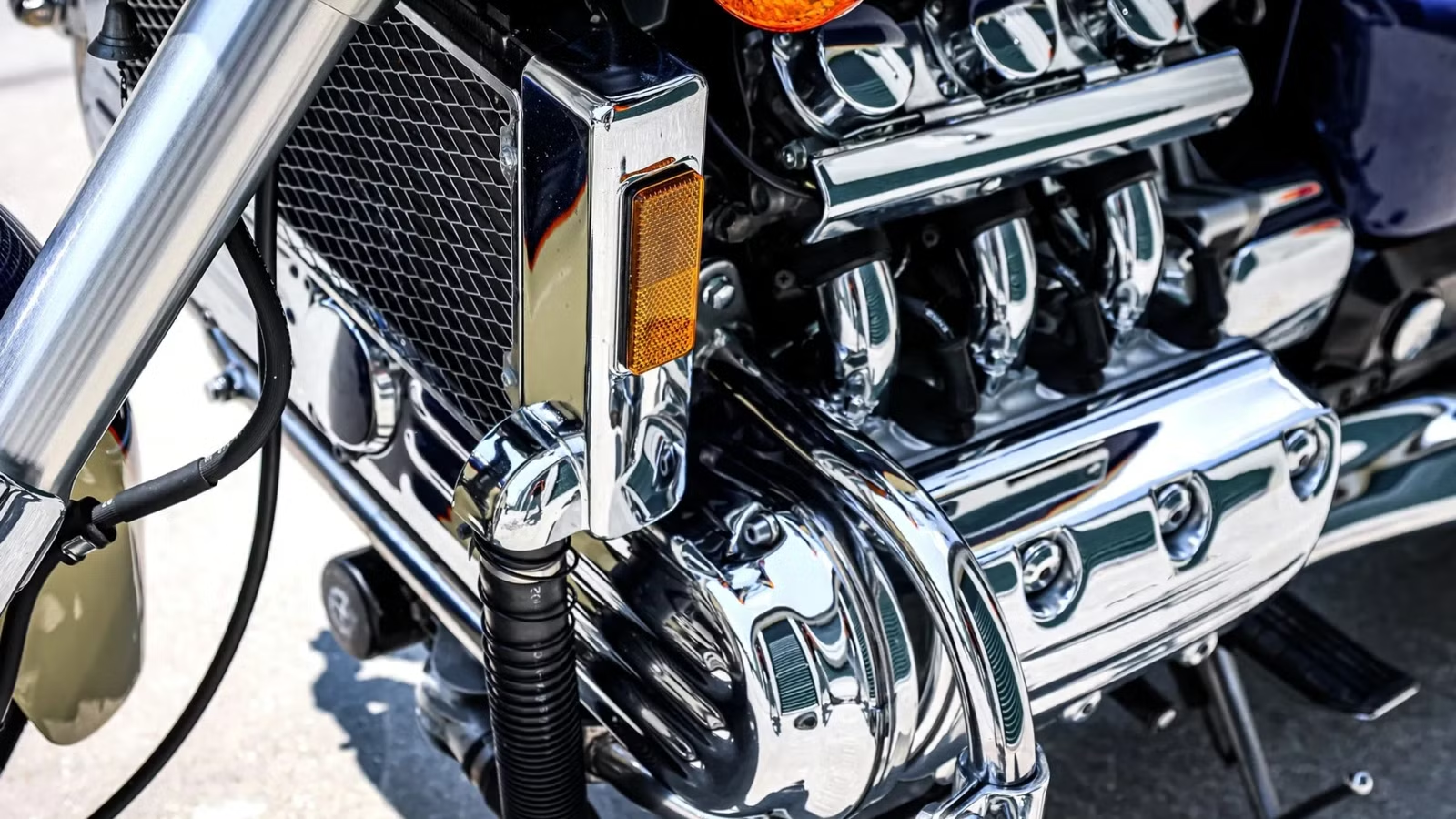
Six-cylinder bikes have always been absolute monsters on two wheels, albeit expensive. And to be fair, that hasn’t changed. Icons like Benelli’s Sei or BMW’s high-tech K1600 were built for deep pockets, and age hasn’t made them any cheaper either. Case in point: if you want a clean ’79 Honda CBX in your garage today, you’re looking at dropping close to $16,000.

But wait, the used market has a surprise. You can actually pick up a real six-cylinder bike in the US for under five grand. And we’re talking about a mile-munching monster with a giant flat-six, a shaft drive, and serious presence. Bottom line, you can get those six pots on a budget. You just have to know which key to turn.
Six Cylinders Were Never Meant To Be Cheap
While Honda flirted with six-cylinder race engines in the 1960s, Benelli beat them to showrooms with the 750 Sei. It was an engineering marvel, but honestly, also a financial nightmare. That’s because more cylinders meant complex valvetrains and sky-high costs, not to mention an awkwardly wide engine. But Benelli found a way around that and hid the alternator behind the cylinders, a layout Honda later lifted for the CBX1000.

The 1978 CBX was a 105-horsepower flex with six carburetors, though its wild price tag and, to be honest, terrifying complexity kept most buyers away. Kawasaki answered with the liquid-cooled Z1300, and BMW later modernized the inline-six formula with the massive K1600 in 2011. Even a used example can command serious money. A 2012 K1600GTL, for example, runs anywhere from $7,000 to $12,000.
The ’88 Gold Wing’s flat-six solved the width problem while dropping the center of gravity. Honda basically kept the engine tidy with a SOHC 2-valve setup and just two carbs, but even then, this big flagship still came at a premium.
Honda Turned Gold Wing Hardware Into A Flat-Six Cruiser

To conquer the custom scene, Honda launched Project Phoenix around 1991. When designer Makoto Kitagawa penned a muscle-bound power cruiser, the engine choice was a no-brainer. Honda pulled the massive 1,520cc liquid-cooled flat-six right out of the Gold Wing. And really, why start from scratch when you already have a big six-cylinder engine sitting there?
The first prototype reportedly lacked the character Honda wanted. Its power delivery felt too much like the touring bike it came from. So, the engineering folks at Honda swapped in six 28mm carbs (the Gold Wing used just two), hotter cams, new ignition timing, and a breathier exhaust. These changes added nearly 10 horses.
The resulting Honda Valkyrie 1500 produced a claimed 100 ponies at 6,000 rpm and 95.9 lb-ft of torque at 5,000 rpm. Backed by a five-speed gearbox and shaft drive (with reverse in Japan), it was, to say the least, a lot of motorcycle for a casual cruiser. Besides, Honda ditched the Gold Wing’s bulky bodywork to give the Valkyrie a much tougher, more muscular look. Twin rear shocks, a wide 180/70-16 rear tyre, and a low 29.1-inch seat helped establish its cruiser stance. Dry weight sat around 309 kg, compared with 368 kg for the GL1500.
You could get the Valkyrie as a Standard or a Tourer with a windshield and saddlebags, followed by the fully loaded Interstate in 1999. The original run ended in 2003. Honda later revived the name with the GL1800-powered Rune, but that was a totally different bike that didn’t share a single part with the GL1500C.
Six-Cylinder Performance At Used-Bike Prices

To be fair, this is where the Valkyrie makes its strongest argument. Standard and Tourer models from 1997 through 2001 typically go for $3,300 to $6,000, outside of cheap fixers and high-end exceptions. On the other hand, full-dress Interstates typically sit between $4,000 and $7,000, with asking prices running up to $9,700. A clean 1999 model with 18,000 miles, for example, recently fetched $6,250.
Compared to rival sixes, it’s a steal. A CBX commands roughly $15,900, and a used BMW K1600GTL sits near $13,500. Meanwhile, the ultra-rare Valkyrie Rune occupies another planet entirely, with mint-condition valuations hitting $25,500. Now, when you look at it that way, a fraction of the cash buys you six cylinders, 100 horsepower, low-slung ergonomics, and a shaft drive that saves you the regular chain-cleaning routine.
The only real catch? High-mileage Gold Wing GL1500s can technically be found cheaper, like a ’95 SE with 124k miles listed at $3,200. But the Gold Wing is a heavy, fully dressed tourer. And if you want flat-six power in a true cruiser layout, the Valkyrie is hard to beat.
What To Check Before Buying An Old Valkyrie

Now that every Valkyrie 1500 is over two decades old, how it was maintained matters more than ever. Start with the timing belts. Unlike many modern motorcycle engines that use a timing chain, the Valkyrie’s flat-six uses belts. And if one breaks, it can cause serious engine damage. Ask for documentation showing when they were last replaced. Replacement belts are shared with the GL1500 Gold Wing and are relatively affordable, but you still want records showing the job was done correctly.
Next, check those six carburetors. They need to stay synchronized, and bikes left sitting on old gas can quickly develop clogged jets and dried-out fuel rail O-rings. One owner reported blocked low-speed circuits and dried fuel-rail O-rings that allowed petrol to leak. While rebuild kits are available, labor costs for a six-carb overhaul add up fast. And here’s the thing: some shops won’t work on them, so identify a specialist who knows the model before pulling the trigger.
So, does the Valkyrie actually deliver as a bargain? Absolutely, provided you buy on condition rather than rock-bottom pricing. Neglected models needing belts, carb rebuilds, or a stator will swallow your savings in no time. But find a well-maintained example, and it’s a whole lot of six-cylinder motorcycle for the money. Just check those records before signing.

Related posts

Latest Post


No Comments