The Used Luxury Sedan That Makes Owning A BMW Feel Like A Mistake
7 minutes reading
Wednesday, 26 Aug 2026 17:00 0 58 autotech
Luxury sedan buyers have traditionally had three names at the top of the list: BMW, Mercedes-Benz, and Audi. These brands built their reputations around performance, technology and prestige, creating cars that were as much status symbols as they were transportation. But luxury has become complex. Modern premium sedans are packed with technology, complex powertrains, and expensive hardware, and the cost of keeping them on the road can rise sharply once warranties expire. That has created an opening for a different interpretation of luxury. One Japanese flagship focuses on refinement, craftsmanship, quietness, and long-term ownership confidence.
BMW has built much of its reputation around driving dynamics. Its larger sedans combine strong engines, rear-biased handling and sophisticated chassis technology to make a big luxury sedan feel more agile than its size suggests. And while I wouldn’t normally associate a large German luxury sedan with dependability, the 7 Series makes a stronger case than you might expect. J.D. Power gives the 2026 model an overall score of 81 out of 100, including 86/100 for quality and reliability, and 85/100 for driving experience.
That is a strong result and shows why BMW remains difficult to dismiss. The problem is the price. The latest 7 Series starts at $99,800, rising to $102,800 for the 740 xDrive. That’s a serious amount of money for a luxury sedan. But BMW’s dominance rests on some expensive assumptions — and they don’t all hold up under scrutiny.
The 2025 Lexus LS Quietly Took A Different Approach
Luxury Built Around Refinement Rather Than Performance
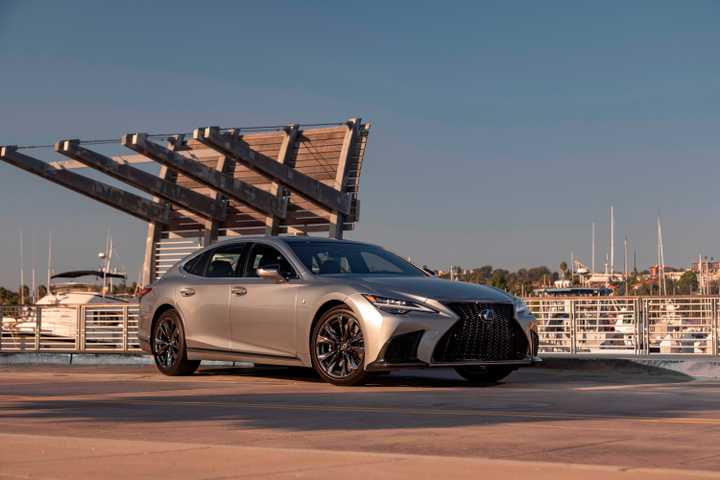
High-angle 3/4 shot of 2025 Lexus LS 500 in silver parkedLexus
If you’re willing to go against the grain, however, there is another option. The 2025 Lexus LS 500 flies under the radar while delivering the comfort, refinement, and quality expected from a flagship luxury sedan. Better still, choosing a used example can put that experience within reach for considerably less money.
When new, the 2025 LS 500 started at $81,685. Just a year later, KBB values a used example at around $75,000, with private-party values dipping into the low-$70,000 range depending on condition. That depreciation makes the LS interesting for buyers who want flagship luxury without paying flagship-new-car money.
Twin-turbo V-6 in the Lexus LSLexus
The 2025 Lexus LS 500 features a 3.4-liter twin-turbo V6 delivering 416 horsepower and 442 pound-feet of torque, mated to a 10-speed automatic transmission. Lexus lists a 0-60 mph time of 4.6 seconds; independent testing by Car and Driver recorded five seconds. The LS prioritizes a quiet cabin and a smooth, comfortable ride over dynamic performance.
The 2027 BMW 740 is powered by a 3.0-liter turbocharged inline-six mild-hybrid unit producing 394 horsepower and 428 pound-feet of torque, paired with an eight-speed automatic. BMW claims 0–60 mph in 4.9 seconds for the rear-wheel-drive model. Adaptive air suspension and rear-wheel steering contribute to a more agile driving experience. The Lexus LS is tuned for refinement and isolation, while the BMW 7 Series offers greater responsiveness and driver engagement.
And between the two, which is more efficient? The 2025 Lexus LS 500 (RWD) is EPA-rated at 18 mpg city, 29 mpg highway, and 22 mpg combined. The 2027 BMW 740 (RWD) achieves 25 mpg city, 31 mpg highway, and 28 mpg combined. This gives the BMW a six-mpg combined advantage, as well as higher city and highway ratings. While the LS delivers more power, the 740 stands out for its superior fuel efficiency.
Hand-Pleated Trim And Silence: What The LS Offers That BMW Can’t Match
Kiriko Glass And Active Noise Cancellation Vs. BMW’s 31-Inch Theater Screen
2024 Lexus LS front cabinLexus
2027 BMW 7 Series interior shot showing dashBMW
The BMW 7 Series sets itself apart with cutting-edge technology and plenty of wow-factor features. Its cabin offers:
An ultra-wide curved digital display for the gauges and infotainment
An optional 31-inch 8K rear theater screen with streaming capability
Gesture controls and a Bowers & Wilkins surround-sound system
Available automatic doors, ambient lighting and reclining rear executive seats with massage and ventilation
Advanced connectivity, including integrated video conferencing and voice assistants
The Lexus LS 500, by contrast, takes a quieter, craftsmanship-focused approach. It is not as flashy or technologically modern as the new 7 Series, and it does fall behind in that respect. Its cabin features:
Hand-pleated door trim and Kiriko glass accents
An exceptionally quiet cabin with active noise cancellation
Lexus Safety System+ 3.0, a head-up display and a 12.3-inch central display
Heated, ventilated and massaging seats, although its rear-seat technology isn’t as elaborate as the BMW’s
The difference comes down to philosophy. The 7 Series aims to impress with technology and spectacle, while the LS 500 focuses on the fundamentals; the 7 Series wins on luxury appointments, but it comes with the lofty price tag mentioned. There’s also a cost the spec sheets don’t show — and BMW owners often only discover it after the warranty expires
Why Some BMW Owners Eventually Look Elsewhere
When Complexity Becomes Expensive
2026 Lexus LS 500 AWD Heritage Edition side profileLexus
The Lexus also has a strong reliability argument. RepairPal gives Lexus a 4.0 out of 5 rating, with average annual repair costs of $551, while BMW scores 2.5 out of 5, with average annual repair costs of $968. RepairPal also records BMW owners making an average of 0.9 unscheduled repair visits per year, compared with 0.4 across all vehicles. J.D. Power does not currently rate the 2025 LS at the individual-model level, so there isn’t a defensible LS-specific score to quote.
However, Lexus ranked among J.D. Power’s highest-performing brands for 2025 vehicle dependability. Consumer Reports also expects the 2025 LS to be more reliable than the average new car, while ranking Lexus third among brands for predicted new-car reliability. The BMW may deliver more theater, but the LS makes a compelling case for buyers who value what happens after the warranty expires.
Why The Lexus LS Makes BMW Harder To Justify
The Luxury Sedan For Buyers Who Value Peace Of Mind
2026 Lexus LS 500 AWD Heritag Edition in blackLexus
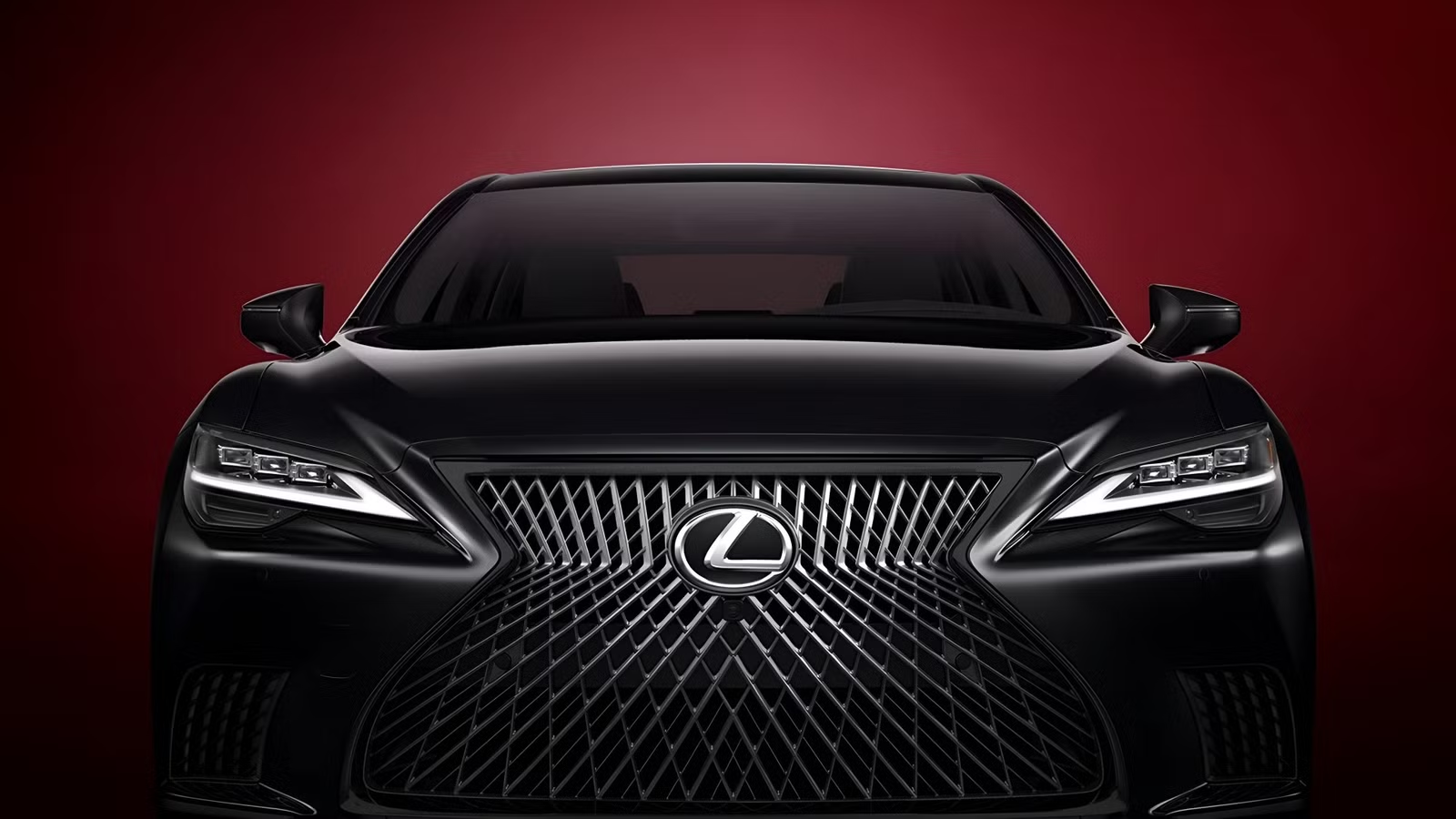
The BMW 7 Series still has the stronger visual presence, with its large kidney grilles, sharp lighting and imposing proportions giving it a more dramatic road presence. The Lexus LS takes a more restrained approach, with its low-slung profile, spindle grille and understated detailing.
The 2025 LS 500 started at $81,685, while the final 2026 LS 500 AWD Heritage Edition costs $99,380 and is limited to 250 U.S. units. With 416 hp, a quiet cabin and strong reliability credentials, the LS delivers much of what buyers want from a flagship sedan. That doesn’t make the Lexus a better car than the BMW.
The Interior of the 2024 Lexus LS in BeigeLexus
The 7 Series remains the more technologically advanced and driver-focused choice, and if you are willing to splurge, then I say go for it. The LS offers a more sensible approach, a less costly route into flagship luxury, particularly for buyers who value comfort, reliability, and long-term ownership, and it may age better over time due to its less technology-heavy specification compared with the 7 Series.
Luxury Is About More Than The Badge
The BMW 7 Series remains a benchmark among luxury sedans. Recent reliability scores also challenge longstanding assumptions about German luxury brands. The Lexus LS offers an alternative focused on craftsmanship, a quiet, refined cabin, and a proven reliability record.
Sales figures highlight the different appeal: in 2025, BMW sold about 11,400 7 Series units in the U.S., while Lexus sold just 1,082 LS sedans, making the LS a much rarer sight. While the 7 Series is the more advanced and popular choice, the LS stands out for those who prefer predictable costs and perhaps do not have the extra cash to spend. The LS does not try to outperform the BMW in every area; instead, it offers a compelling alternative for buyers seeking sensible flagship luxury.
Base Trim Engine
3.4L V6 ICE
Base Trim Transmission
10-speed automatic
Base Trim Drivetrain
Rear-Wheel Drive
Base Trim Horsepower
416 HP @6000 RPM
Base Trim Torque
442 lb.-ft. @ 1600 RPM
Base Trim Fuel Economy (city/highway/combined)
18/29/22 MPG
Base Trim Battery Type
Lead acid battery
Make
Lexus
Model
LS
Sources: Lexus USA, BMW USA, J.D. Power, RepairPal, Consumer Reports, Kelley Blue Book (KBB), Car and Driver and CarFigures












No Comments