
Oldsmobile’s Forgotten 350 Hid Big-Block Valves And Only 3,007 Were Built
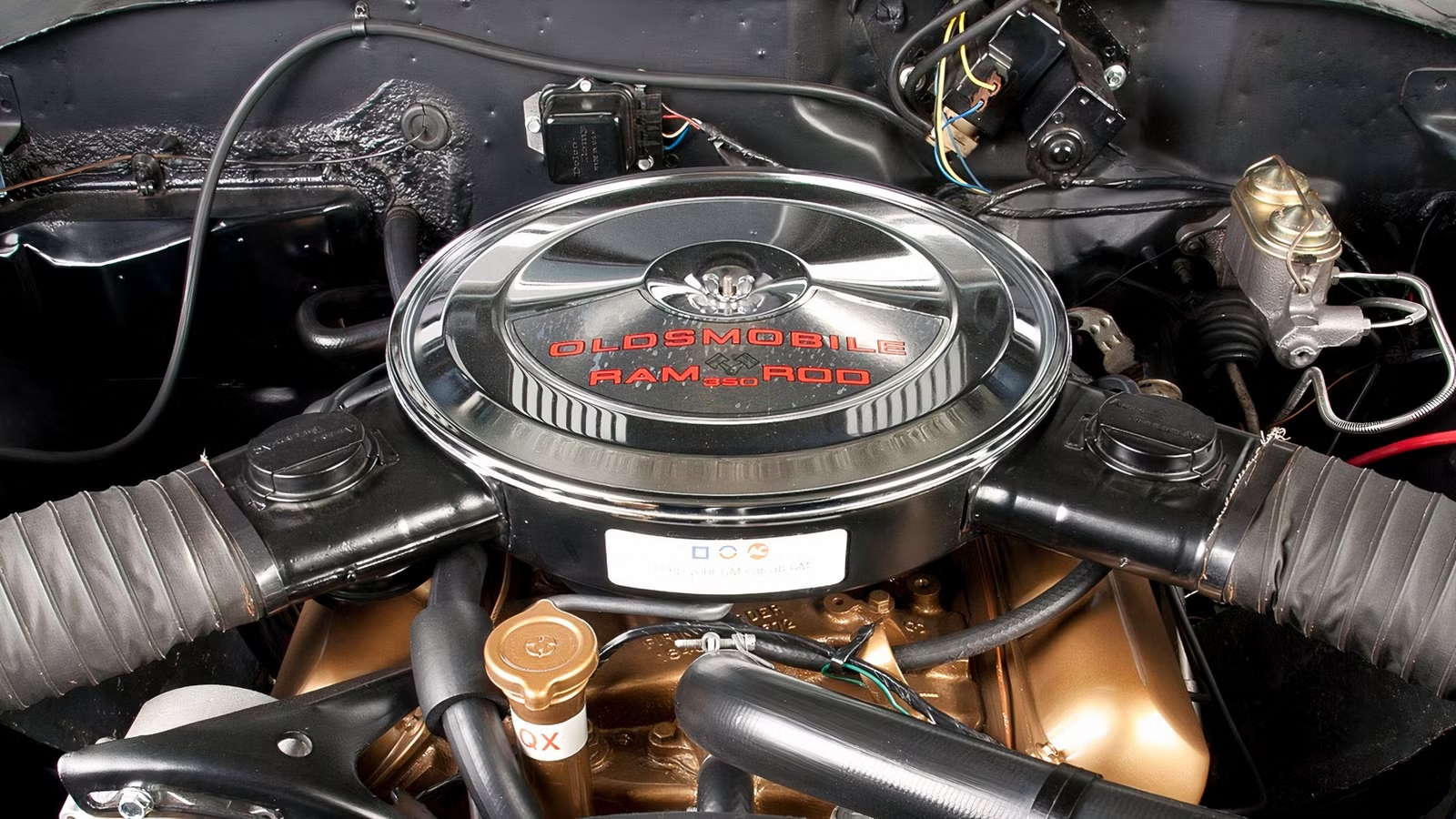
In the late 1960s, a big V8 was the easiest way to advertise a muscle car’s intentions. The problem was that a big engine could also mean a bigger insurance bill, particularly for younger drivers. General Motors had another idea. Instead of stuffing its smaller cars with a 455-cubic-inch V8, it built a high-revving 350 with hardware normally associated with its larger engines. The result was a compact muscle car that didn’t need a huge displacement badge to make its case. Yet the W-31 spent decades in the shadow of the better-known 4-4-2. Its production run totaled just 3,007 cars, and its engineering deserves a closer look.
The Muscle Car Insurance Problem Created Room For A Smaller V8

Muscle cars were getting bigger engines and more attention, but not every buyer could afford the consequences. Insurance premiums for high-performance cars could be punishing, especially for younger drivers. A 455-powered Oldsmobile inventions might look like the obvious choice, but its displacement and performance credentials could make ownership expensive before the first tank of gas was gone.
Oldsmobile already had the 4-4-2 to handle the traditional muscle-car role. Its W-30 package offered serious big-block performance, leaving room for a different kind of car beneath it. The F-85 and Cutlass S were lighter, less imposing alternatives, and a carefully developed 350 could give them genuine performance without following the big-block crowd.
Oldsmobile promoted the smaller performance package as a “Junior Super Car,” appealing to buyers who wanted speed without paying for the biggest engine available. That didn’t guarantee lower insurance premiums for every owner, since insurers considered more than displacement. Still, the idea made commercial sense: build a quick car that looked less threatening on paper.

The Oldsmobile W-31 Hid Big-Block Hardware Inside A 350
For 1968, Oldsmobile called its performance 350 the Ram Rod 350. The W-31 designation continued through 1970, appearing on the F-85 and Cutlass S. Its engine retained the small-block’s 350-cubic-inch displacement but received 10.5:1 compression, a 308-degree camshaft with .474-inch lift, heavy-duty valve springs, and oversized 2-inch intake valves and 1.625-inch exhaust valves associated with the larger 455.
The factory rated the engine at 325 horsepower at 5,400 rpm and 360 lb-ft of torque at 3,600 rpm. A recalibrated Rochester Quadrajet fed the engine, while the Force-Air system drew cooler outside air through ducts into the air cleaner. The intake manifold varied by year: 1968 and 1969 used cast iron, while 1970 received an aluminum unit.
The Valves Were Only Part Of The Recipe
Those larger valves helped the 350 engine breathe, but they weren’t working alone. The high compression, aggressive camshaft, and supporting valve train components made this an engine designed to operate at higher revs. The trade-off was a rougher idle and limited vacuum for power brakes, which helps explain why manual brakes were part of the package. The Ram Rod name belonged to the 1968 marketing campaign; W-31 was the designation used across the three-year run.
The Smaller Engine Had An Advantage The 455 Couldn’t Match

The W-31’s strongest argument wasn’t simply that its 350 could run hard. It was that Oldsmobile put that engine into a lighter car. Compared with a 455-powered counterpart, the smaller V8 reduced weight over the front axle, giving the Oldsmobile F-85 and Cutlass S a better chance of feeling balanced through a series of corners.
On a winding back road, less weight over the front wheels can help a car respond more willingly to steering inputs. On a drag strip, the W-31 could still make a respectable showing. Period performance figures put a well-tuned example in the neighborhood of a 14.9-second quarter-mile at 96 mph, although results varied with transmission, gearing, tires, and conditions.
Oldsmobile’s official figure was 325 gross horsepower. Enthusiast accounts often put the engine closer to 350 hp, but that estimate isn’t a verified factory measurement. Automotive writer Roger Huntington, meanwhile, calculated approximately 310 hp at the clutch. Those figures use different approaches, so they shouldn’t be treated as directly interchangeable. The W-31’s appeal doesn’t depend on proving it made 350 hp. Its high-revving character and lighter front end gave it a distinct personality compared with the bigger 4-4-2.
Only 3,007 Were Built, And The W-31 Never Escaped The 4-4-2’s Shadow

Oldsmobile built 742 Ram Rod 350 cars in 1968, followed by 913 W-31s in 1969 and 1,352 in 1970. Together, those figures make 3,007 examples. The rising production totals didn’t make the package a mainstream success, and the 4-4-2 W-30 remained the more recognizable performance choice. Its larger engine and established reputation gave buyers an easier story to tell.
Bring a Trailer provides a useful look at what documented examples can bring. A 1970 Oldsmobile Cutlass S Holiday Coupe W-31 sold for $48,750 in October 2025, while another example sold for $63,000 in December 2024. Those results aren’t universal valuations, but they show the money collectors will pay for the right car. Originality, condition, and documentation all matter, particularly with a rare package that can be difficult to authenticate.
The W-31 may never carry the same name recognition as a 4-4-2 W-30, but it offers a compelling alternative. Oldsmobile built a small-block that could breathe at high revs, paired it with a lighter front end, and gave buyers a less obvious route into muscle-car performance. That combination is what makes the forgotten 350 worth remembering.
Sources: Bring A Trailer

Related posts



Latest Post


No Comments