

This 2028 BMW Sports Bike Render Brings Back The Simplicity Missing In The Superbike Class
4 minutes reading
Wednesday, 14 Oct 2026 10:30 0 4 autotech
The liter-class sports bike segment is a revolving door. Bikemakers keep adding new tech and more power to their machines, which changes the standings almost every year. In 2027, BMW wants to do the same, attempting to set a new precedent in the inline-four segment. How, you ask? Well, by whipping up a fully refreshed superbike to take the fight to the currently dominating Italian V4 duo (Ducati Panigale V4 and Aprilia RSV4). There have been several sightings of the machine, which confirm several details, including the design. And that is where things get a bit tricky.
The Upcoming S 1000 RR Will Have A Busy Design

75 autotech
Take a look at the spy shots, and you’ll realize the S 1000 RR is ready for a massive overhaul in the design department. It looks nothing like the current iteration, which we first saw in 2019. The two angry-looking DRLs are no longer present, while the LED headlamps are a bit Japanese (with oval shapes).
At the same time, the fascia is dominated by the massive ram air duct and gigantic wings. The latter aren’t as large as the current 2026 bike, but they are still some of the biggest in the segment. They also have horizontal slits and angle downward for an ever busier design. Add to that the new fairings, and the entire bike seems very chunky rather than minimalistic.

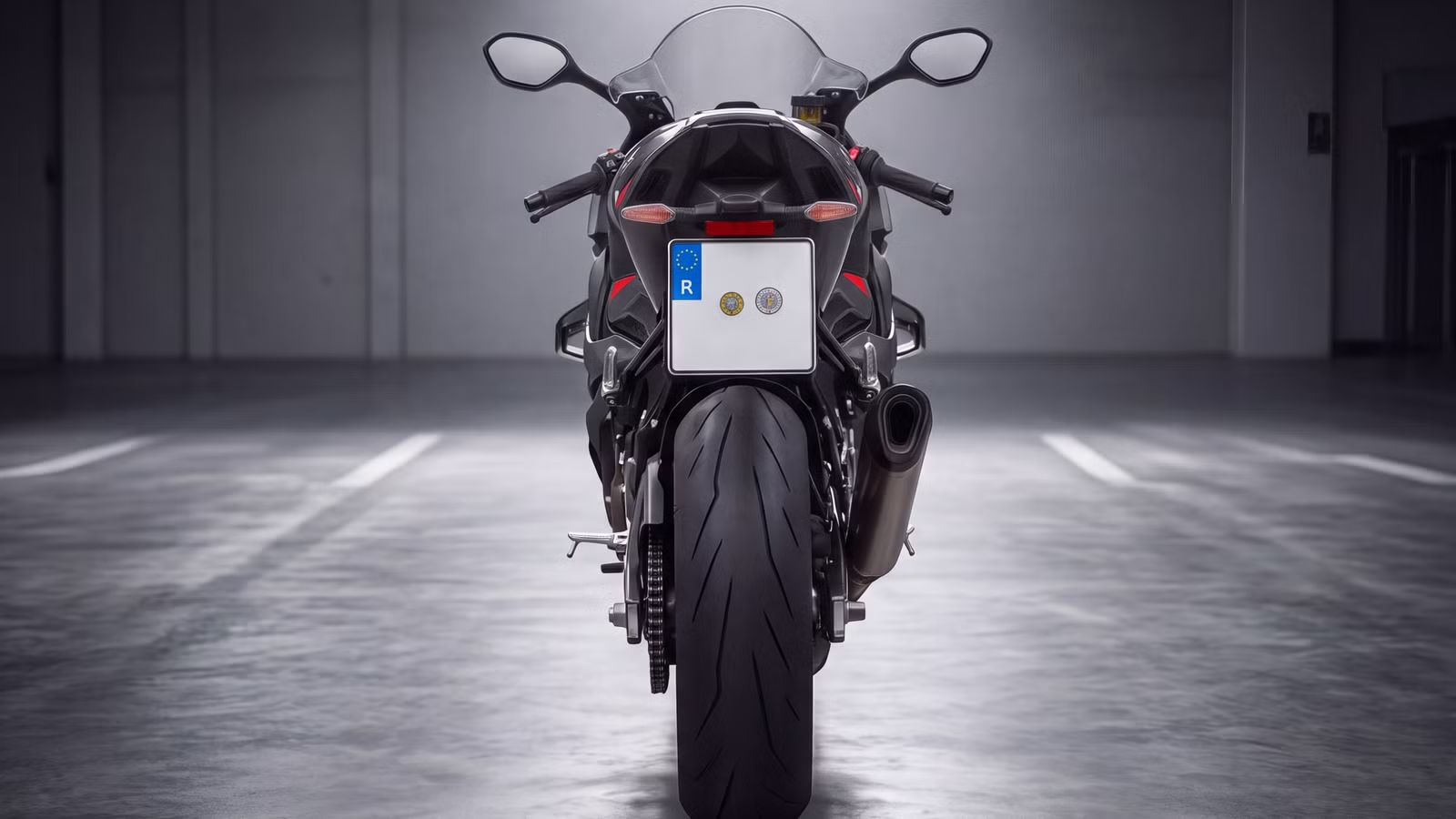
This is where the problem arises. We believe the overhaul is too different and busy for true enthusiasts, meaning it might do more harm than good for the superbike. That urged us to rethink a simpler, more familiar new S 1000 RR without missing out on any of the juicy new goodies. Here’s our render of the same.

76 autotech
Our Imagination Of The New BMW S 1000 RR Keeps Things Simple
Yes, we know this looks very similar to the previous-generation S 1000 RR. And you’d be right. But that’s the point. We think BMW doesn’t need to go back to the drawing board to reinvent the design. When this symmetrical fascia dropped in 2019, it took every S 1000 RR fanatic by surprise. After all, the asymmetrical face was the RR’s identity in the segment. Over the years, this has grown on us, and it’s well-accepted in the superbike world today.
Now, with the upcoming overhaul, we think BMW is again changing things a little too much. This will again divide opinions among fanatics. Instead, we believe the bikemaker should cut it down and make the design simpler. That’s why our render is identical to the 2023 S 1000 RR, featuring much smaller aero and an overall less busy look. We believe this was the sweet spot for aero size on the RR, as the current 2026 model wings simply look out of proportion. Our render also has the older colorway, rather than one of the new in-your-face liveries.
Here’s What Will Change On The New S 1000 RR
If you look closely at our render, we’ve tried to incorporate the mechanical upgrades confirmed in the spy shots. Here’s a refresher on what to expect.
Updated Inline-Four Engine For More Kick

BMW’s 2026 S 1000 RR has a 998cc inline-four engine, featuring the ShiftCam technology. That is good for 210 horsepower (205 in the US) and 83 pound-feet. The upcoming bike, though, is said to take that figure to 212 HP, as confirmed by type-approval filings by the Bavarian giant. This should be achieved via an array of internal updates, along with the visibly longer and sleeker exhaust. The four-into-one exhaust should also help meet newer emission norms. As always, you can expect a top speed of over 186 mph here.
New Chassis Parts For Increased Sportiness

With the updated engine comes an updated twin-spar chassis. Reworked cross-sections and a new tubular subframe are visible in the spy shots, alongside a new swingarm. A big change also comes to the braking package. Out go the Nissin-made BMW-badged calipers, and in come the latest Brembo Hypure four-piston ones up top. The rear also has a new underslung caliper. Meanwhile, what looks carried forward is the suspension.
A Gigantic TFT Sits In The Cockpit

The 2026 S 1000 RR already has one of the most sophisticated electronic rider aid packages in the world, regardless of the segment. So we don’t expect any massive changes in this department. However, the way you’ll toggle these is changing, thanks to a new instrument cluster. The spy shots reveal a massive square-type TFT in place of the rectangular 6.5-inch setup from the current bike. This is paired with new switchgear that no longer comprises the popular circular joystick.
Source: BMW, Valnet

Related posts




Latest Post


No Comments