
This 2026 Ford Galaxie Render Asks Whether Full-Size Muscle Deserves A Comeback
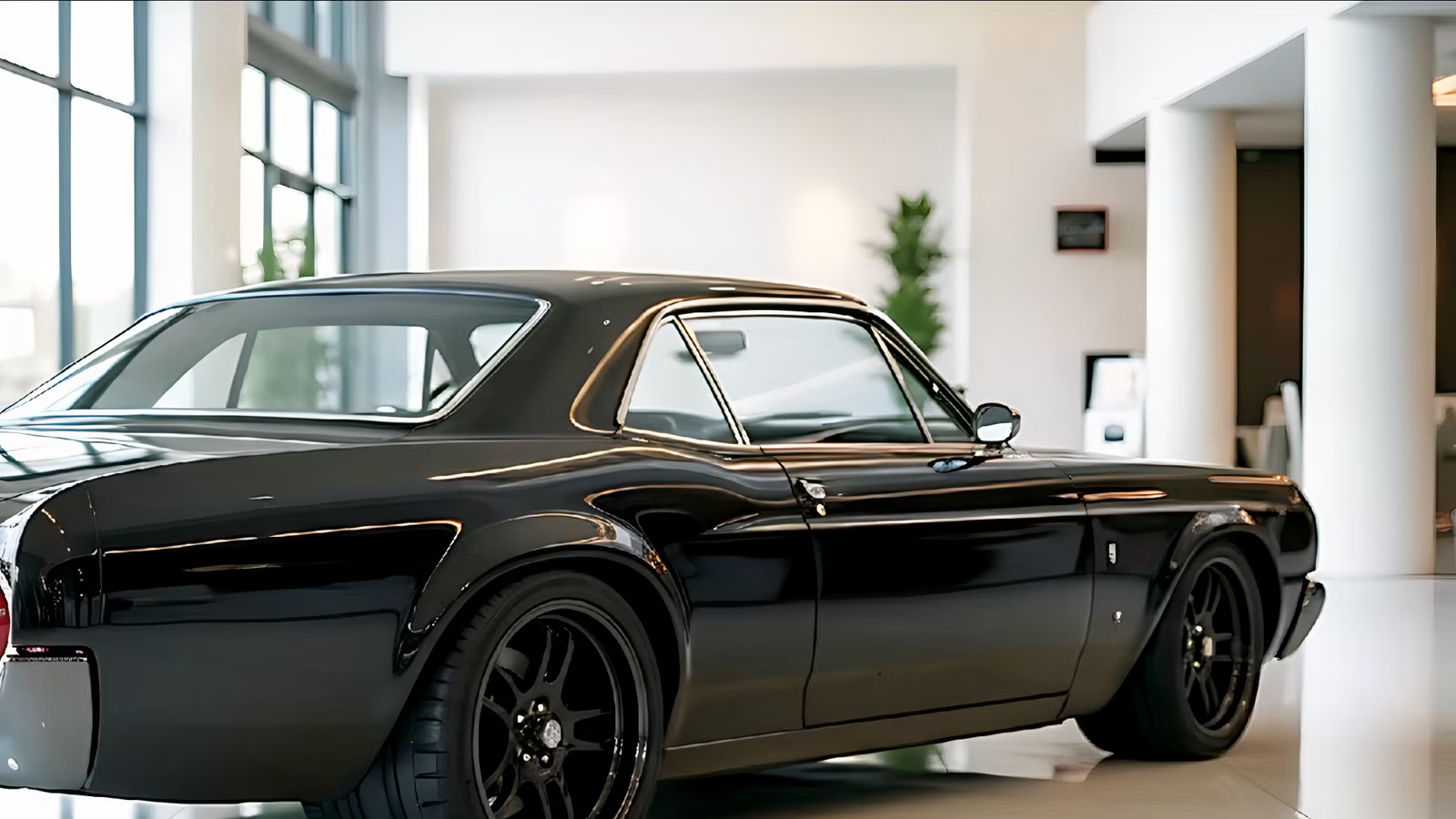
In a pre-SUV world long before the crossoverfication of the auto industry, American automakers built big cars with big engines and buyers couldn’t get enough of them. The Ford Galaxie was one of the great success stories of the era.

Buyers could get family-friendly practicality powered by an unrepentant V8, a combination that would become increasingly hard to come by as time went on. Now, more than 50 years after the Galaxie disappeared from showrooms, an intriguing render prompts us to ask: could full-sized muscle make a modern comeback?
The Original Galaxie Was A Massive Success For Ford
The Galaxie arrived in 1959 as the top-level trim for the Fairlane before graduating into its own model line the next year. Ford seemed committed to delivering just about every conceivable take on the Galaxie.

There were sleek Galaxie convertibles and striking Galaxie two-door hardtops. There were Galaxie sedans and Galaxie wagons. That versatility was a big part of the success. In 1963 alone, buyers could choose from a borderline ridiculous array of 18 different Galaxie configurations, representing a dizzying number of options when it came to people giving Ford money in exchange for big cars.
And people did exactly that. A lot. By 1965, Ford’s broader full-size lineup was approaching a million units in annual sales, and the various Galaxies represented more than half at 564,000. The nameplate continued until 1974, eventually giving way to the LTD as Ford leaned harder into luxury and away from performance.
What A Modern Ford Galaxie Could Look Like
More than 50 years later, there are plenty of old ’70s muscle cars that seem content to remain in the past, but there is something about the Galaxie that still captures the imagination. The pointedly unofficial rendering embedded above doesn’t mean that anyone at Ford is hard at work making the case for a comeback story, but the enthusiast appeal is hard to deny.
It’s a low-slung, aggressive take on the classic silhouette that’s grounded in the original era but vaguely conceivable in a modern showroom. Some contemporary styling cues carry the ethos into 2026 and it’s not hard to see how it could attract buyers today. Not as an ultra-limited exotic halo car or premium offering, but as a mainstream American automobile representing a formula that barely exists today and that Ford no longer offers.
The Galaxie Had Serious NASCAR Credentials

While the Chevrolet Impala generally had the upper hand in sales, the place where the rivalry played out most spectacularly wasn’t the boardroom, it was the racetrack. The two were competing for bragging rights and NASCAR glory, even though the heavy and boxy Galaxie didn’t seem on its face to be well suited for high-speed ovals during an era when aerodynamics was beginning to make all the difference.
For 1963, the Galaxie came to the line with a new design featuring a slippery fastback roofline that put the car into serious contention. In ‘65, it was clear they had made the right moves, with Ford pulling 48 NASCAR victories and a Ned Jarrett championship. (Chrysler’s Hemi boycott helped, admittedly.)
The road car came along for the ride, with an available 427-cubic-inch V8 making up to 425 hp, putting legitimate performance within reach for a high-volume family car.
Modern Galaxie Restomods Can Cost Half A Million Dollars

With that kind of provenance, it may be hard to believe that there isn’t a market for a rebooted Galaxie, but the short answer is that there kind of is. You just have to pay a whole lot of money to get in on the game. One ground-up Galaxie restomod, this 1964 from RK Motors, reportedly cost more than half a million dollars and features a 665-hp, 482-cubic-inch V8. That’s a staggering figure for something that would have begun life as fairly ordinary transportation.
Mecum Auctions had another one. It was a 1965 with a modern 5.0 Coyote V8 that looked great, didn’t sell despite presale estimates of up to $200,000, and attracted a high bid of just $85,000. At this point the real question becomes not whether modern takes on Galaxies are cool (they are), but whether the itch could be better scratched by a brand-new car.
Big American Performance Cars Aren’t Dead Yet

You’d be forgiven for assuming that family-friendly American muscle has become a thing of the past by now, but the formula hasn’t been completely retired. Dodge remains more than happy to sell you a four-door Charger with enough power to land you in prison, and Cadillac continues carrying the torch for the big V8 in a sporty sedan. Buyers willing to shell out for a CT5-V Blackwing starting at $98,900 will get 668 hp out of a supercharged 6.2-liter V8. The power figures are a little different with the Charger, and the Scat Pack gets you 550 hp at $56,995 for the four-door.
These aren’t exactly ordinary family cars at ordinary family-car prices, but they’re proof positive that you can still trace a line from yesterday’s Galaxie right into today. Not at Ford, though.
Could Ford Actually Make A New Galaxie Work?

When Ford let the Taurus fade away, it was clearly picking a lane, betting big on its trucks and SUVs while saying goodbye to regular cars that aren’t called Mustang. So just because Dodge and Cadillac are finding a way to make it work within the American muscle niche doesn’t mean that Ford could get to the same place with its current priorities and product lineup.
Reviving the nameplate as a crossover that shares a platform with the Explorer probably isn’t what enthusiasts have in mind, so renders like the one examined here are perhaps less of a blueprint and more of a respectful nod to what might have been.
Sources: The World Garage, RK Motors, Mecum Auctions, Classic.com, Dodge, Cadillac

Related posts





Latest Post


No Comments