

This 1984 Harley-Davidson FLHT Heading To Mecum Fort Worth Marks The Model’s Launch Year On The Block
3 minutes reading
Monday, 12 Oct 2026 14:15 0 45 autotech
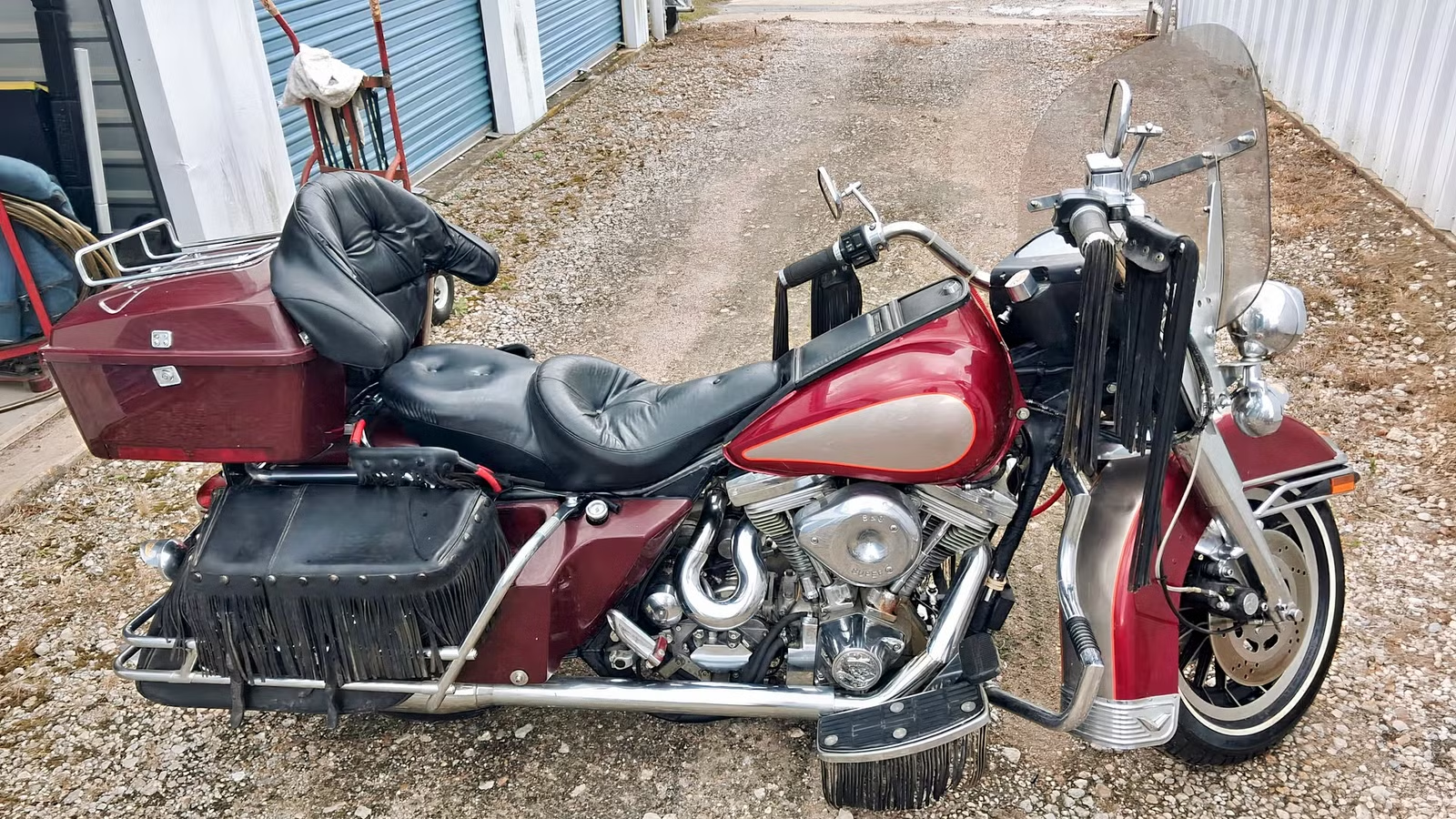
A 1984 Harley-Davidson FLHT is crossing the block as lot W2 at Mecum’s Dallas/Fort Worth 2026 auction, and the timing of this particular bike matters more than most touring Harleys that come through Mecum’s doors. The FLT and FLHT Tour Glide platform launched in 1980, but 1984 marks the year Harley brought the V2 Evolution engine into the lineup, a shift that would define the brand’s touring bikes for more than a decade.

97 autotech
For collectors who track early-Evolution values, a 1984 FLHT isn’t just another big-twin tourer heading to auction. It’s a snapshot of Harley-Davidson right at the hinge point between the old Shovelhead era and the modern Evolution age, consigned at a moment when interest in that transitional period seems to be building.
Why The 1984 Model Year Matters For FLHT Collectors
The FLHT nameplate carries real engineering history. The FLT and FLHT Tour Glide debuted for 1980 with a redesigned frame and a three-point mounting system meant to isolate rider and passenger from the vibration of the 45-degree V-twin. The FLT frame attached directly to the fairing rather than mounting it to the handlebars, and the fork tubes sat behind the steering stem to lighten up low-speed steering. A five-speed transmission, oil-bath chain, and spin-on oil filter rounded out the mechanical upgrades.

218 autotech
1983 brought belt final drive to the platform, and it was also the year AMF’s ownership of Harley-Davidson ended through a management buyout led by Davidson family members. The new V2 Evolution engine, developed under AMF’s watch but launched after the buyout, arrived for the 1984 model year. That makes a 1984 FLHT one of the first touring Harleys built under the post-AMF company, powered by the engine that would carry Harley’s touring lineup all the way through 1998.
What The Evolution Engine Replaced, And Why It Mattered

The engine the Evolution replaced was the Shovelhead, named for the shape of its valve covers, which had powered Harley’s big twins since 1966. By 1978, Shovelhead displacement had grown to 80 cubic inches (1340cc) and output to 65 horsepower, respectable numbers for the era but numbers that came with the oil leaks and reliability quirks Harley owners of that generation remember well. The Evolution engine addressed those issues directly, and its arrival on the FLHT in 1984 signaled that Harley’s touring flagship was entering a more dependable chapter.
What The Auction Result Could Signal For Early-Evolution Values
Hagerty’s Price Guide currently places a 1984 FLHT in #3 (Good) condition between roughly $5,800 and $8,233, a range that reflects where early-Evolution touring Harleys generally sit in the broader collector market. Lot W2 at Mecum’s Dallas/Fort Worth 2026 sale gives that valuation a real-world test. A strong hammer price would suggest buyers are starting to put a premium on first-year Evolution touring bikes specifically, rather than lumping them in with later, more common FLHT examples from the following years. A soft result would suggest the market still treats 1984 as a transitional curiosity rather than a true milestone year.
Mecum’s listing for lot W2 does not detail mileage or service history beyond identifying it as a 1984 Harley-Davidson FLHT consigned for the Fort Worth, Texas event. Bidders and collectors watching the listing closely should expect those specifics, along with condition notes and any originality claims, to surface as the auction date approaches and Mecum publishes fuller lot details.
Whatever lot W2 brings, its presence on the Fort Worth docket is a reminder that Harley’s touring lineage has clear inflection points worth tracking, and 1984 is one of the sharpest.
Source: Mecum

Related posts





Latest Post

36 minute ago
10 autotech


No Comments