
The Used Toyota Avalon Could Be A Smarter Buy Than A New Entry-Level Sedan
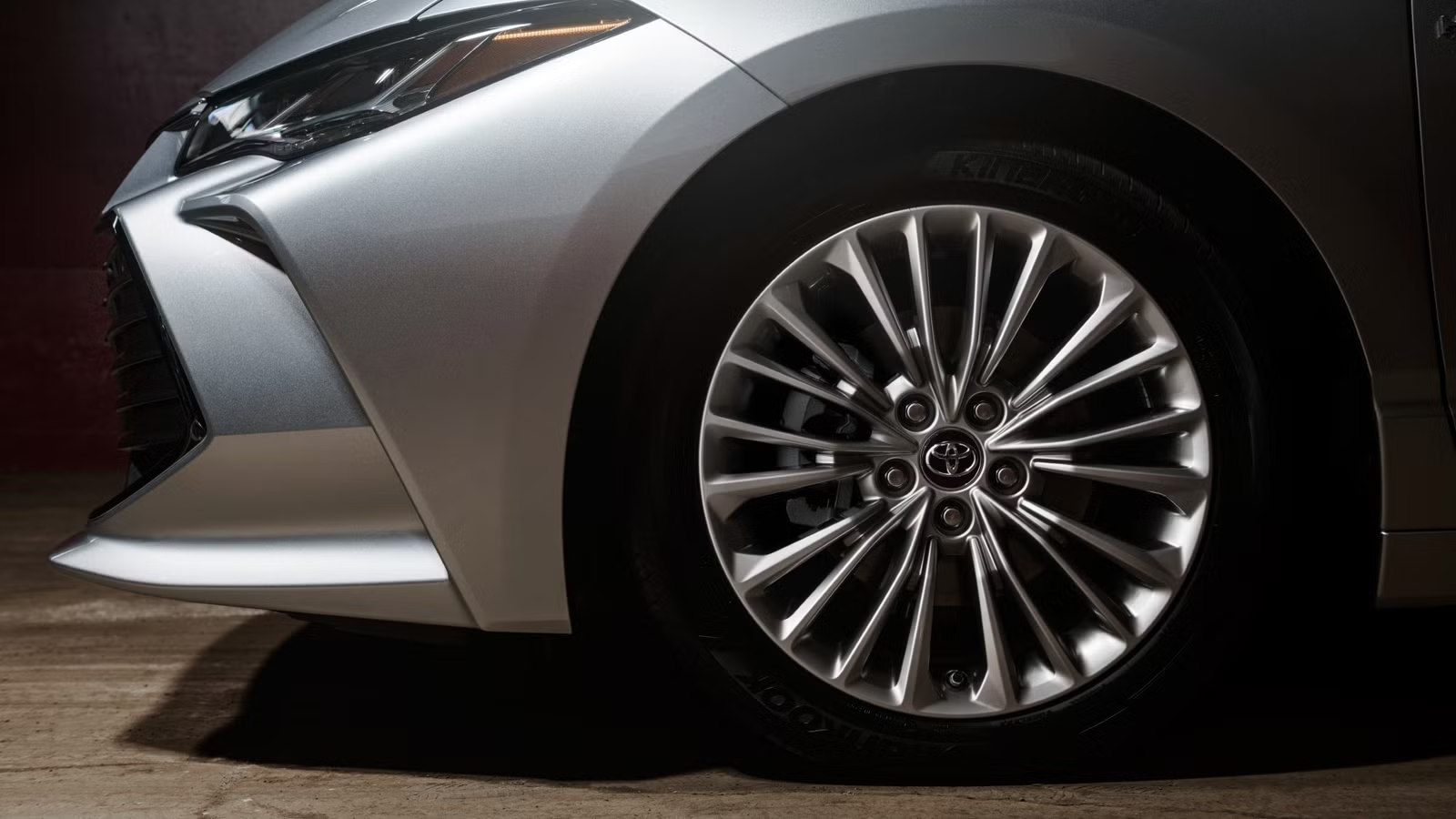
The new car market today is a lot different from before. If you want the most affordable brand-new entry-level sedan today, the Kia K4 is the cheapest. It costs $22,390 for the base LX, which, to be fair, offers great value for the price. But what if I told you that you could get a used full-size sedan for similar money?

Yes, a full-size sedan — the segment that used to be filled with models like the Chrysler 300, the Nissan Maxima, and the car for today’s article, the Toyota Avalon. The Avalon shares its mechanical foundations with the Lexus ES, and being a Toyota, it is unsurprisingly more affordable as well.
With this in mind, would you consider a used full-size mainstream sedan with more features and presence, or is going the brand-new route a non-negotiable factor for you? Here’s why we hope you’d consider a used Avalon first before heading to your nearest Kia dealer for the affordable K4.
The Full-Size Sedan Survivors

If you want a full-size sedan in the mainstream segment, you no longer have a lot of options. Here’s what you can get in 2026 and what makes each model stand out.
The Charging Dodge

A true full-size sedan in every way is the new Dodge Charger. This thing is huge, measuring 206.6 inches whether in coupe or sedan form. The girth is due to the need to accommodate either a Hurricane 3.0-liter twin-turbo straight-six or a pure electric drivetrain.
There’s a limited-production Hustle Stuff Drag Pak with a 5.8-liter supercharged HEMI V-8, too. The Charger is not light, either. In fact, it weighs more than a Mazda CX-90 that seats up to eight passengers, according to Car and Driver. This is a concerning automotive trend when a sedan outweighs an SUV.
Toyota’s Crown Jewel

The Toyota Crown replaced the Avalon in the 2023 model year. It is slightly shorter than the Avalon, but considering its name, it is also the more prestigious model. Like the Avalon, the Crown shares a lot with the Lexus ES, and in some ways, we think that the Crown really blurs the line between a Toyota and a Lexus.
The interior is thoroughly refined, and everything is laid out in an ergonomic manner. It is a Toyota, after all, but with the level of indulgence that’s expected from the Crown nameplate. The thing is, a used Avalon shares a lot of the Crown’s traits for the price of an entry-level brand-new sedan.
Why The Avalon Is Worth Considering

The Toyota Avalon was discontinued in 2022, but it still lives on in China as the full-size sedan’s sole surviving market. Four core variants were offered, plus a few special edition models here and there, such as the Nightshade trim and the sporty TRD.
High Resale, But Affordable Nonetheless
With the Avalon ceasing production after the 2022 model year, it means that the youngest model would be four years old. According to iSeeCars, a four-year-old Toyota Avalon has an average value of $29,896. If that’s too expensive for you, a 2019 model year Avalon has an average value of $24,889. A five-year-old model is $28,855 on average, meaning it retains 63.3 percent of its value.
That’s still a lot higher than the industry average of 41.8 percent. Price-wise, a used fifth-generation Avalon puts it in line with the brand-new price of many compact sedans, even if it has a lot more refinement and a more potent drivetrain versus what entry-level compact sedans offer.
Speaking of which, that’s what you’ll appreciate with the Avalon. You either get a 215-horsepower 2.5-liter fourth-generation Toyota Hybrid System with an eCVT, or a potent 301-horsepower 3.5-liter V-6, and I think that’s the engine you’ll like for the Avalon. It’s hooked up to an eight-speed automatic, delivering smooth and linear power that’s matched with a throaty engine note. Most enthusiasts would rather have a V-6 than a more modest four-cylinder engine.
Full-Size Refinement And Comfort

And perhaps the most obvious advantage of the Avalon is the mere fact that it was once Toyota’s flagship sedan. Matched with those two refined engine choices is an inherently fine TNGA-K platform that makes the Avalon supremely refined and comfy. Go for a Touring variant, and you’ll have the benefit of Adaptive Variable Suspension (AVS), which heightens the refinement and handling balance even further. Based on our team’s review, all Avalon versions are inherently balanced. Just athletic enough not to become boring to drive, while truly being focused on delivering a supple and refined ride.
On the other end of the spectrum is the TRD variant, whose sporty exterior with a pinstriped bodykit is matched with sports suspension and a louder exhaust. Despite the TRD goodness, most reviews point out that though it makes the Avalon sporty, it isn’t dramatically different from other models, particularly the already sport-oriented XSE. The folks who loved the Avalon would still love the TRD, since the TRD bits haven’t negatively affected its ride and refinement.
Why It’s Still Appealing As A Used Purchase
We’ve talked about why the Avalon is worth considering, and considering that it’s no longer in production, is this vehicle still worth owning long term? You’d be surprised that, based on these numbers, the Avalon will still last longer than some new cars.
Still A Lot Of Useful Life

The Toyota Avalon is a very reliable car, though as with most vehicles, the first year of a full redesign tends to have a few more issues. Anyway, iSeeCars says that the Toyota Avalon has an average lifespan of an extremely long 19.2 years or a whopping 200,751 miles. With this data, iSeeCars also reports that the Avalon has a 50.6 percent chance of reaching 200,000 miles. If a child were born when the Avalon was purchased, it would still be in working condition even once that child goes through college. Perhaps it would be a great college car for your kid?
The Avalon is not too expensive to repair and maintain annually, costing $463 versus the full-size sedan’s average of $590 or the industry average of $652. The hybrid system is similar to the Lexus ES or Toyota Camry, which means that even this electrified variant should be reliable. Ditto the 3.5-liter V-6, which is a 2GR-FKS that’s already made a name for itself with reliability and ease of maintenance.
One Of The Few Mainstream Sedans With A V-6

But perhaps one of the Avalon’s strengths is the fact that it had a V-6. Today, the V-6 engine’s popularity is declining, not because of consumer demand, but because of market conditions that incentivize automakers to switch to downsized, turbocharged, or electrified engines. The appeal of a V-6 is strong even in the used market, due to its smooth power delivery and how the engine sounds.
Go for the XSE or TRD variants, and you’ve got an Avalon with a bit of a sporty driving experience without compromising the values that made the Avalon great. If you want an experience that blurs the line between a Toyota and a Lexus, the Touring variant of the Avalon offers posh amenities and the pleasure of Adaptive Variable Suspension (AVS). The Avalon may no longer be produced, but due to its long-lasting reliability and legacy, a used Avalon still makes a compelling case as a used-car purchase.
Sources: Toyota, iSeeCars

Related posts






Latest Post


No Comments