
The Unkillable Motorcycle That Bargain Hunters Are Eyeing
Every touring motorcycle manufacturer promises a machine built to cross 100,000 miles without drama. Few of them actually get tested on that promise past the first big service interval. Ride one hard enough for long enough and something in the driveline usually gives out well before six figures show up on the odometer. Owners trade in early, dealers quietly stop stocking certain parts, and the marketing language about lifetime reliability gets forgotten by the second owner. One touring bike keeps beating that pattern anyway, and its owners aren’t shy about proving it.
What Happens To Most Touring Bikes Long Before They Hit Six Figures

Touring motorcycles are supposed to be the reliable end of the market. They’re bought by riders who plan to put real distance on them, not park them in a garage for weekend photos. In practice, most touring bikes get retired long before their engines actually reach six-figure mileage.
Electrical systems age poorly, suspension components on heavier bikes take a beating from loaded highway miles, and a lot of touring-class engines were never designed with six-figure mileage in mind. The result is a class of motorcycle that talks a big game about longevity but rarely gets ridden far enough to back it up. So what would an engine actually engineered for six-figure mileage look like — and does one actually exist?
Why Honda’s Engines Keep Running Long After Everyone Else’s Give Up

Honda’s reputation here isn’t limited to one bike. Its Africa Twin has owners reporting DCT transmissions lasting past 500,000 miles, and even the budget-friendly NX500 has built a following among mechanics who buy the bike with their own money. That reputation comes from decades of conservative engineering choices: understressed engines, generous service intervals, and a parts-bin philosophy that keeps components proven across multiple generations rather than reinvented every model year. It’s the same philosophy that shows up, in a much bigger and much smoother package, in Honda’s flagship touring bike.

Why The Honda Gold Wing Tour Is The Touring Bike Riders Never Sell

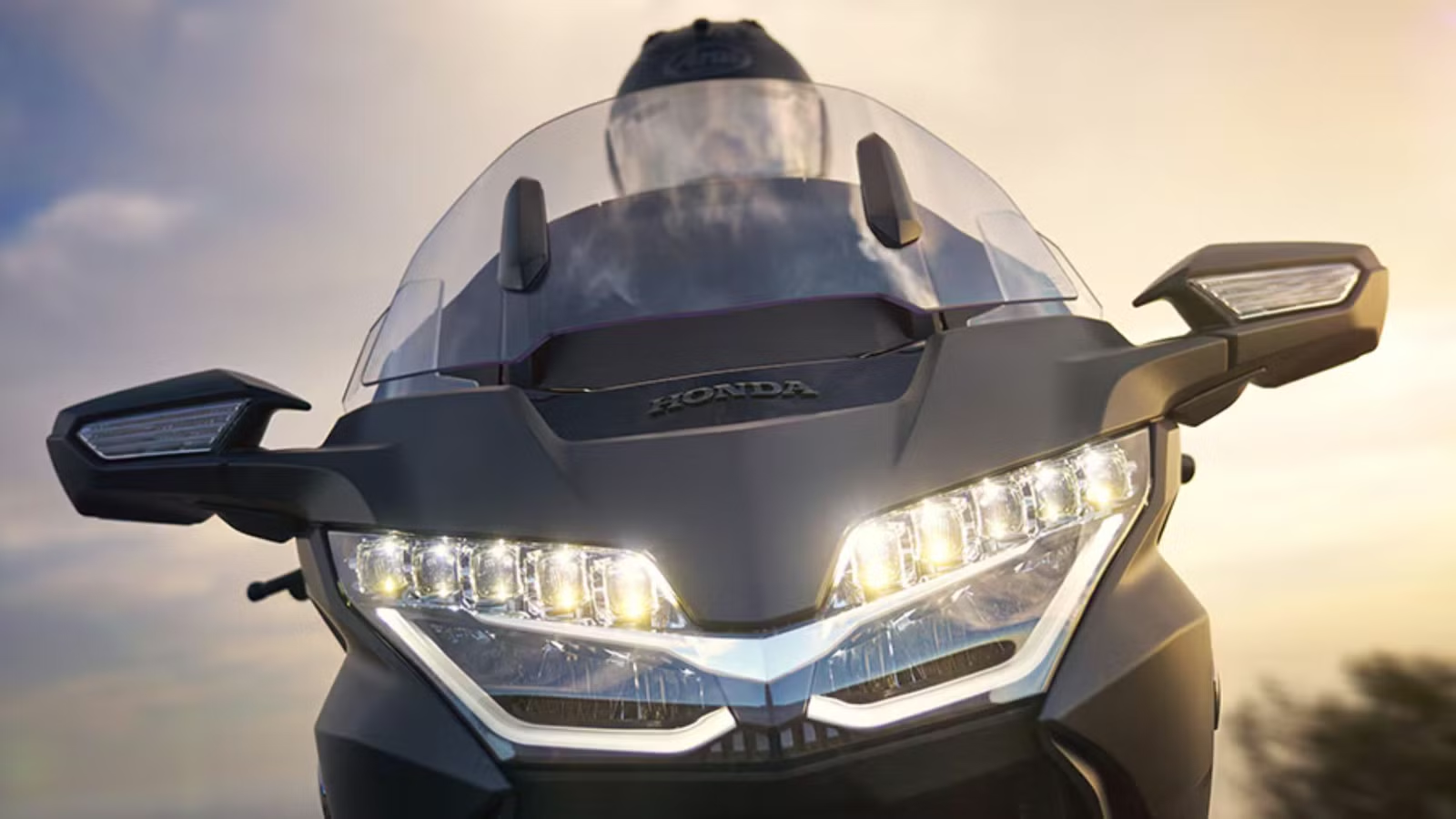
That philosophy reaches its fullest expression in the Gold Wing Tour, where Honda applied it to a bike designed to be ridden for decades. The Honda Gold Wing Tour starts at roughly $29,500 for 2026, positioning it in the same territory as Harley-Davidson’s Road Glide and Indian’s Pursuit Limited rather than at the top of the touring class.
What separates it from that price bracket isn’t a spec sheet number. It’s a pattern that shows up constantly in Gold Wing owner communities: these bikes rarely change hands. Riders who buy one tend to keep it until it’s genuinely worn out, not until the next model year drops. That kind of retention isn’t something a manufacturer can manufacture. It gets earned one long, uneventful ride at a time.
What A 1,833cc Flat-Six Does Differently After 300,000 Miles

The current Gold Wing’s 1,833cc horizontally opposed six-cylinder engine produces 125 horsepower at 5,500 rpm and 125 pound-feet of torque at 4,500 rpm, numbers that sound modest for a bike this size until you ride it. The flat-six layout spreads combustion forces across six small pistons instead of two large ones, which means less stress on any individual component and a naturally smoother powerband.
Owner forums are full of examples well past the 250,000-mile mark, and some riders report engines still running strong past 400,000 miles on the original internals, a pattern that shows up across Honda’s Japanese-built lineup generally. Those figures come from owner-reported mileage rather than a formal manufacturer reliability index, since motorcycles don’t have an equivalent to the used-car industry’s iSeeCars-style longevity data. But the volume and consistency of those reports, across a bike that’s been in continuous production since 1975, is hard to dismiss as coincidence.
How A Seven-Speed DCT Removes One Of The Biggest Wear Points On Two Wheels

Mechanical longevity isn’t only about the engine. The Gold Wing’s optional seven-speed dual-clutch transmission removes the clutch lever entirely, cutting down on one of the most common wear points on any high-mileage motorcycle. Up front, the double-wishbone suspension design, carried over from the 2018 redesign, moves the front wheel’s steering and damping duties away from a conventional telescopic fork. That setup reduces stiction and spreads load more evenly through the front end, which matters enormously on a bike that regularly carries a passenger and a full set of luggage over thousands of highway miles a year.
61 Liters Of Storage Is Why This Bike Never Sits In The Garage

None of that mechanical durability matters if the bike doesn’t get ridden, and the Gold Wing Tour’s feature set is built to keep it in constant use rather than parked in a garage. The Tour’s top box and side cases add up to 61 liters of storage, enough for two full-face helmets and a real weekend’s worth of luggage.
A seven-inch display brings Apple CarPlay, Android Auto, and SiriusXM into a bike that already isolates riders from wind and road noise better than almost anything else in the touring class. Bikes that stay comfortable enough to ride every week are the ones that actually rack up the miles needed to prove a reliable reputation in the first place.
The Gold Wing Tour Proves $29,500 Doesn’t Have To Mean Compromise

Against the rest of the premium touring field, the Gold Wing Tour’s roughly $29,500 starting price undercuts Harley-Davidson’s Road Glide Limited and Indian’s Pursuit Dark Horse, both of which start near $33,000, while still delivering a six-cylinder engine, a double-wishbone front end, and a dual-clutch transmission option that neither rival offers.
It costs more than BMW’s R 1300 RT, which starts near $22,645, but the Gold Wing counters with a longer production history and a much larger base of high-mileage owners to draw reliability data from. For riders shopping this class specifically because they plan to keep a bike for decades rather than trade it in after a few seasons, that combination of price and proven longevity is difficult for any current rival to match.
Sources: Honda Powersports, motorcycles.com

Related posts

Latest Post


No Comments