
The Underrated 360-HP Yenko Nova That Let Buyers Skip The Big-Block Insurance Hit
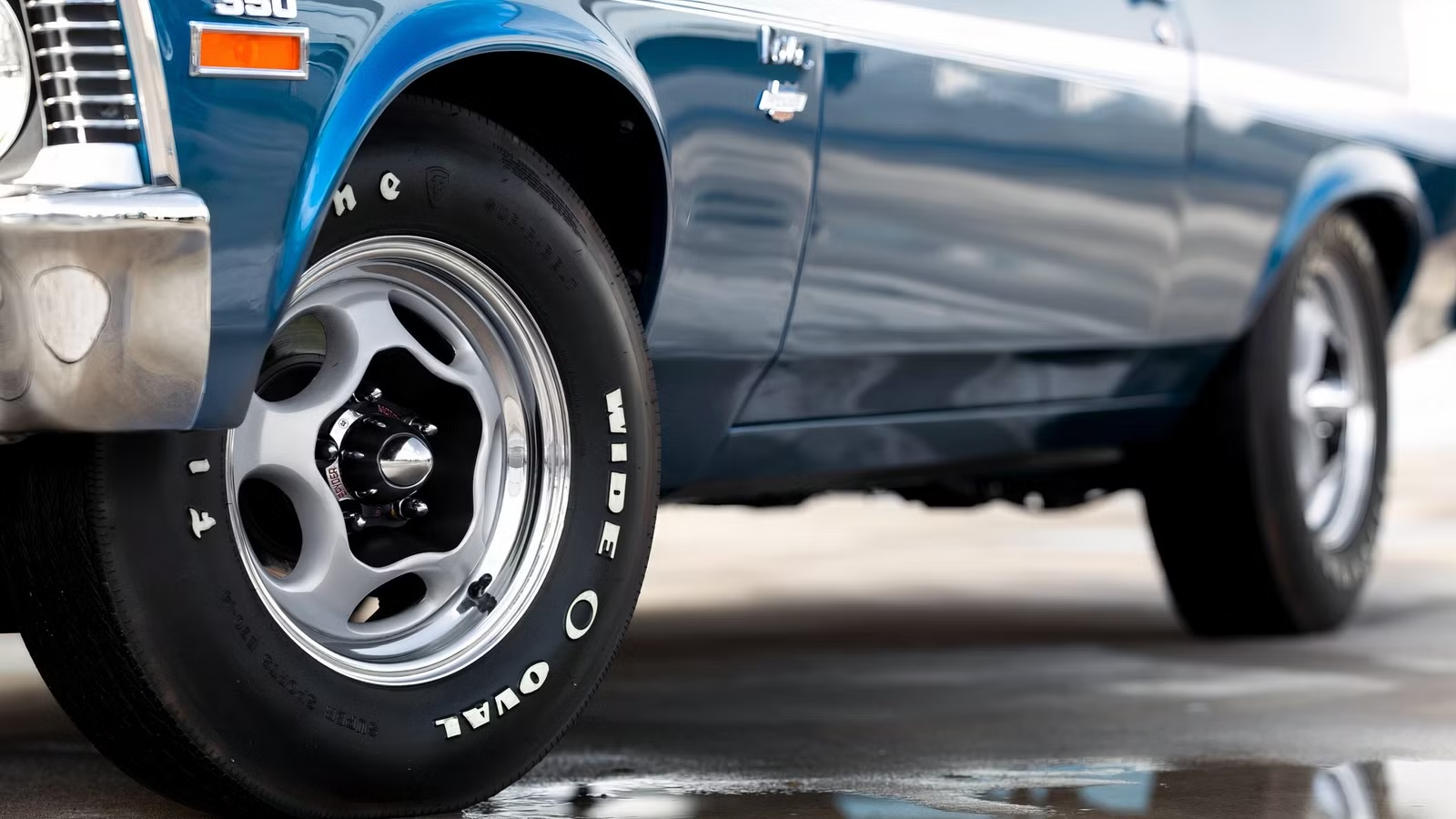
The Nova was the baby of the Chevrolet family, a cheap but cheerful way to cash in on the booming compact commuter market of the 1960s. Looking at its base form with a wimpy straight six and an interior where the biggest luxuries were a vinyl bench seat and a push-button AM radio, you’d be forgiven for thinking there wasn’t any latent sporting potential hidden within. Well, that’s where a Pennsylvania Chevy dealer with as much brains as he had cojones came in clutch.
The Nova: The Corolla/Civic of 1960s America

For most Americans, the Chevy Nova was exactly what it looked like: a sensible, affordable grocery-getter that got you to work and back without any drama. Designed to compete with Ford’s Falcon and unveiled as the Chevy II in late 1961, it was General Motors’ straightforward answer to the growing demand for no-frills, practical transportation. In its early years, the Nova was one of the few American cars small enough that a four-cylinder engine could legitimately propel it to highway speeds, albeit very slowly.
Still, like most American cars, the Nova ballooned and gained considerable weight over the next eight years and two model generations. Over time, that very same latent sporting ability that seemed absent at first became clear, just by virtue of how light the chassis was against the behemoths most American cars of the day were.

For many, the Nova wouldn’t reach its watershed moment until the third generation rolled around in 1968. By then the golden age of American muscle was in full swing, and the completely redesigned Nova had finally gained the aggressive, semi-fastback styling to match the V8s hiding under its hood. It was here, finally, where the Nova and its most famous enthusiast became acquainted on a professional level.

Don Yenko: The Man, The Myth, The Legend

To car enthusiasts, Donald Frank Yenko was the man who took ordinary Chevrolets and turned them into machines that could make the first of the supercars blush. Yet, many don’t understand exactly why Yenko felt the need to do this. Outside of being an old-fashioned speed junkie with legitimate SCCA road racing experience, Yenko, a licensed Chevrolet dealer, was intensely resentful of newly-implemented insurance surcharges and federal emissions regulations that were threatening to strangle the golden era of American performance.
As early as 1970, pencil-pushing, bean-counting insurance companies were growing weary of so many young people wrapping muscle cars around trees and light poles, miraculously escaping unharmed, and running to adjusters with puppy dog eyes asking for brand new cars. To combat this, those actuaries did the only thing they knew how to do, they started hiking premiums on big-block engines to the point that only older, wealthier drivers and their nepo babies could realistically afford comprehensive coverage.

This obviously infuriated Don Yenko, who made his living selling big-block performance to the exact young, blue-collar gearheads who were now being priced out of the hobby. He had already made a massive name for himself in 1969 by having his dealership mechanics swap massive 427-cubic-inch big block engines into standard Novas, creating legendary, white-knuckle tire-shredders. For 1970, Yenko knew the massive-displacement era was running on fumes, but Yenko knew a little dealer’s trick to get around them.
1970 Yenko Nova Deuce: Compact Car, Big Performance

Instead of doubling down on massive-displacement engines and charging his customers a fortune to swap them in-house, Yenko pivoted to Chevrolet’s elite small-block. Of course, that was the same solid-lifter LT1 350-cubic-inch V8 you’d find in the Z/28 Camaro as well as the C3 Corvette. To make it happen when normal dealership ordering channels prevented it, Yenko used his knowledge of Chevrolet’s Central Office Production Order (COPO) system to get the factory to do the work for him.
Ordinarily, the COPO system was used to outfit fleet vehicles with specific paint jobs or mundane things like heavy-duty suspensions for taxi service. Through the magic of the COPO 9010 order code, Chevrolet factory-installed the ferocious LT1 directly into the humble Nova chassis right on the assembly line. To ensure the car didn’t just go fast in a straight line, Yenko also checked the box for COPO 9737, which bolted on Chevrolet’s elite Sports Car Conversion handling package. The cars were then shipped to Yenko’s Pennsylvania dealership to be finished with his signature graphics, badging, and tuning.

Officially dubbed the Yenko Deuce, a nod to the Beach Boys’ classic hit “Little Deuce Coupe”, it was second only to the 427 Big Block Novas of the year prior in terms of the ultimate factory sleeper. Because it technically carried a 350-cubic-inch small-block, insurance companies categorized it alongside standard, grocery-getting commuter cars. Little did the actuaries know, this undercover powerhouse was rated at a blistering 360 horsepower (just a hair shy of the Corvette’s 370-horsepower rating). With a few minor modifications, it was capable of ripping off quarter-mile times in the low 13-second range. Not that this performance came cheap, no less than $4,395, or the equivalent of a brand-new Cadillac.
Ultra-Rare, And Valuable

As a result, only a small number of units, as little as 175 of these small-block terrors were ever built. Specifically, 122 units were shipped with Muncie four-speed manual gearboxes, and the rest with heavy-duty Turbo-Hydramatic 400 three-speed automatics. Allegedly, two were shipped to Canadian Chevy dealerships, and the rest were sold as turn key sleepers at Yenko’s Chevy dealership in Canonsburg, Pennsylvania, southeast of Pittsburgh.
Today, 1970 Deuces are at least a little bit more reasonably priced than the million-dollar 427s. Well, reasonable is a relative term, of course: we’re still talking between $125,000 and $150,000 on any given day. But if you want the ultimate prize, Look for one of the 10 cars produced in a vibrant shade of Sunflower Yellow.
Source: Bonham’s Auctions

Related posts

Latest Post


No Comments