
The Ultimate City EVs For Under $45K
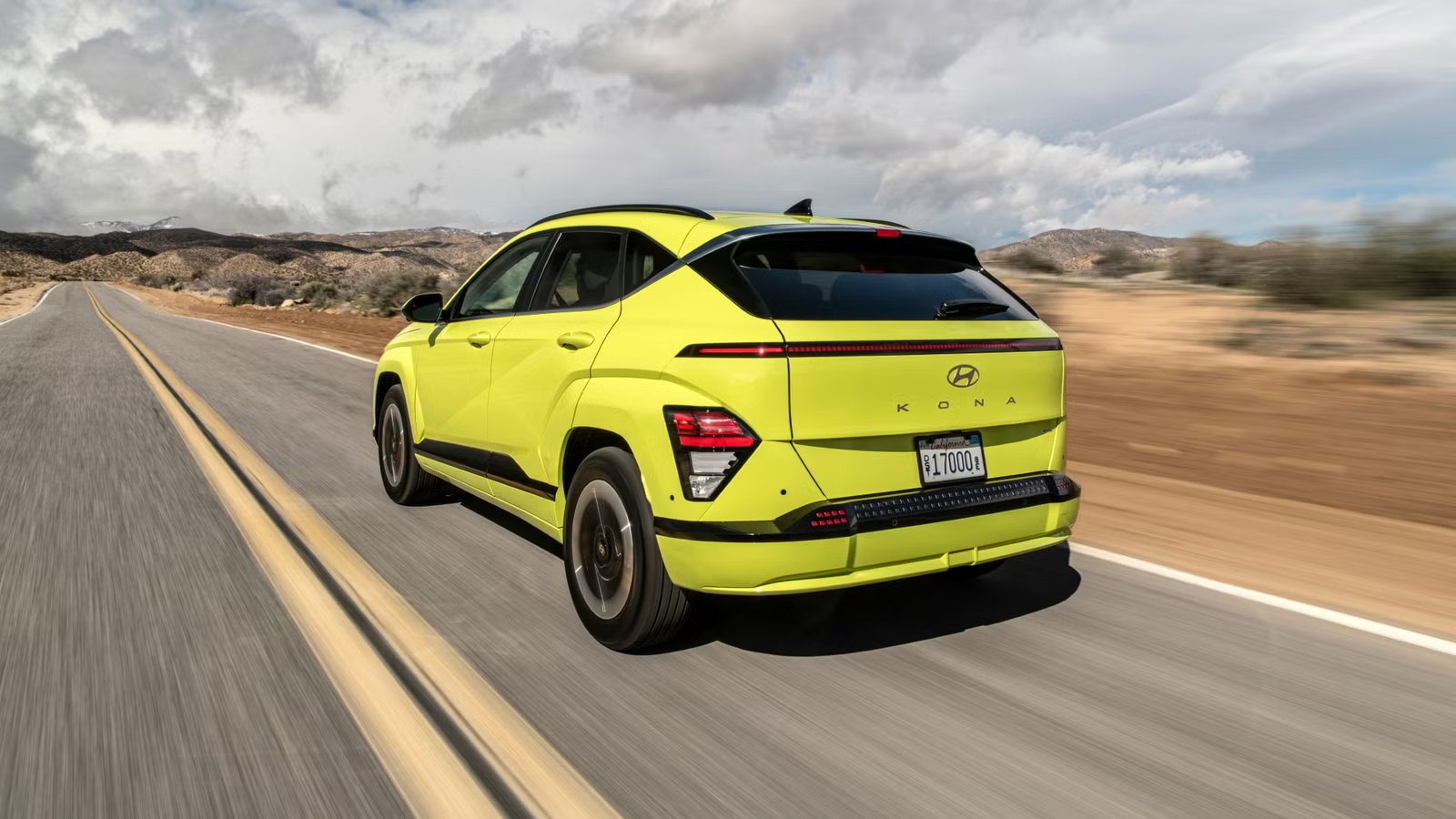
Electric cars are no longer just expensive luxury vehicles designed for wealthy early adopters. Over the past few years, the EV market has slowly started becoming more accessible, with several manufacturers finally focusing on smaller, more affordable EVs aimed at ordinary commuters rather than six-figure status symbols. That shift matters because city driving may actually be where electric cars make the most sense.

Urban commutes are usually shorter, traffic-heavy environments that naturally benefit from regenerative braking, and many city drivers simply do not need massive driving ranges or oversized electric SUVs. Instead, buyers gravitate toward compact EVs that are easy to park, affordable to run, efficient in daily use, and modern enough to feel worth the switch from gasoline power.
The market is finally starting to deliver that. While some affordable EVs still involve compromises, several newer models now offer enough range, practicality, refinement, and technology to function as genuinely usable everyday cars. From compact hatchbacks to small crossovers and entry-level sedans, these EVs prove buyers no longer need to spend luxury-car money to join the electric era.
2027 Chevrolet Bolt EV
Starting MSRP: $27,600

The Chevrolet Bolt EV quietly became one of the best-value electric cars on the market before production paused. Now returning as an all-new 2027 model, the Bolt continues representing affordable EV ownership done properly. Previous versions offered over 250 miles of driving range, brisk acceleration, and surprisingly practical interior packaging.

Unlike some tiny urban EVs, the Bolt never felt heavily compromised during highway driving either. CarBuzz praised the Bolt EV’s “excellent electric range” and strong practicality for such a compact hatchback. Still, the Bolt was not perfect. CarBuzz criticized some interior materials for feeling “cheap in places,” while also noting that DC fast-charging speeds lagged behind newer EV rivals. Even so, Chevrolet’s decision to revive the Bolt confirms just how important affordable EVs have become in the American market.
|
2027 Chevrolet Bolt |
Specification |
|---|---|
|
Starting MSRP |
$27,600 |
|
Battery Pack |
65 kWh |
|
Range |
Estimated 262 miles |
|
Horsepower |
210 |
|
Torque |
TBD |
|
Driveline |
Front-wheel drive |
|
0–60 MPH |
6.7 Seconds |
|
DC Fast Charging |
150 kW+ |
|
Body Style |
Compact Electric Hatchback |
2026 Nissan Leaf
Starting MSRP: $29,990

The Nissan Leaf remains one of the most important affordable EVs ever built. Long before electric cars became fashionable, the Leaf quietly introduced ordinary buyers to daily EV ownership at relatively attainable prices. Now entering a new generation for 2026, the Leaf adopts a far more modern crossover-inspired design while continuing to focus on affordability and everyday usability.

The new Leaf offers significantly improved technology, updated styling, and access to Tesla-compatible NACS charging, addressing one of the biggest weaknesses of the previous-generation model. Compact dimensions still make it well-suited to crowded urban environments and tight parking spaces. Inside, Nissan gives the new Leaf a much more modern cabin with larger digital displays, updated infotainment technology, improved materials, and a cleaner dashboard layout.
Early impressions from publications like Car and Driver praised the Leaf’s more refined design, improved packaging, and updated technology, while also noting that the crossover-inspired shape should broaden the EV’s appeal beyond purely city-focused buyers. Even so, the Leaf continues prioritizing simplicity, efficiency, and affordability over outright performance or luxury-car theatrics — and that may still be exactly what many commuters want from an everyday EV.
|
2026 Nissan Leaf |
Specification |
|---|---|
|
Starting MSRP |
$29,990 |
|
Battery Pack |
75 kWh |
|
Range |
303 miles |
|
Horsepower |
214 hp |
|
Torque |
261 lb-ft |
|
Driveline |
Front-wheel drive |
|
0–60 MPH |
7.0–8.0 seconds (estimated.) |
|
DC Fast Charging |
150 kW |
|
Body Style |
Compact Electric Crossover |
2025 Fiat 500e
Starting MSRP: $30,500

The Fiat 500e may be tiny, but that is exactly what makes it so appealing in urban environments. Unlike many modern vehicles that continue growing larger every generation, the 500e embraces compact simplicity. It feels purpose-built for crowded city streets, tight parking spaces, and short daily commutes.
The retro-inspired styling also gives the little Fiat plenty of personality. Inside, the cabin blends colorful materials, minimalist controls, and surprisingly modern technology. Car and Driver praised the Fiat 500e’s nimble handling, light steering, and easy maneuverability around town, reinforcing its city-focused personality. The compact dimensions also make it exceptionally easy to place in traffic and squeeze into tight urban parking spaces.

Range remains relatively modest compared to larger EVs, but for buyers primarily driving within cities, that limitation becomes far less problematic. The Fiat 500e is not designed to dominate long highway road trips. Instead, it focuses heavily on charm, maneuverability, and making everyday city driving feel lighthearted and stress-free.
|
2025 Fiat 500e |
Specification |
|---|---|
|
Starting MSRP |
$30,500 |
|
Battery Pack |
42-kWh |
|
Range |
Up to 162 miles |
|
Horsepower |
117 hp |
|
Torque |
162 lb-ft |
|
Driveline |
Front-wheel drive |
|
0–60 MPH |
8.5 seconds |
|
DC Fast Charging |
Up to 85 kW |
|
Body Style |
Compact Hatchback |
2025 Hyundai Kona Electric
Starting MSRP: $32,975

The Hyundai Kona Electric quietly delivers one of the strongest all-around packages in the affordable EV market. Unlike some rivals that prioritize quirky styling or minimalism, the Kona Electric simply focuses on usability. It blends respectable range, solid practicality, comfortable ride quality, and modern technology into a compact crossover shape buyers already understand.

Inside, Hyundai has improved material quality and dashboard design. Dual digital displays and updated infotainment systems help the Kona become more modern than earlier affordable EVs. Car and Driver praised the Kona Electric’s smooth ride quality, practical driving range, and surprisingly refined road manners, noting that the compact EV feels easy and comfortable to live with daily. Range also remains highly competitive for the price point, making the Kona Electric practical for both city commuting and longer highway journeys.
|
2025 Hyundai Kona Electric |
Specification |
|---|---|
|
Starting MSRP |
$32,975 |
|
Battery Pack |
64.8-kWh |
|
Range |
Up to 261 miles |
|
Horsepower |
201 hp |
|
Torque |
188 lb-ft |
|
Driveline |
Front-wheel drive |
|
0–60 MPH |
6.6 seconds |
|
DC Fast Charging |
Up to 150 kW |
|
Body Style |
Compact Electric Crossover |
2026 Chevrolet Equinox EV
Starting MSRP: $34,995

The Chevrolet Equinox EV represents something increasingly important in today’s market: a genuinely affordable electric SUV with proper practicality. Unlike smaller hatchbacks and compact urban EVs, the Equinox EV targets families wanting more space without stepping into luxury-EV pricing territory.

Chevrolet also deserves credit for avoiding overly futuristic gimmicks here. The Equinox EV looks approachable, practical, and familiar — something many mainstream buyers still appreciate while transitioning into EV ownership.
Car and Driver praised the Equinox EV’s comfortable ride quality, competitive range figures, and spacious interior packaging, noting that the SUV feels particularly well suited to everyday family use. For buyers wanting an EV that feels closest to a traditional gasoline crossover, the Equinox EV may quietly become one of the smartest choices available.
|
2026 Chevrolet Equinox EV |
Specification |
|---|---|
|
Starting MSRP |
$34,995 |
|
Battery Pack |
85 kWh |
|
Range |
Up to 319 miles |
|
Horsepower |
220–300 hp |
|
Torque |
243–355 lb-ft |
|
Driveline |
FWD / AWD |
|
0–60 MPH |
5.8–7.0 seconds |
|
DC Fast Charging |
Up to 150 kW |
|
Body Style |
Compact Electric Crossover |
2026 Hyundai Ioniq 5
Starting MSRP: $35,000

The 2026 Hyundai Ioniq 5 has quickly established itself as one of the most compelling electric vehicles on sale, blending retro-inspired styling with cutting-edge technology. Built on Hyundai’s dedicated E-GMP electric platform, it offers a spacious, lounge-like cabin, ultra-fast charging capabilities, and a driving experience that balances comfort with refinement. Available in multiple configurations, the Ioniq 5 delivers up to 318 miles of EPA-estimated range, making it a practical choice for both daily commuting and longer road trips.

Unlike many EVs that prioritize technology over usability, the Ioniq 5 combines intuitive features with impressive real-world practicality. Car and Driver praised its “roomy interior, rapid charging capability and composed ride,” while Edmunds highlighted its comfortable seating and futuristic yet functional cabin. The Ioniq 5 isn’t without its shortcomings, however. Some reviewers have noted that rear visibility is limited due to the bold styling, and certain infotainment functions require more touchscreen interaction than traditional physical controls. Nevertheless, the Ioniq 5 remains one of the benchmark electric crossovers, proving that an EV can be both innovative and genuinely easy to live with.
|
Hyundai Ioniq 5 |
Specification |
|---|---|
|
Starting MSRP |
$35,000 |
|
Battery Pack |
63.0 kWh / 84.0 kWh |
|
Range |
Up to 318 miles (EPA) |
|
Horsepower |
Up to 320 hp (AWD) |
|
Torque |
Up to 446 lb-ft |
|
Driveline |
RWD or AWD |
|
0–60 MPH |
As quick as 4.4 seconds (AWD) |
|
DC Fast Charging |
Up to 350 kW |
|
Body Style |
Compact Electric SUV |
2026 Tesla Model 3 Premium RWD
Starting MSRP: $36,990

Even after years on the market, the Tesla Model 3 still heavily influences the affordable EV segment. The rear-wheel-drive version remains Tesla’s most accessible model while continuing to deliver excellent efficiency, strong charging access, and highly competitive driving range.

The minimalist cabin design still divides opinion, particularly because nearly all controls sit inside the central touchscreen. Still, Tesla’s software integration, charging convenience, and overall efficiency remain major strengths.
MotorTrend praised the Model 3’s efficiency, responsive handling, and everyday usability, while also highlighting Tesla’s Supercharger network as one of the car’s biggest real-world advantages. For city drivers specifically, the Model 3’s compact sedan footprint, responsive acceleration, and one-pedal driving behavior suit urban commuting extremely well.
|
2026 Tesla Model 3 RWD |
Specification |
|---|---|
|
Starting MSRP |
$36,990 |
|
Battery Pack |
69.5 kWh |
|
Range |
Up to 321 miles |
|
Horsepower |
271 hp |
|
Torque |
310 lb-ft |
|
Driveline |
Rear-wheel drive |
|
0–60 MPH |
5.8 seconds |
|
DC Fast Charging |
Up To 225 kW |
|
Body Style |
Electric Sedan |
2026 Kia Niro EV
Starting MSRP: $39,700

The Kia Niro EV focuses heavily on practicality and comfort rather than dramatic styling or aggressive performance. That may sound slightly boring on paper, but it actually makes the Niro EV incredibly easy to live with daily. Kia also gives the Niro EV one of the more mature and well-executed interiors among affordable EVs, with large digital displays, physical climate controls, comfortable seating, and clever storage solutions helping reinforce its everyday usability.

TopSpeed praised the Niro EV for its smooth ride quality, practical cabin layout, and relaxed driving manners, noting that the crossover feels particularly well suited to commuting and everyday use rather than trying to behave like a performance EV. Range remains competitive as well, while charging speeds continue improving with newer updates. The Niro EV may not be the most exciting electric car emotionally, but as a sensible everyday commuter vehicle, it quietly excels.
|
2025 Kia Niro EV |
Specification |
|---|---|
|
Starting MSRP |
$39,700 |
|
Battery Pack |
64.8 kWh |
|
Range |
Up to 253 miles |
|
Horsepower |
201 hp |
|
Torque |
188 lb-ft |
|
Driveline |
Front-wheel drive |
|
0–60 MPH |
7.1 seconds |
|
DC Fast Charging |
Up to 85 kW |
|
Body Style |
Compact Electric Crossover |
2026 Volvo EX30
Starting MSRP: $40,345

The Volvo EX30 may become one of the most disruptive, affordable EVs in years. Volvo managed to package premium design, strong technology, minimalist Scandinavian styling, and impressive EV performance into a far smaller and more affordable package than many buyers expected.

Inside, the EX30 is clean and modern, with textured materials, ambient lighting, and Volvo’s signature minimalist design philosophy helping create a genuinely upscale atmosphere. TopSpeed praised the EX30’s premium-feeling cabin, compact dimensions, and strong performance, particularly in dual-motor form. Yet despite its speed, the EX30 still feels heavily focused on urban efficiency and everyday usability. For buyers wanting a small EV that genuinely feels upscale, the EX30 may become one of the strongest options available.
|
2025 Volvo EX30 |
Specification |
|---|---|
|
Starting MSRP |
$40,345 |
|
Battery Pack |
69 kWh |
|
Range |
Up to 261 miles |
|
Horsepower |
268–422 hp |
|
Torque |
253–400 lb-ft |
|
Driveline |
RWD / AWD |
|
0–60 MPH |
3.4–5.1 seconds |
|
DC Fast Charging |
Up to 153 kW |
|
Body Style |
Compact Electric Crossover |
2026 MINI Countryman SE ALL4
Starting MSRP: $45,200

Just over the threshold, but the MINI Countryman SE takes a different approach from many affordable EVs. Rather than focusing purely on value, MINI leans heavily into personality, premium flair, and quirky design charm. The larger body also gives the new Countryman noticeably stronger everyday practicality than previous MINI models.

Inside, the cabin features circular OLED displays, minimalist switchgear, and premium materials. Edmunds praised the Countryman SE’s low center of gravity, instant electric performance, and balanced handling, while GreenCars highlighted its responsive steering and refined ride quality. Still, the Countryman SE is not perfect. Edmunds noted that the steering lacks some feedback, while also mentioning that the touchscreen-heavy interface can occasionally become distracting to use. Range also trails certain similarly priced EV rivals.
|
Mini Countryman SE ALL4 |
Specification |
|---|---|
|
Starting MSRP |
$45,200 |
|
Battery Pack |
64.7 kWh |
|
Range |
216 miles |
|
Horsepower |
308 hp |
|
Torque |
364 lb-ft |
|
Driveline |
AWD |
|
0–60 MPH |
5.4 seconds |
|
DC Fast Charging |
Up to 130 kW |
|
Body Style |
Compact Electric Crossover |
Sources: OEMs, Car And Driver, Edmunds, Motortrend

Related posts




Latest Post


No Comments