
The Suzuki Motorcycle That Balances Fun, Comfort, And Reliability
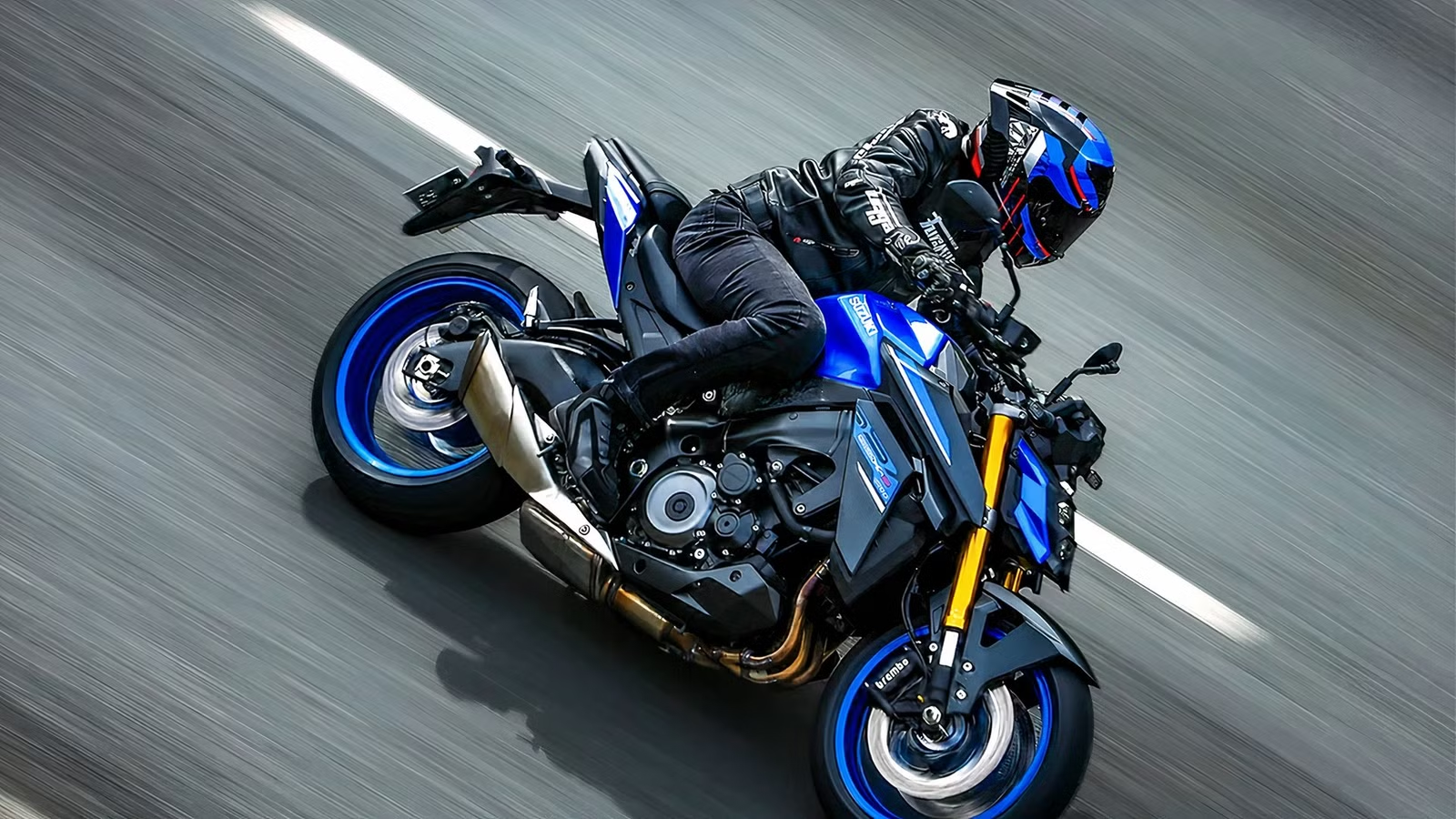
Suzuki is one of the smaller Japanese motorcycle manufacturers. Although it does not lack engineering capability, it decided to take a different track from the other Japanese brands when it comes to its motorcycles. Reliability and affordability are prioritized over pretty much everything else. This attitude of democratizing performance for everyone is what has made Suzuki such a popular brand, and if you want something for the real world rather than something that looks good on a spec sheet, then it is the brand you need to consider seriously. Out of its current lineup, a liter-class naked hits the fun, comfort, and reliability balance.
Modern Streetfighters Are Track Bikes in Disguise — And That’s A Problem For Real Riders

There was a time when naked bikes were practical bikes that you could use daily on the street. Then, suddenly that concept was taken over by sports bikes whose fairings had been ripped off and whose riding position was made a little less unforgiving, so you could use them on a daily basis. These streetfighters are nothing but sports bikes in disguise. Even when you see their marketing materials, they show them with riders at a racetrack, which shows what the intent actually is — and it isn’t the commute.
Why Most Nakeds Miss The Mark For Daily Riders

The modern motorcycle rider has realized that track-day specials are brilliant when you are actually on a racetrack. When you want something for daily use or just a weekend in the mountains, you need something more practical. Something that is between the middleweights that feel asthmatic on a highway and the flagship streetfighters that are far too high-strung. This need aligns perfectly with Suzuki’s ethos of providing usable performance, so what it did was repurpose old but still usable parts and create a Frankenstein that feels like anything but. Suzuki remains the smartest brand for budget buyers.
It’s Not A Middleweight, Not A Premium Flagship — It’s The Price Point Both Miss

Suzuki did not do anything different from what other manufacturers have also been doing by cobbling together parts from older machines to make a streetfighter with a blend of aggressive styling and real-world usability. Where it deviated from the norm is that the result feels like more than the sum of its parts, and the Hamamatsu factory has inserted it into a price gap that exists between the premium middleweights and the liter-class streetfighters. So not only is this a Suzuki motorcycle that balances fun, comfort, and reliability, it also balances its price quite well.

The GSX-S1000 Lives In A Unique Price Gap

Suzuki’s solution is this: the GSX-S1000, its flagship naked bike that nevertheless is one of the most affordable inline-four motorcycles from the popular brands. It uses an old GSX-R1000 engine and chassis to great effect. The superbike lineage means that it has intuitive handling, and the detuned output means that it has great reliability and low cost of ownership as well. It doesn’t have complicated electronics that can fail easily, and it looks good enough to turn heads wherever it goes. In short, it has everything you would want from a value-focused liter streetfighter.
A Proper Liter-Class Experience Under $12,000

The GSX-S1000 retails for $11,989, which is incredible value for a liter-class sportbike. If you look at the pricing of other nakeds by Japanese manufacturers, it splits those that displace around 900 cc and the liter-class nakeds. You’ll not have to look at European brands at all; it rivals the Ducati Monster at a lower price. It is almost $1,000 more expensive than its direct rival, the CB1000 Hornet SP, but unlike the Honda, this gets the international engine tune and no separate one for the US market with less power.
An Old Repurposed Superbike Engine Offers Both Power And Reliability

An old GSX-R engine has been pressed into service, and it delivers big bike performance in a lean package. Like a few of the other models in Suzuki’s lineup, it displaces 999 cc from an inline four-cylinder configuration and has a compression ratio of 12.2:1. It has been detuned because it is a street bike, but it still generates 150 horsepower at 11,000 RPM and 78 pound-feet of torque at 9,250 RPM. It is a slightly peaky engine, but it is matched with a close-ratio six-speed gearbox with an assist and slipper clutch and a two-way quickshifter, so that helps a little.
Twin-Spar Aluminum Chassis Is Rare In Its Segment

The GSX-S1000 has an aluminum twin-spar frame, which is very rare for the segment. The only other low-cost motorcycle to have a similar frame is the Yamaha MT-09. If you go looking for others that have one of these, you’ll be looking at premium brands like Aprilia, Triumph, and BMW. Like the engine, this has also been derived from an old GSX-R, the K6, making this one of the Suzukis that balance performance and practicality well.
The suspension consists of 43 mm inverted, fully adjustable KYB forks and a link-type monoshock at the rear with adjustment available for preload and rebound damping. The brakes consist of dual 310 mm discs at the front with Brembo radial monobloc calipers and a 240 mm disc at the rear with a single-piston Nissin caliper. As equipped, it has 17-inch alloy rims and tubeless radial tires.
Its GSX-R Roots Make It Bigger Than the Competition, For Better And Worse
Motorcycles have been getting more compact over the decades so that they appeal to a wider audience, and they have been tamed by electronics, but the GSX-S1000, as described above, is an amalgamation of parts from old bikes, which is why it is a full-size liter naked. It is 83.3 inches long, 31.9 inches wide, and has a 57.2-inch wheelbase. The seat height is normal for the segment at 32 inches. The fuel tank can hold five gallons of fuel. The only place where it lags behind the competition is its weight; at 472 pounds, it is higher than most others in this segment.
The Feature Set Looks Adequate For The Price

This model received an update in 2025 and got a five-inch TFT display; however, Suzuki left out Bluetooth and navigation, which makes no sense on multiple levels. First, whether premium or budget, every other product in the segment offers at least Bluetooth connectivity, at least as an option.
Second, it has the five-inch display installed on its 800 cc models and the V-Strom 1050, so through commonality of parts, it won’t be that expensive to add. Suzuki even offers Bluetooth connectivity on a 4.2-inch TFT display on a 125 cc scooter in the Indian market, so why it leaves it off the GSX-S1000 is puzzling. This bike might deliver thrills without the stress, but this omission needs to be corrected.

The GSX-S1000 is available in two colorways, blue and red. Both have gold front forks and color-matched wheels, but the red has black plastic for the headlamp surround and the side panels next to the pillion seat, whereas the blue one has splashes of blue in both those areas. The official accessories list is disappointingly small, but the aftermarket should be able to take care of whatever you need.
As far as electronics are concerned, it has a by-wire throttle, so you get three power modes that change the throttle response but not the peak power, five-step traction control, low-RPM assist that works as a kind of anti-stall, and Suzuki’s Easy Start that doesn’t require you to hold the starter button until it fires up. The dual-channel ABS is not switchable, which limits the fun you can have despite all the power and handling it has on offer.
The GSX-S1000 Stacks Well Against Rivals

Coming to rivals, the direct competitor is the CB1000 Hornet SP, which retails for $10,999. It doesn’t have the kind of chassis the Suzuki has, and it is down on power in the US market as well, but it balances performance and peace of mind. The design is a little more cohesive than that of the ‘Zook, and it gets some very good cycle parts. There is a Brembo radial master cylinder for the front brakes and an Öhlins TTX36 rear shock, which any track-day special would be proud of. A simple flash of the ECU will also get its international level of power back, which is on par with the Suzuki.

Then there is the CB1000F. This isn’t really a streetfighter, but it is a liter naked motorcycle that costs $10,599. That puts it right in the ballpark of the GSX-S1000, and this one sports a six-axis IMU; it quietly delivers the best value in segment. You trade in a little bit of performance and aggressive looks for far greater safety and future-proofing.
Source: Suzuki Cycles

Related posts





Latest Post


No Comments