
The Toyota Sienna Makes A Strong Case For Keeping The Minivan Alive
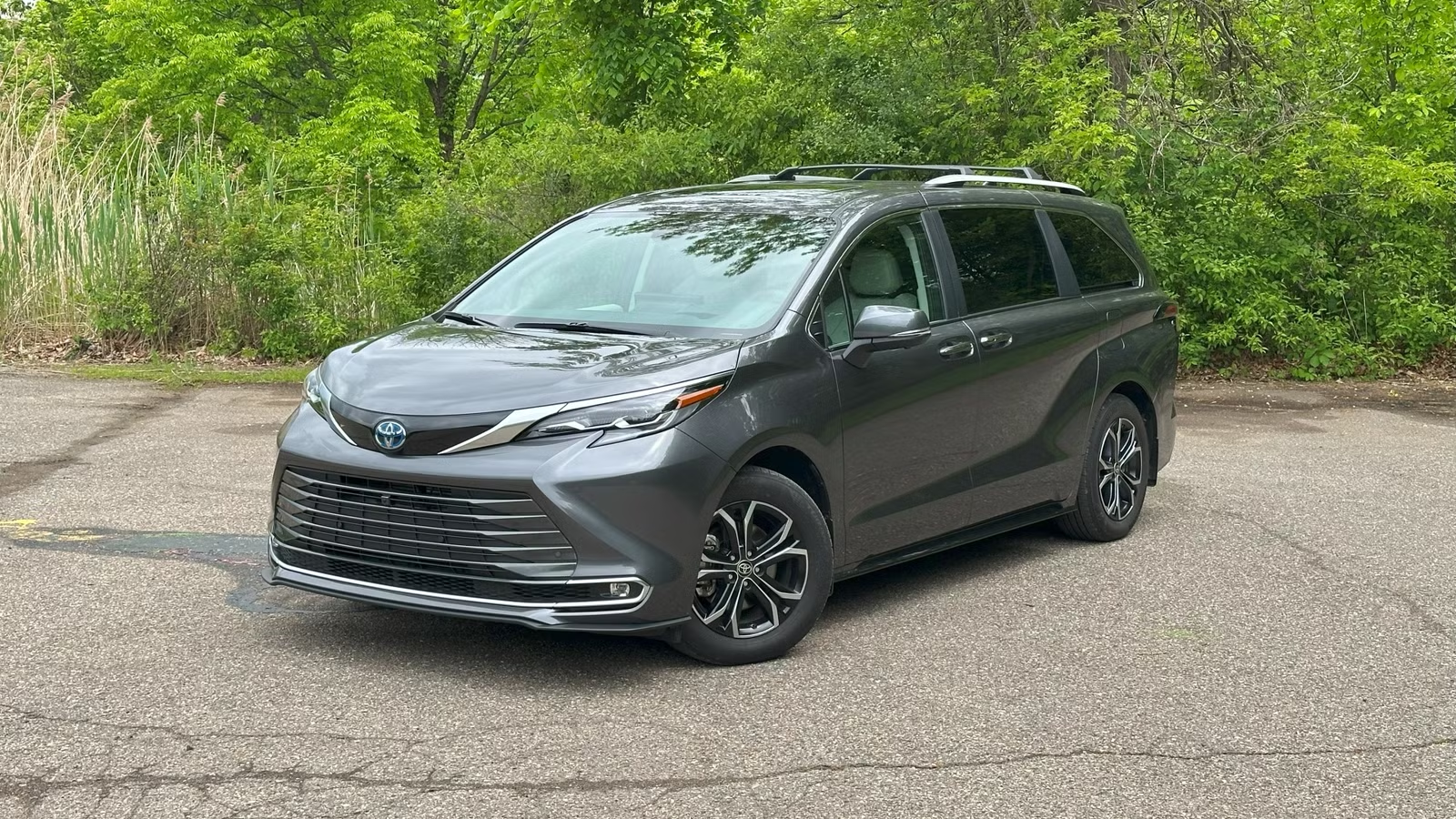
Walk through any school parking lot at 3 p.m. and the pattern is obvious. Crossovers and SUVs in every shade of grey, back seats full of bags, third rows folded flat because nobody could actually sit there. Meanwhile, the one body style built for this exact job has shrunk to a handful of nameplates on sale today. The sales charts say the minivan lost; however, the spec sheets say something different. One Japanese contender, hybrid across the range and priced like a well-equipped crossover, argues that families have been paying extra for less. It deserves a hearing before the segment disappears completely.
SUVs Have Taken Over, But Families Still Need Minivan Space

Dodge retired the Grand Caravan in 2020, and the minivan aisle has been thin ever since. Buyers drifted to three-row SUVs because they look tougher, sit higher and carry the right badge in the driveway. Fair enough, but the trouble starts when the family actually loads in.
Most three-row SUVs treat the back row as an emergency measure. Legroom is tight, the cargo area behind it is barely a trunk, and the load floor sits high enough that lifting a stroller feels like a gym session. Hinged rear doors swing wide into the car beside you. Climbing over a second-row seat to reach a booster is a skill parents develop through repeated pain.

A minivan doesn’t ask for any of those compromises, because it was designed around people and their stuff rather than around a silhouette. The question is whether any current model still does that job well enough to justify the shopping trip. One does, and it’s the one with the most interesting powertrain.

The Toyota Sienna’s Hybrid Powertrain Makes Every School Run Cheaper

The Toyota Sienna is the only hybrid-exclusive minivan on sale. Every trim, from the base LE to the Platinum, pairs a 2.5-liter four-cylinder with electric motors for a combined 245 horsepower. Toyota rates it at 36 mpg combined with front-wheel drive, or 35 mpg with all-wheel drive.
Here’s what that means in a household budget. Assume 15,000 miles a year and gasoline at roughly $3.30 a gallon. The Sienna burns about 417 gallons, or around $1,375. A typical gasoline three-row SUV returning 23 mpg burns about 652 gallons, or roughly $2,150. That’s close to $775 a year back in your pocket, and the gap widens every time prices climb. These are illustrative figures, so plug in your own mileage and local pump price.

Hybrid driving also suits the school run specifically. Short trips, stop-start queues and crawling through drop-off zones are where electric assist does its best work, because the engine spends much of that time switched off. Nobody will mistake it for a sports sedan. The CVT and the modest output favor smoothness over drama. But the powertrain is quiet, relaxed and consistent, and Toyota backs the hybrid system with a 96-month, 100,000-mile warranty.
Sliding Doors And A Low Floor Beat SUV Convenience

Spend one week with a minivan, and the sliding doors become the feature you can’t live without. In a tight supermarket parking lot, they open without a hint of door-ding anxiety. In a driveway with a car squeezed alongside, they still open fully. A parent holding a toddler and a bag of groceries can trigger the power function and step through without a contortion act.
The low floor does just as much work. Strapping a child seat into a tall SUV means lifting a heavy seat and a wriggling child above your shoulder line. The Sienna’s lower step-in height brings the whole operation down to a sensible working height. It also makes life easier for grandparents, anyone with a dodgy knee, and a nine-year-old who insists on climbing in unaided.
The same logic applies at the back. A lower load floor means heavy items go in with less lifting, and the wide aperture swallows flat-pack furniture, sports kit and a double pram in one go. A crossover can match the volume on paper, but it rarely matches the ease of use. Convenience is the minivan’s real specification, and it shows up every single day in use rather than on a brochure.
Three-Row Comfort Comes With Fewer Everyday Compromises


The Toyota Sienna seats seven or eight, depending on configuration, and the arrangement reflects how families really travel. The second-row captain’s chairs, available from the base LE up, offer a super-long slide, which means you can push them forward for a toddler within reach or all the way back for an adult to stretch out. Three-zone climate control on the LE keeps the back rows from becoming a separate climate region, and everyone wins the temperature argument.
The third row is the real test. In most SUVs, it suits children and short journeys only. Here it takes adults on a normal trip without anyone drawing the short straw. Toyota quotes 33.5 cubic feet of cargo space behind the third row, which is enough for a week’s luggage before a single seat is folded.
Flexibility matters too: slide the second row forward and the third row gains legroom. Fold the seats when you need to haul and the cabin transforms from people-carrier to small van. Trim levels such as the Woodland Edition add a 1,500W inverter with two household outlets, which suits camping, tailgating or running a laptop off the car during a power cut. There are compromises, of course. You won’t get the commanding SUV driving position, and the styling is more practical than pretty. But the everyday ones, the ones that grind you down over months, are largely engineered out.
The Sienna Proves Practicality Still Deserves A Premium

The 2026 Sienna LE starts at $41,320 before destination in front-wheel drive form, and all-wheel drive adds $2,000. The Kia Carnival starts lower at $37,490, while the Chrysler Pacifica opens at $44,445 and the Honda Odyssey at $42,795.
So the Sienna isn’t the cheapest minivan. It is the only one with a hybrid on every trim, and that changes the ownership math. Spend a little more upfront, save fuel every week, and you’re probably ahead before the warranty runs out. The Pacifica counters with a plug-in hybrid option and clever stow-away seating, and the Carnival offers more style and a lower entry price.

Both are legitimate alternatives, and which suits you depends on whether you value electric range or simple frugality. Climbing the trim ladder, the price rises quickly. The Limited and Platinum trims push well into the $50,000 and $60,000 bands, where the value case gets harder to defend. The sweet spot sits in the middle of the range, where the XLE adds reasonable comfort.
Strip away the nostalgia and the minivan isn’t a lifestyle statement. It’s the right answer to a practical question: how do you move a family, their gear, and their dignity as efficiently as possible? Toyota’s version delivers the best fuel economy in its class, the easiest access, and a cabin that works for adults and children alike. The segment may be small, but this van makes a strong case that it shouldn’t be allowed to vanish.
Sources: Toyota, Kia, Honda, Chrysler, The EPA

Related posts


Latest Post


No Comments