The Toyota Hybrid That Delivers Incredible MPG Without Feeling Slow
8 minutes reading
Saturday, 25 Jul 2026 21:00 0 93 autotech
Hybrid electric vehicles or HEVs have mostly been developed with efficiency in mind, but adding an electric motor to an internal combustion engine (ICE) also has positive effects. Electric motors deliver instant torque, while an ICE only delivers peak torque at a certain RPM range. As a result, electric motors often fill in the gaps of the ICE.
Apart from improving responsiveness, the electric motors in a hybrid reduce the load on the ICE. Less ICE reliance also means better fuel efficiency. But is there a hybrid that can balance efficiency with performance? Toyota may have the answer. Today, we’ll be discussing the Toyota hybrid that offers one of the absolute best fuel efficiencies in the industry, without feeling lethargic or slow to drive.
Toyota was one of the pioneers of the mass market hybrid with the Prius back in 1997. Since then, Toyota’s hybrids have become the backbone of its electrification efforts, evolving from merely efficiency purposes to now being used for performance applications.
The Toyota Prius debuted in 1997 as one of the world’s first mass-market hybrids. At the time, it had a 1.5-liter Atkinson cycle four-cylinder tuned for high fuel efficiency and excellent thermal efficiency. Over the years, the Prius has evolved from a pioneer to a trendsetter. This was especially apparent when the second-generation model came out, as the Prius became a fashion statement for efficiency and sustainability, mainly due to its trendy yet aerodynamic Kammback body style and the novelty associated with a modern hybrid drivetrain.
Eventually, the hybrid drivetrain was no longer exclusive to the Prius. The Highlander midsize SUV would be the second Toyota model to be electrified when it debuted for the 2006 model year. The debut of the Highlander Hybrid was possible due to the debut of the Lexus RX 400h—the world’s first hybrid in the luxury segment. This had a 3.3-liter V-6 hybrid system, which conveniently leads us to Toyota hybrid systems that also offer plenty of performance and smooth power due to the large displacement engine.
Toyota Hybrids For Performance
2013 Lexus LS 600h Exterior SideLexus
Toyota’s quest for using hybrids for either opulence or performance continued when they released the Lexus LS 600h, the world’s first hybrid with a V-8. Moritaka Yoshida, the Chief Engineer for the LS, says that they needed more power for the LS, and they also thought of a V-12, but that wouldn’t be creative and distinct enough to stand out from the Europeans. Yoshida said, “Simply dropping in a larger displacement engine would have required no creativity. We had the opportunity to be innovative and to expand the segment.” So they decided to create a hybrid system with the power of a V-12, but the efficiency of a V-8. Indeed, they were able to meet those goals. The 2007 LS 600h L produces 438 horsepower—the same output as the 2007 BMW 760Li, but the LS has a combined efficiency figure of 21 MPG versus 17 MPG for the 7 Series.
Since the LS 600h’s debut, this V-8 hybrid drivetrain has only been fitted to one other model—the current-generation Toyota Century. Since the LS 600h, more large-displacement hybrids have been developed, such as the Multi-Stage Hybrid in the Lexus LS 500h and LC 500h. Toyota’s next performance hybrid application is in the GR GT, whose 4.0-liter turbo V-8 hybrid and transaxle-integrated electric motor deliver 641 horsepower. Production is set to commence in 2027, and this will be Toyota’s halo car.
The Prius Becomes More Emotional Than Before
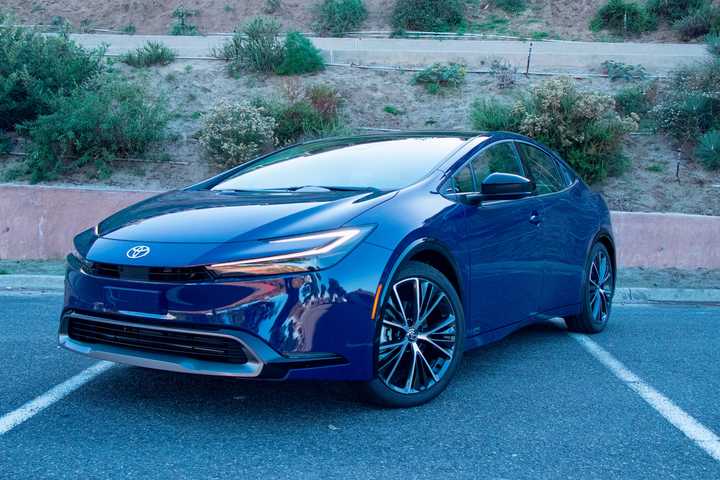
2023 Toyota Prius from the front three-quarter shot parkedToyota
And this now brings us to the current-generation Toyota Prius. The pioneering hybrid was known for efficiency and modern technology, but not necessarily for performance. Though the current-generation model still isn’t a performance machine by any means, today’s Prius has never been this engaging and exciting.
Bigger Engine, Better Efficiency
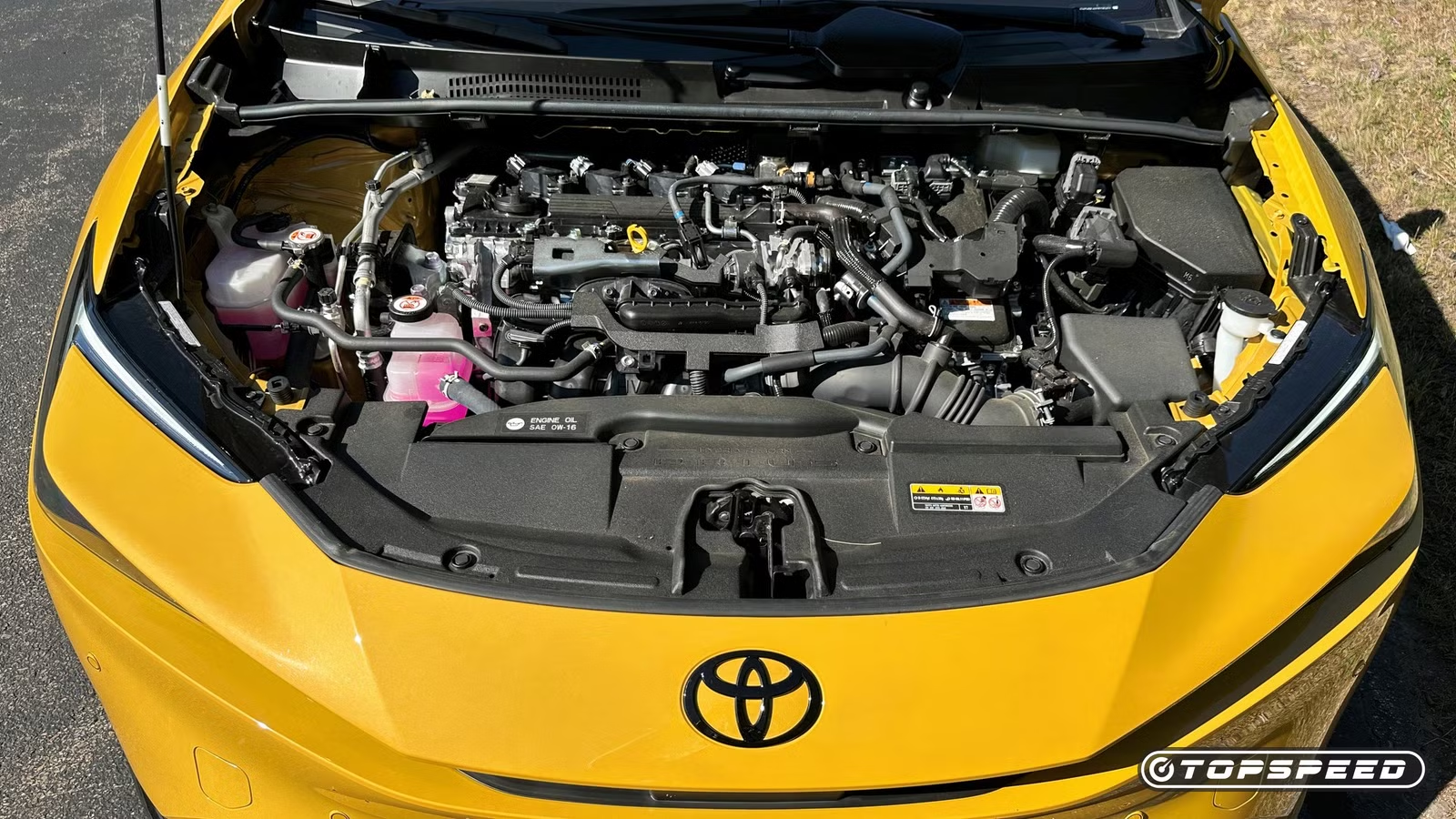
2023 Toyota Prius Engine BayToyota
The current Toyota Prius debuted in 2023, and it immediately made a bold impression due to what it was finally capable of. The Prius was the first Toyota to use the brand’s fifth-generation Toyota Hybrid System. The main highlight was that it got a bigger, more powerful 2.0-liter four-cylinder that replaces the smaller and significantly less powerful 1.8-liter four-cylinder. As a result, the system output has significantly improved from 121 to 194 horsepower, or even 196 horsepower if opting for the electronic all-wheel drive (AWD) versions.
For the first time, you might consider a Prius for performance reasons. Its 0–60 mph time is now at 7.2 seconds for the front-wheel drive (FWD), or seven seconds for the AWD. That’s two and a half seconds quicker than the previous model’s 9.8 seconds. The only other mainstream hybrid sedan that’s faster than the Prius is the Honda Civic Hybrid, which Car and Driver has clocked at 6.2 seconds for the sedan, or a tenth of a second faster for the hatchback.
2023 Toyota Prius WheelToyota
And yet fuel efficiency has improved despite the significant power increase. The previous generation Prius came in an L Eco variant that could achieve a combined EPA-rated efficiency figure of 56 MPG. For the current model, the base LE FWD is rated at up to 57 MPG. Sure, that’s only a one MPG improvement, but power has significantly improved. Overall, you’re getting significantly more performance at better efficiency versus the previous model, and that’s a notable achievement.
Coupled With Competent Handling
Blue 2023 Toyota Prius Rear 3/4 ViewToyota
With its increased performance comes improved handling. Our team has reviewed the current Prius, and they were left impressed with the neutral and secure handling of this car. No, it doesn’t handle like a sports sedan, but it handles well enough for its intended purposes. Its reflexes are responsive enough to make twisty-road driving feel less of a chore and more of an event. Because of this neutral character, there’s stability and also a high degree of comfort—qualities that most Toyota buyers look for in a car in the first place.
The more powerful hybrid system is also responsive and provides enough joy in the driving experience. The throttle behavior complements the handling of the vehicle. If there’s anything that makes the driving experience slightly frustrating, it is the engine noise when you drive the Prius enthusiastically. Granted, the new hybrid system relies more on the electric motor than before, but when you try to eke more power out of the Prius, the engine can still be vocal. This is simply the planetary gear e-CVT at work, as it causes the engine to flare its revs even when the hybrid system can capably move the Prius.
Interesting Prius Tidbits
There are also a few details about the 2026 Prius that you may not have considered before reading this article. That’s because certain engineering decisions were made in order for the Prius to become more emotional and exciting than ever.
Sportier But Less Aerodynamic
Profile action shot of 2026 Toyota Prius drivingToyota
The new Prius design is undeniably appealing. Unfortunately, did you know that its more handsome styling is less aerodynamic than the previous model’s frumpy looks? Its drag coefficient of 0.27 Cd is a slight downgrade from the previous model’s 0.24 Cd. To offset this aerodynamic penalty, the Prius was given a smaller frontal area. This was achieved by making it two inches lower while being just an inch wider than the previous model. The frontal area is the total cross-sectional area of the vehicle when viewed directly from the front, and a smaller frontal area results in an improved drag area (measured in CdA).
Some Variants Are Less Efficient Than Before
Shot of 2026 Toyota Prius interior showing cockpitToyota
The current Prius may have a slightly worse drag coefficient, but we can’t deny that, due to improvements in other areas, it is also the most handsome Prius to date. Contributing to its handsomeness are its 19-inch wheels in higher variants. These are the biggest wheels ever fitted to the Prius, but if you go for these wheels, they also make the Prius less efficient than before. FWD models with 19-inch wheels are rated by the EPA to achieve a combined 52 MPG, while adding electronic AWD drops it further to 49 MPG.
Granted, however, these are still extremely efficient figures, especially for the additional style that the wheels offer. What could be a challenge, though, will be its tires. The 195/50R19 tires are nearly exclusive to the Prius, so availability from tire manufacturers may be limited.











No Comments