
Cummins 12-Valve vs 7.3L Power Stroke: Which Forever Truck Wins?
A forever truck used to be the thing parked beside the barn with a cracked dash, faded paint, and an interior that smelled like hay, pipe fittings, and questionable gas station coffee. Now, the same kind of truck gets treated like a solid asset because people have realized the last truly approachable diesel workhorses are getting older, scarcer, and massively desirable.

One way to go about this is to pick the truck with the bigger number or the louder idle. But in all honesty, it’s about deciding whether you want a machine you can keep alive with patience and hand tools, or one that gives you a broader safety net when towing, commuting, and working for a living. Both can run deep into silly mileage when maintained properly. But both can empty a wallet if you buy the wrong one with rose-tinted glasses on.
How Much Control Do You Want?
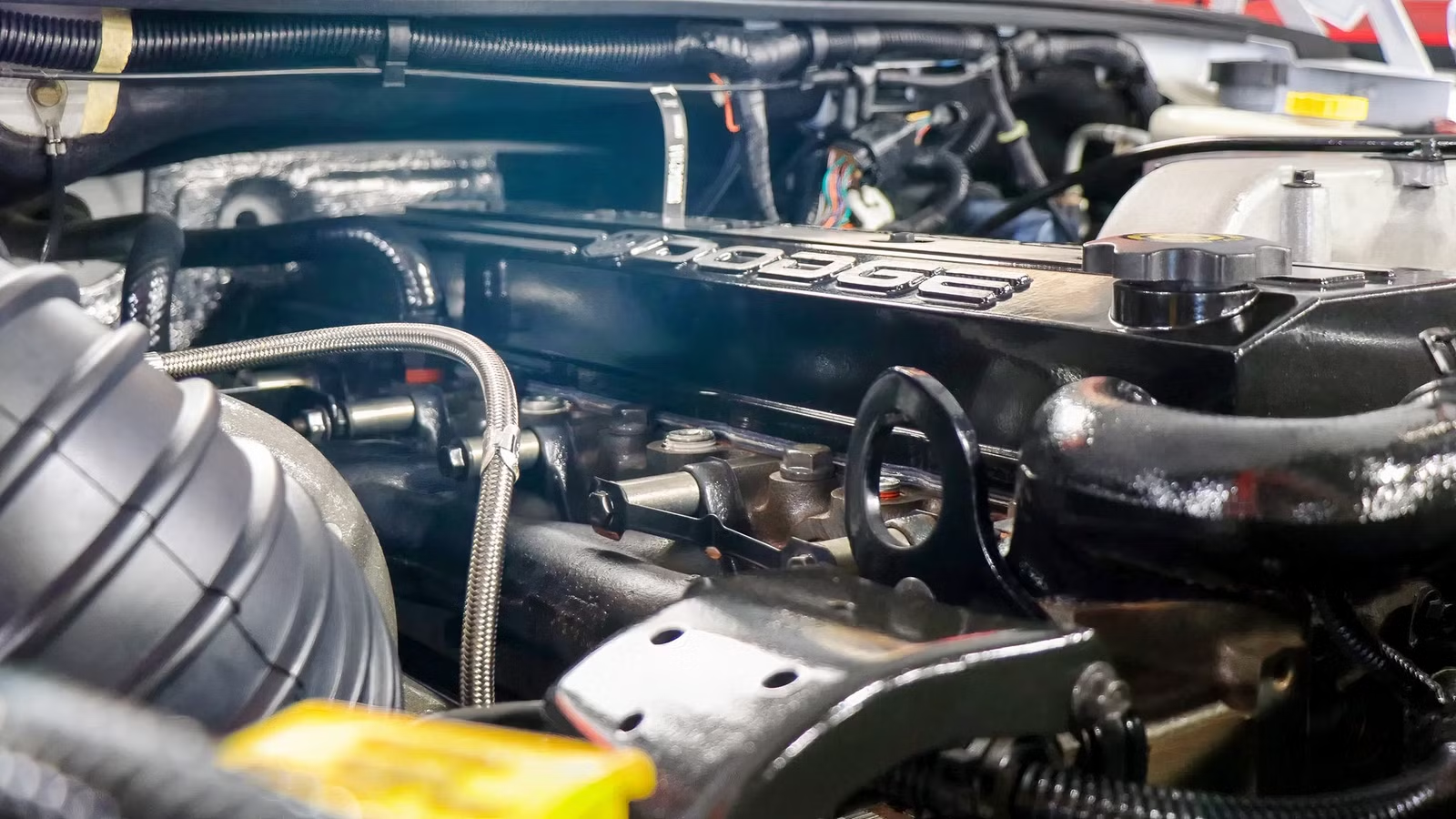
The old 5.9-liter Cummins Ram and the 7.3-liter Power Stroke Ford sit on opposite sides of the same forever truck idea. The Cummins crowd loves control. They like the idea of a big inline-six with old-school diesel bones: a layout that is physically simple, easy to understand, and famously willing to take more fuel, air, and abuse than most engines would politely accept.

The Ford crowd, on the other hand, sees the appeal differently. A 7.3-liter Power Stroke F-250 or F-350 feels more like a heavy-duty truck that left the factory with the right amount of everything. The engine uses a cast-iron block and heads, HEUI injection, strong internals, and enough factory engineering around cooling and drivability to make it feel like the safer long-haul answer.
In a nutshell, it’s why the Cummins 12-valve vs 7.3-liter Power Stroke debate refuses to die. Stock output depends heavily on year and transmission, with older Cummins numbers starting around 160 hp and later 24-valve versions climbing to 245 hp. The Ford’s 7.3-liter Power Stroke hit 235 hp and 500 lb-ft in 1999 form, with later versions pushing torque higher. Useful numbers, certainly, but they don’t settle the argument. They just tell you where the shouting starts.
The Diesel Engine So Good It’s Been Powering Cars For Almost 40 Years
Meet the diesel that outlasted rivals, trends, and even the cars it powered, reliably serving decades with abundant torque and pure American grit.
The 12-Valve Cummins Is The Truck For Owners Who Still Wrench

The 12-valve Cummins earns its legend the honest way. It’s a 5.9-liter inline-six with cast-iron toughness, a simple valvetrain, and, in the prized 1994-1998 trucks, the Bosch P7100 mechanical injection pump. Diesel people call it the P-pump because saying the full name every time would exhaust even the most patient parts-counter attendant.
That P7100 is the whole personality of the truck. There’s no engine computer controlling fuel timing or delivery the way later diesels do. Fuel changes can be handled mechanically, and that makes the 12-valve Cummins feel like a truck from an era when tuning meant turning wrenches rather than coaxing a laptop and a module into agreement.
Mechanical Heart

This is why it’s such a natural pick for the DIY owner, the farmer, the old-school hauler, and the person who thinks a Saturday under the hood counts as wellness. The 12-valve Cummins has a reputation for crossing 300,000 to 500,000 miles with proper care, and when something goes wrong, the diagnosis is usually mechanical rather than mysterious.
The catch is that not every 5.9-liter Cummins Ram wears the same halo. The early 24-valve Cummins, introduced for mid-1998, brought better breathing and stronger output, but it also brought the electronically controlled Bosch VP44 injection pump. That pump depends on healthy lift-pump pressure, and when the fuel supply gets weak, the VP44 can suffer.
The Million-Mile Diesel Pickup With The World’s Biggest Inline-Six
Equipped with a diesel inline-six pushing four-digit torque, this truck has proven it will never quit.
The 7.3-Liter Power Stroke Wins For The Owner Who Wants Fewer Surprises

The 7.3-liter Power Stroke’s case is less romantic. It doesn’t have the same mechanical-folk-hero feel as the P-pumped Cummins, but it carries the reputation of a truck that clocks in and gets on with it. Ford used the Navistar-built 7.3-liter Power Stroke from 1994 through 2003, and the engine’s reputation rests on long service life, broad parts support, and a design that came before modern emissions hardware made diesel ownership feel like a group project.
The late-1990s Super Duty version brought the package into its strongest form. The 1999 7.3-liter Power Stroke got an intercooler, a wastegated turbocharger, split-shot injectors, a higher-voltage injector driver module, and an electric fuel pump. It also hit 500 lb-ft, which was a major number for pickup diesels of the period and gave Ford a serious claim in the heavy-duty towing fight.
Massive Reputation For Durability

The HEUI system is the Ford’s defining technical difference. It uses high-pressure engine oil to actuate the injectors, which gives the truck a more electronically managed feel than the old mechanical Cummins. That sounds scarier on paper, but in practice, the 7.3-liter Power Stroke has built a massive reputation for durability.
Owners regularly report 300,000 to 500,000 miles, and real-world fuel economy in the 15 to 20 mpg range gives it another practical edge for buyers who still use these trucks for serious mileage. It’s the forever truck for someone who wants old-diesel charm without needing every weekend to become a driveway seminar.
The Real Winner Depends On Which Repair Bill You Can Live With
This is where the internet’s favorite diesel bar fight gets more useful. A clean 12-valve Cummins Ram may be the simpler truck, but simplicity doesn’t mean you can ignore everything. The killer dowel pin is one known 12-valve issue, and if it’s handled proactively, it’s a manageable fix. High-mileage injectors can wear, and once owners start chasing big boost, head studs become part of the conversation.
The early 24-valve trucks need sharper attention. The VP44 injection pump and lift-pump relationship is the big one, because weak fuel pressure can turn into expensive trouble. There’s also the 53-block concern on some 1999-2001 engines, along with the usual sensor and wiring aging that comes with any older electronic system.
What You’d Rather Manage

The 7.3-liter Power Stroke has its own list, and buyers shouldn’t pretend otherwise. Camshaft position sensors, under-valve-cover harnesses, injectors, and oil-system upkeep are the usual talking points. The difference is that these problems are well known, parts are widely available, and the engine’s basic construction gives owners a lot of confidence once the common wear items are sorted.
So the real question isn’t which engine never breaks. That engine lives in the same fantasy garage as the $5,000 rust-free crew cab with one owner and a full paper service history. The smarter question is which set of problems you’d rather manage.
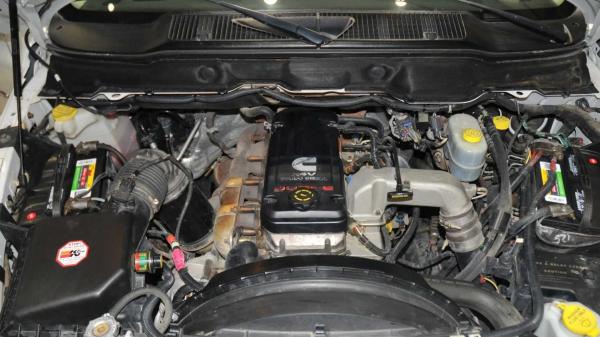
The Diesel Engine That Made Pickup Trucks Unstoppable
Before turbo-diesels became pickup legends, the 5.9-liter Cummins changed the game with torque, simplicity, and lasting power.
The Best Forever Truck Is The One That Matches Your Bad Habits

Put simply, the Cummins is the better forever truck for the owner who likes being involved. If you wrench, tune, farm, haul locally, or want a diesel that rewards mechanical understanding, the 12-valve Ram is the one that keeps calling your name. It’s simple, durable, rebuildable, and deeply satisfying in an agricultural way, like a tractor that discovered denim and a CD player.
The 7.3-liter Power Stroke is the better answer for the owner who wants the truck to be a truck first and a hobby second. It suits the weekend tower, the contractor, and the buyer who needs a dependable old diesel without turning every weekend into a parts-store loyalty program. The Ford’s balance of durability, towing manners, parts support, and long-mileage history makes it the safer all-rounder.
So which forever truck wins? Tough call, honestly. The only honest answer is that it’s a split vote. A forever truck is forever because the owner picked the right kind of trouble.
Sources: Blessed Performance, Driving Line, Diesel Power Products, ProSource Diesel, Valley Fuel Injection, Jalopnik.

Related posts




Latest Post


No Comments