
The Suzuki That Looked Like It Escaped From A Concept
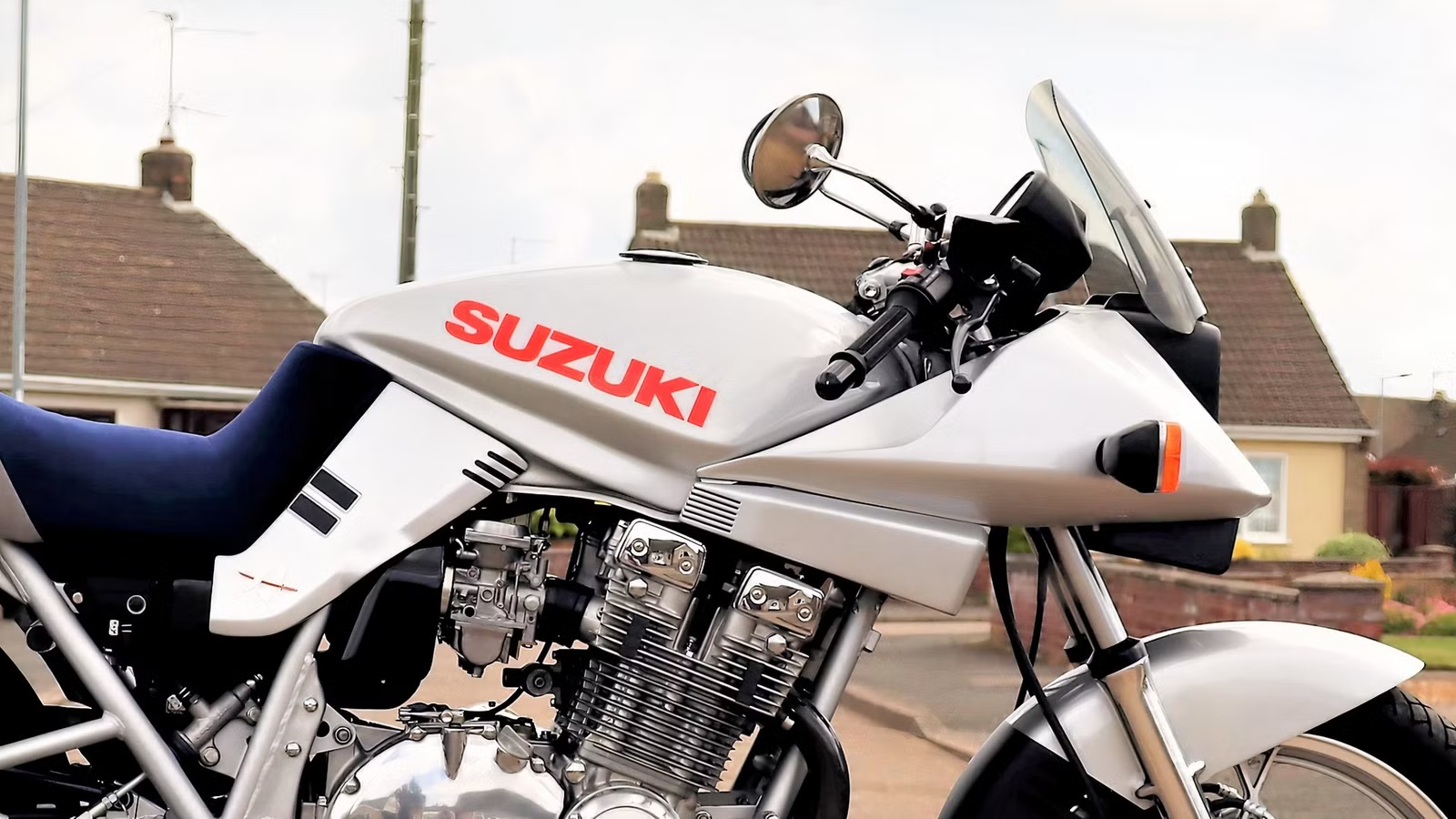
In the car and motorcycle realm alike, there is usually a big difference between design concepts and the versions that actually make it into production. Real-world practicality, industry regulations and corporate oversight don’t fully agree with stylistic visions at all times, so compromises have to be made even when it comes to the best-looking concepts. The two-wheeled legend we’re about to examine was a bit of an exception, though, and it paved the way toward a new era of motorcycle design with none other than Hans Muth leading the charge. He is best known for his work with BMW, but models like the R 100 RS aren’t nearly as radical as the one we’ll be looking at today.


The Superbike As Sculpture

During the 1970s, high-performance motorcycles were all about actual capabilities first and aesthetics as a distant second. The era still spawned plenty of great-looking bikes, nonetheless, though manufacturers treated the visual side of things as more of an afterthought rather than an integral part of the overall package. That began to change as the eighties rolled around, and the dawn of the decade brought one of the most striking bikes the world has ever seen. Interestingly enough, it looked almost the same as the original concept penned by Hans Muth under the banner of Target Design, which he’d co-founded in ‘79 together with two former BMW designers.
10 Big-Bore Vintage Superbikes Real Riders Worship Forever
These legendary machines from motorcycling’s golden era continue to command massive respect and serious auction money decades later.
Target Design Walked Into Cologne With A Concept

At the IFMA Cologne Motorcycle Show in 1980, the public got its first look at a Suzuki GSX1100S Katana prototype, whose radical design was inspired by the traditional Japanese sword of the same name. It was unlike anything seen before, with sharp, futuristic lines that looked straight out of a sci-fi movie and went on to captivate audiences right away. Things snowballed from there, setting the Katana up for immediate success upon its debut the following year. But appearances were far from the bike’s only standout feature, because its performance credentials most certainly lived up to the expectations set by its looks. That being said, let’s see what the GSX1100S brought to the table from a mechanical standpoint.
Yamaha Built A V4 Two-Stroke That Shook The World To Its Core
This Yamaha exploded onto the motorcycling scene and changed bikes forever
The DOHC Engine That Matched The Bodywork

At its core, the model’s first iteration came with an air-cooled 1,074cc inline-four carrying dual overhead cams, 16 valves, and four Mikuni carbs. The engine could summon about 110 hp at 8,500 rpm and 71 lb-ft of torque lower down the rev range, sending this force to the bike’s chain-driven rear wheel via a five-speed transmission. Sources aren’t exactly consistent regarding the Katana’s top speed, stating either 137, 142 or 147 mph. In any case, it’s safe to say Suzuki’s machine was exceptionally fast, and it had no problem scoring mid-elevens in the quarter-mile sprint.
The chassis was fairly rudimentary by today’s standards, but it did keep the GSX nice and stable at high speeds. Its cornering ability was a little on the slow side, though, while the suspension package received mixed reviews hampered mostly by the bike’s unpredictable forks. And with a dry weight of 511 pounds, the Katana was far from light even for a machine released back in the early eighties. As for the model’s sporty ergonomic package comprising clip-on handlebars and rearsets, it was great for aggressive riding for short periods but could prove rather uncomfortable over longer distances.
Technical Specifications
|
Engine |
Air-Cooled 1,074cc Inline-Four |
|
Valvetrain |
DOHC, 4 Valves Per Cylinder |
|
Transmission |
5-Speed |
|
Final Drive |
Chain |
|
Horsepower |
110 HP |
|
Torque |
71 LB-FT |
|
Quarter-Mile |
~11.0-11.6 Seconds |
|
Top Speed |
~137-147 MPH |
|
Dry Weight |
511 LBS |
Now, we don’t want to focus too much on the negatives here, because the GSX1100S really was a great piece of machinery overall. It landed before models like the Suzuki GSX-R750 came to take the whole chassis game to the next level, so the earlier Katana was simply limited by the technology available at the time. But, even so, it still made a notable impact with its blistering straight-line speed and that unmistakable angular aesthetic. Speaking of which, the design created by Hans Muth was the perfect icing on the cake, ensuring the bike would never have any issue standing out from the crowd.
Honda’s Six-Cylinder Motorcycle Vintage Riders Worship
Honda’s wild six-cylinder superbike still stops vintage riders cold.
A Design Moment That Stuck

On a market where numerous Japanese machines had performance as their main selling point, you could make a solid case for the Katana’s looks being what really set it apart. Besides that, it’s not hard to see the model’s influence on motorcycle design as a whole; all it takes is a quick look at the countless angular-looking bikes released on the market after the GSX. Suzuki’s collaboration with Target Design kickstarted a widespread shift away from traditional styling toward more experimental territory, and the effects of it remain clearly visible to this day.
The GSX1100S stayed in production until the model-year 2000, gaining a multitude of chassis upgrades along the way. Then, after a long hiatus, Suzuki revived the Katana nameplate in 2019, this time powered by a 146 hp, 998cc inline-four borrowed from the GSX-R1000. It bears little resemblance to the original Katana on a mechanical level, but its appearance is a very close match with only some minor tweaks. That, right there, is a genuine testament to the timeless quality of Hans Muth’s design, which stood the test of time while so many other motorcycles from that decade lost their visual appeal. This is an impressive feat in and of itself, as it is by no means common to see a design endure so well for more than four decades.
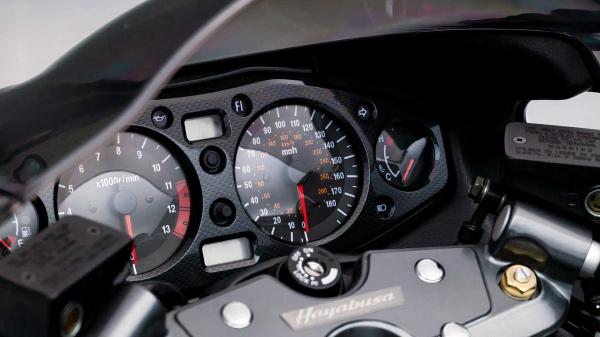
Suzuki Built The Fastest Motorcycle Nobody Could Handle
This 194-mph machine ended the speed wars by forcing a global truce that capped all future production motorcycles.
What It Left Behind

Without the Katana’s far-reaching influence, later Japanese legends like the Kawasaki GPZ900R Ninja may have looked very different. Because not only was the GSX1100S a pioneer of proper bodywork on motorcycles, but it also showed everyone else the way to a more cohesive and integrated aesthetic. That made it a huge milestone in motorcycle design and one of history’s most influential models, yet pricing on the used market remains fairly accessible despite the model’s cult-classic status. Stay patient, keep your eyes peeled, and you should be able to eventually score an early example in good condition for less than 10 grand.
The cleanest specimens out there, thoroughly restored and with low mileage, might fetch upward of $15,000 at auction. Now, that’s still not very much weighed up against the Katana’s impact, but the good news is that you can experience such a significant piece of motorcycling history on a relatively tight budget. And its legacy shouldn’t be judged based on today’s market values, as you only need to look at how bikes have evolved cosmetically since its inception to see where its merit lies. Two-wheelers were no longer treated as mere instruments of speed, but as something that could also please the eye without compromising performance in any way.
Sources: Suzuki, Target Design, MCNews, Bennetts, H&H Classics

Related posts

Latest Post


No Comments