
The Suzuki Middleweight That Now Undercuts The Triumph Daytona 660
Middleweight sport bikes are where plenty of riders finally decide to get serious. They’re quick enough to thrill, light enough not to intimidate, and priced so you don’t need a second mortgage. That last part usually settles the argument. Triumph knew it when it launched the Daytona 660 in 2024 to grow the middleweight sport scene. Two years on, the sticker math has shifted. A Japanese rival that used to cost more now sits just below the Triumph’s price. Not by a lot, but enough to start a conversation.
The Suzuki GSX-8R Is The Middleweight Sport Bike Quietly Getting More Competitive

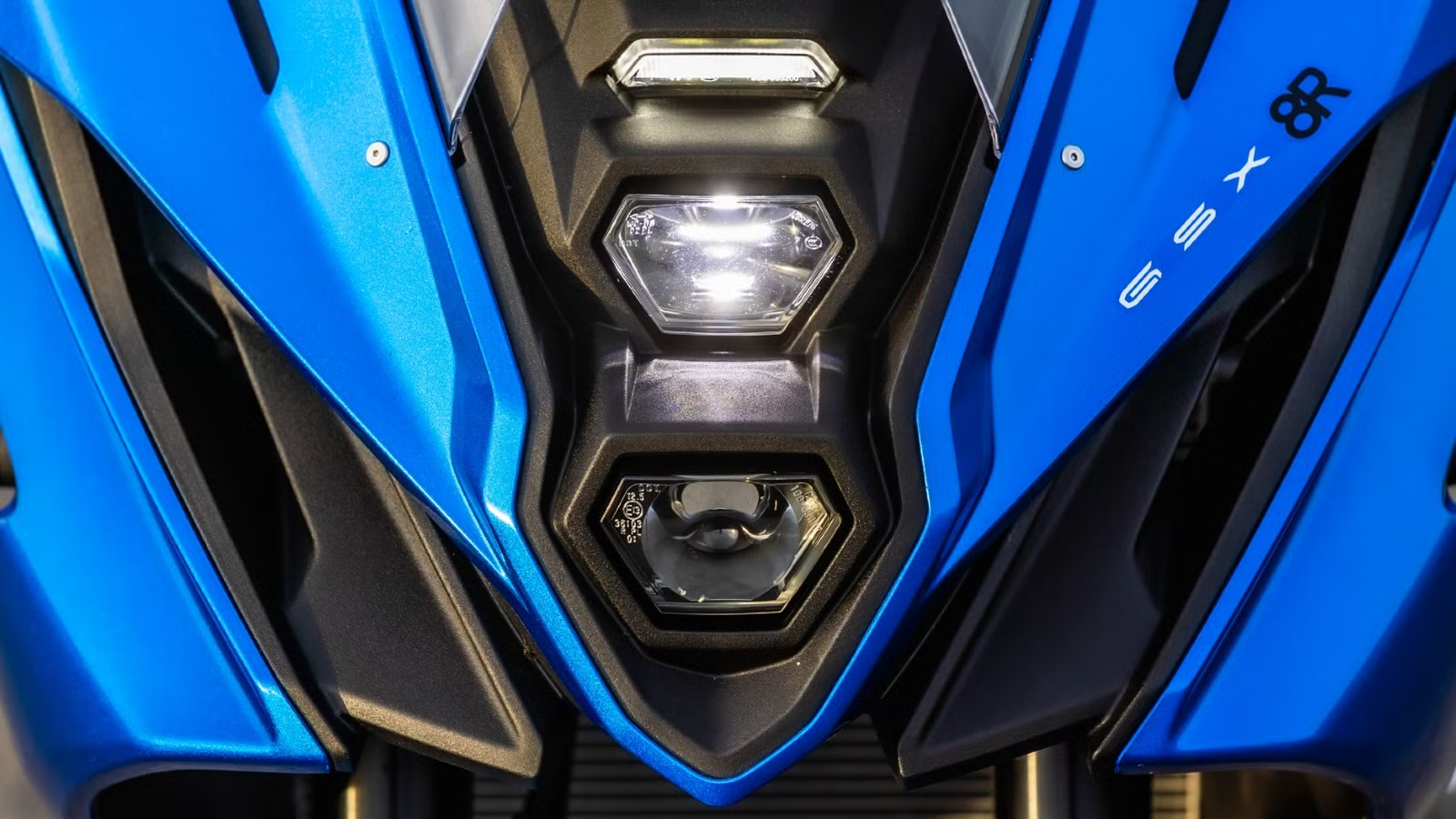
The fully-faired GSX-8R is one of Suzuki’s most interesting offerings. However, right now, the story isn’t just about its hardware but the pricing as well. For 2027, Suzuki cut the GSX-8R by $500 to $9,199. That puts the 8R $240 under its early-2024 launch price of $9,439. The company called the move a response to market conditions and dealer feedback. Notably, this isn’t a redesign, so the savings don’t come with a downgrade. Colors include Metallic Triton Blue, Pearl Tech White, Glass Blaze Orange, and a Metallic Matte Black No. 2 (added for the 2027 model).
The New MSRP Helps Undercut The Daytona 660

The MSRP essentially helps the 8R enjoy a more mighty market position over rivals, particularly the Triumph Daytona 660. The Daytona 660 starts at $9,395 in Sapphire Black, and the two-tone schemes add $150, which brings it to $9,545. Thus, the GSX-8R undercuts the standard Daytona 660 by $196, while the difference grows to $346 against either two-tone version. It’s worth noting that Triumph has added meaningful equipment for 2026, including adjustable front suspension, standard Triumph Shift Assist, and grippier Metzeler tires.
What You Actually Get For That GSX-8R’s Lower Price


We start with the engine. The Suzuki GSX-8R’s 776cc parallel-twin is arguably its biggest selling point. It produces approximately 81.8 hp at 8,500 rpm and 57.5 lb-ft of torque at 6,800 rpm. The 270-degree crankshaft gives the twin an engaging firing rhythm, producing an exhaust note that brings a V-twin to mind. Suzuki’s Cross Balancer technology plays an important role here. The patented system uses a pair of primary balancers to counter engine vibrations while maintaining a compact engine layout. It’s a clever engineering solution that helps make the motorcycle more comfortable during longer rides.
The Triumph takes a different approach with its 660cc inline-three engine. It produces 93.7 hp at 11,250 rpm and 50.8 lb-ft of torque at 8,850 rpm. That’s a noticeable horsepower advantage, giving the Daytona more incentive to rev and a more exciting top-end character. The Suzuki, on the other hand, offers greater peak torque at a lower engine speed.
Chassis, Suspension, And Ergonomics Uphold The Price Tag

Underneath, the GSX-8R rides on a steel-pipe frame. Up front sits a 41mm Showa SFF-BP inverted fork with 5.1 inches of travel, paired with a link-type Showa mono-shock out back. Radial-mounted four-piston Nissin calipers bite dual 310mm discs, and reviewers say they shed speed reliably without overwhelming the front end. Dunlop Roadsport 2 tires wrap the 17-inch wheels. The Triumph’s brake hardware is a near match, with radial four-piston calipers on 310mm discs.
Dimensions are almost a wash. The Suzuki lists a 452-lb curb weight, a 31.9-inch seat and a 3.7-gallon tank. The Triumph weighs 443 pounds wet, with the same seat height and tank size. Where the Daytona pulls ahead is hardware you can tweak: its Showa fork offers adjustable compression and rebound damping, and it comes on Metzeler M9RR tires. The Suzuki’s fork isn’t adjustable at all, which shouldn’t bother if you aren’t a track-day regular.
Electronics And Rider Aids Are Par For The Course

Electronics are where the two bikes meet in the middle. Suzuki’s Intelligent Ride System (S.I.R.S.) brings a three-mode Drive Mode Selector, four-mode traction control, and Easy Start and Low RPM Assist, all displayed on a 5-inch color TFT. The three drive modes run from A, the sharpest throttle response, to C, the gentlest. A bidirectional quick-shifter comes standard, along with the Suzuki Clutch Assist System, which works as both a slipper and an assist clutch.
The Triumph isn’t short on tech either. It has traction control and three rider modes, and since 2026 it’s carried a standard up-and-down quick-shifter. So the quick-shifter isn’t a differentiator. Fork adjustability and tires are. The Suzuki makes a strong case, but the Triumph still has real strengths, and which one wins depends on who’s riding.
Who Should Pick The Suzuki Over The Triumph

The 2027 Suzuki GSX-8R makes a convincing case for riders who want a practical middleweight sport bike with accessible torque, contemporary electronics, and sharp styling. Its parallel-twin engine is particularly appealing to those who spend more time on public roads than racetracks. The lower starting price is another advantage, especially for buyers trying to keep their initial motorcycle purchase within a reasonable budget.
However, the Triumph Daytona 660 remains an attractive alternative. Riders who enjoy the character of a three-cylinder engine, want more top-end horsepower, or appreciate having adjustable front suspension will find plenty to like about the British motorcycle. It also makes sense for anyone who can secure a meaningful Triumph dealer incentive. The Daytona 660 still has its performance-oriented strengths, but the Suzuki is now a much harder middleweight sport bike to overlook.
Source: Suzuki/Triumph

Related posts




Latest Post


No Comments