
The Hybrid Honda Civic Lease That Costs Barely More Than The Gas LX
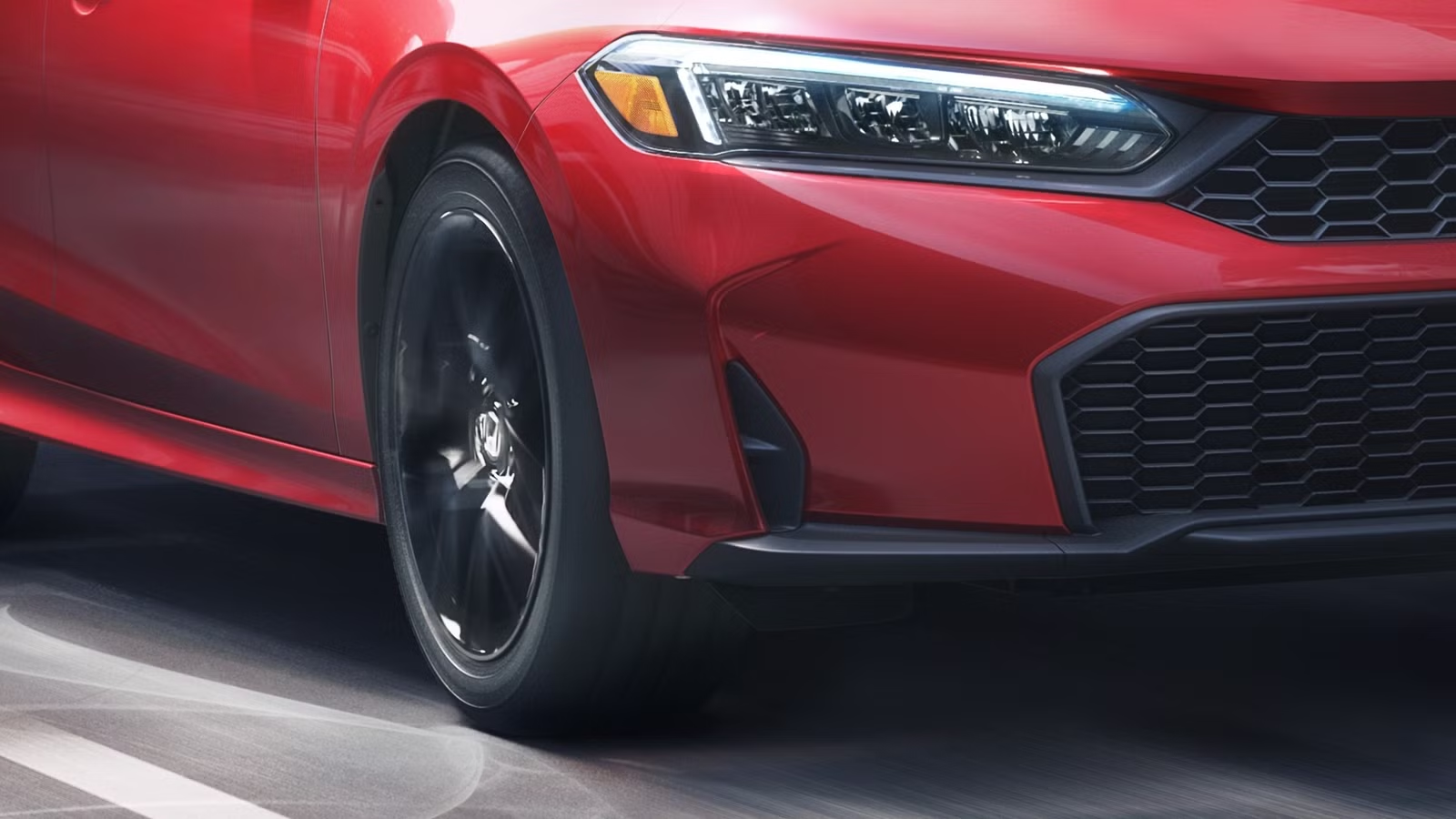
Leasing anything from a sedan to an SUV offers drivers a predictable and flexible path to modern transportation without the burdens of long-term ownership. Because monthly payments cover only the vehicle’s depreciation during the contract term rather than its full purchase price, lessees often secure lower monthly outlays and smaller down payments.

Furthermore, consumers gain access to newer models featuring updated safety technology and improved fuel efficiency every few years. Factory warranties typically span the entire lease duration, shielding motorists from unexpected repair bills. When the contract expires, drivers simply return the keys, avoiding resale hassles and market depreciation risks altogether.
Honda’s $199 Monthly Lease Has A Big Hidden Cost
A $199 monthly payment on a 2026 Honda Civic LX sedan looks like a rare bargain in the current automotive market. However, that headline figure masks the true cost of the contract. Honda requires $4,299 due at signing for its November 2026 lease program, which runs for 39 months and expires on November 30. When buyers spread that upfront cash across the 39-month term, the effective monthly cost climbs to $319 per month according to Sacramento Bee data, while another market calculation places the $199 regional offer at $304 per month. Even in markets where the base LX starts at $209 monthly with the same $4,299 down payment, the true outlay remains anchored above the $300 mark. The budget-friendly sticker price exists on paper, yet the actual bank transfer mirrors a mid-tier compact car payment.

This pricing structure changes the value equation across the 2026 Civic lineup. Instead of comparing a $199 base sedan against a $259 hybrid, shoppers must compare effective monthly commitments. The 2026 Civic Sport Hybrid sedan requires $3,999 due at signing and carries a monthly payment of $259 in most regions, or $249 in select markets like Atlanta. Spreading that lower upfront payment over 39 months yields an effective monthly cost between $352 and $362. Consequently, stepping up from the base gas LX to the Sport Hybrid costs roughly $43 more per month in effective terms. For drivers evaluating the 2026 Civic lineup before the November 30 deadline, the Sport Hybrid stands out as the smarter financial and mechanical choice.
Weighing Up The Fueling Costs

The $43 monthly gap buys a substantial mechanical upgrade. The gas-powered LX uses a 2.0-liter four-cylinder engine that produces 150 horsepower, delivering adequate acceleration for routine commuting. In contrast, the Sport Hybrid pairs a 2.0-liter engine with Honda’s two-motor hybrid system to generate 200 hp. That 50-hp advantage transforms how the compact sedan merges onto highways and passes slower traffic, making the hybrid feel like a different class of vehicle.
Fuel economy widens the value gap even further, especially with mid-November 2026 national gas prices sitting between $3.75 and $3.84 per gallon, marking the most expensive November at the pump on record. The gas LX achieves 32 MPG in the city and 41 MPG on the highway. Meanwhile, the Sport Hybrid reaches 50 MPG in the city and 47 to 49 MPG combined.
For a driver covering 1,000 miles per month in mixed driving, the hybrid saves roughly 8 to 10 gallons of fuel every 30 days. At $3.80 per gallon, those fuel savings return $30 to $38 directly to the driver’s wallet each month. Factoring in fuel costs shrinks the $43 effective lease premium down to single digits, meaning shoppers get 50 extra hp and superior refinement for the price of two coffees per month.
The Sport Touring Hybrid May Be Worth The Premium

Shoppers willing to stretch their budgets further will encounter the 2026 Civic Sport Touring Hybrid Hatchback at the top of the November lease ladder. Honda prices this trim at $299 per month for 39 months with $4,199 due at signing, creating an effective monthly cost of $407. That represents a $45 monthly increase over the $362 Sport Hybrid sedan.
Deciding whether to pay that extra $45 depends on how much value a driver places on cabin technology and cargo versatility. The Sport Touring Hybrid adds leather-trimmed seats, a 12-speaker Bose premium audio system, a larger 9.0-inch touchscreen with Google built-in, wireless smartphone charging, and front and rear parking sensors, alongside the practical liftback cargo area.
Mechanically, however, it uses the exact same horsepower hybrid powertrain and delivers nearly identical fuel efficiency as the Sport Hybrid sedan. Drivers who prioritize cabin luxury and hatchback utility will find the $407 effective payment reasonable. Conversely, value-focused shoppers should skip the Touring trim, as the Sport Hybrid delivers the identical driving dynamics and fuel savings while saving $1,755 over the 39-month lease.
Why Used Civics And 2027 Models Cost More

Cost-conscious buyers often assume that purchasing a used vehicle or waiting for the next model year offers a better financial path. Current market data refutes both strategies. Because Honda vehicles retain value at exceptional rates, a three-year-old used Civic sedan sells for $7,432 above the average price for the small-car segment. High used-car prices combined with elevated auto loan interest rates mean financing a three-year-old Civic often requires a monthly payment exceeding the $362 effective lease cost of a brand-new 2026 Sport Hybrid, without the benefit of full factory warranty coverage.
Waiting for a 2027 Civic also penalizes the buyer. Honda is actively rolling out 2027 models alongside remaining 2026 inventory, and the newer model year brings higher starting prices and shorter lease terms. The 2027 LX sedan MSRP rises to $24,995 compared to $24,695 for the 2026 model. Furthermore, Honda structures 2027 leases on 36-month terms rather than the 39-month terms offered on 2026 cars, which pushes monthly payments $14 to $24 higher across the board.
Honda also introduced a new 2027 Sport-L trim priced at $28,495 that adds leather and heated seats to the base 150-hp gas engine, yet leasing a 2026 Sport Hybrid provides the superior 200-horsepower hybrid powertrain for a similar monthly commitment. Finally, buyers hoping to wait for a complete redesign face a long timeline, as industry reports indicate Honda has delayed its next-generation product cadence and shifted future Civic Hatchback production to Japan starting in 2028. Leasing the 2026 Civic Sport Hybrid before November 30 locks in the 39-month term structure, avoids inflated used-car prices, and delivers maximum performance and efficiency per dollar.
Sources: Honda, The Sacramento Bee, the EPA, Complete Car Lease, and iSeeCars.

Related posts





Latest Post


No Comments