
The Suzuki Cruiser That Out-Equipped Harley’s Formula With Shaft Drive And A Gear Indicator
In the early 1980s, Japanese motorcycle manufacturers wanted a bigger share of America’s cruiser market. Harley-Davidson had built its reputation around V-twin engines, relaxed riding positions, and unmistakable styling. Japanese brands could copy the look, but winning over American buyers required something extra. One manufacturer found an interesting solution by combining cruiser styling with a smooth four-cylinder engine, low-maintenance shaft drive, and useful equipment.
Japanese Manufacturers Wanted A Piece Of Harley-Davidson’s Cruiser Market

Harley-Davidson had spent decades shaping America’s idea of a cruiser. Its motorcycles offered distinctive engines, plenty of chrome, and relaxed ergonomics that appealed to riders who valued character over outright speed. Japanese manufacturers recognized the demand but didn’t necessarily want to develop entirely new motorcycles to satisfy it. Instead, they modified existing street bikes with pullback handlebars, stepped seats, smaller rear wheels, and more chrome. The changes gave conventional motorcycles the appearance of American cruisers while keeping their proven mechanical foundations.
However, making a street motorcycle look like a cruiser wasn’t the same as engineering one from scratch. Existing frames and engines imposed limits on seating positions, handling, and overall proportions. Still, sharing components kept development costs under control and helped Japanese brands expand their lineups quickly. With several manufacturers following the same strategy, styling alone soon became a weak selling point. Riders needed practical reasons to choose one Japanese cruiser over another.
Shaft Drive And Better Equipment Challenged The Basic Cruiser Formula


Shaft drive offered one such advantage. Unlike conventional chains, which required regular cleaning, lubrication, and tension adjustments, an enclosed driveshaft demanded less routine attention. It still needed periodic final-drive oil changes and inspections, but owners could forget about chain adjustments. That convenience appealed to riders who preferred spending weekends on the highway rather than working in the garage. Shaft drives added weight and mechanical complexity, though, so they weren’t automatically better for every motorcycle.
Japanese manufacturers also emphasized everyday equipment. Gear-position indicators helped riders identify the selected gear, while fuel gauges reduced guesswork between gas stations. Adjustable suspension could improve comfort when carrying passengers or luggage. Harley-Davidson had its own engineering strengths, but Japanese brands increasingly offered conveniences that traditional cruiser styling didn’t necessarily promise. By adapting established street-bike platforms, they could introduce these features without absorbing the cost of developing an entirely new motorcycle.
The 1981 Suzuki GS650L Combined Cruiser Styling With Clever Engineering

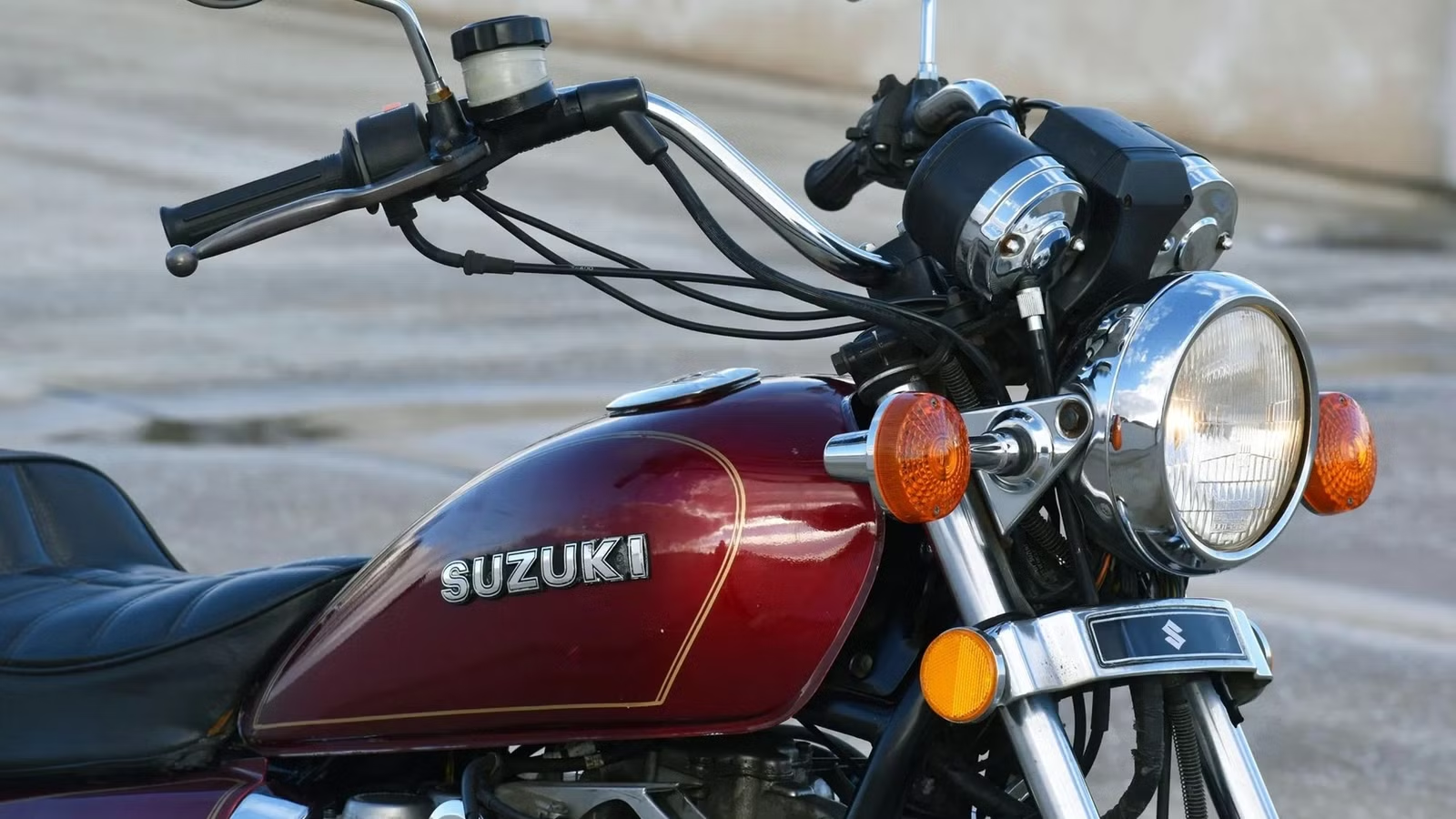
The 1981 Suzuki GS650L, also known as the GS650GL, represented this approach particularly well. Suzuki gave its GS platform the Low Slinger treatment, adding pullback handlebars, chrome details, a deeply stepped seat, and a chunky rear tire. Its 19-inch front wheel and 16-inch rear wheel reinforced the custom appearance. Beneath the styling sat a 673cc air-cooled, double-overhead-cam inline-four with eight valves. Four 32mm Mikuni carburetors fed the engine, while electronic ignition helped keep operation consistent. Unlike Harley’s traditional V-twins, Suzuki’s four-cylinder engine emphasized smoothness and strong performance at higher engine speeds.
The GS650 family included the chain-driven GS650E and shaft-driven GS650G and GL models, but their differences extended beyond the rear wheel. The E used a roller-bearing crankshaft, while the shaft-driven versions featured plain crankshaft bearings and a higher-pressure lubrication system. Suzuki’s Direct-Link shaft drive also placed the drive pinion directly on the transmission mainshaft. This eliminated an additional output shaft arrangement, making the gearbox more compact. In fifth gear, the direct connection reduced unnecessary drivetrain play, helping deliver smoother throttle transitions.

Suzuki also developed Twin-Dome Combustion Chambers to improve the engine’s efficiency. Carefully shaped combustion chambers and pistons supported a 9.5:1 compression ratio while encouraging efficient combustion. The design helped Suzuki extract useful performance from a two-valve-per-cylinder engine without adopting a more complicated four-valve arrangement. Combined with the compact shaft-drive system, these details showed that the GS650L had considerably more engineering behind it than its chrome-heavy appearance suggested.
The GS650L Offered Features That Made Everyday Riding Easier

The GS650L’s equipment was another selling point. Its gear-position indicator displayed the selected gear, saving riders from repeatedly hunting for an imaginary sixth gear. The fuel gauge also made longer journeys easier, especially when gas stations were few and far between. Neither feature appeared universally on contemporary motorcycles. Suzuki complemented them with a quartz-halogen headlight, electronic ignition, and tubeless tires. Meanwhile, the shaft drive eliminated routine chain maintenance, although the final-drive housing still required oil changes and inspection.
Suspension specifications require an important distinction. Some later descriptions associate the GS650L with air-adjustable forks and rear shocks offering preload and damping adjustments. However, Cycle World‘s April 1981 coverage identified those features with the standard GS650G. That model offered air-assisted front forks and rear shocks with five preload positions and four damping settings. The GL cruiser instead received simpler front forks without air caps and fixed-damping rear shocks. While the standard model offered greater suspension adjustability, Suzuki prioritized styling and the cruiser riding position on the Low Slinger.
Why Suzuki’s Well-Equipped Cruiser Still Fell Short

The GS650L had several drawbacks, starting with its claimed 472-pound dry weight. That made it heavier than the chain-driven GS650E, which Suzuki listed at 450 pounds. The extra heft compromised the approachable character some buyers expected from a middleweight cruiser, particularly when maneuvering at low speeds. Its heavily stepped seat also restricted movement, potentially leaving taller riders feeling cramped. Limited cornering clearance created another problem. Despite the capable GS engineering underneath, the cruiser layout prevented enthusiastic riders from exploiting the chassis as freely as they could on a conventional street motorcycle.
Keeping an aging example running properly also required attention. Dirty or neglected carburetors could cause hesitation, rough running, and disappointing acceleration. A poorly maintained GS650L might feel sluggish, but that didn’t mean the model was inherently slow. In fact, tests from that era recorded a 12.91-second quarter-mile at 101.46 mph on the mechanically related GS650G in 1981. That result demonstrated the underlying engine’s potential, although it wasn’t a direct test of the GL cruiser. Ultimately, the GS650L combined appealing equipment with genuinely interesting engineering, but its weight, restrictive ergonomics, and cruiser-specific handling compromises kept it from fully matching the versatility of its street-bike roots.
Source: Suzuki, Cycle World

Related posts

Latest Post




No Comments