
The Sports Car That Makes 500 Horsepower Feel Completely Unnecessary
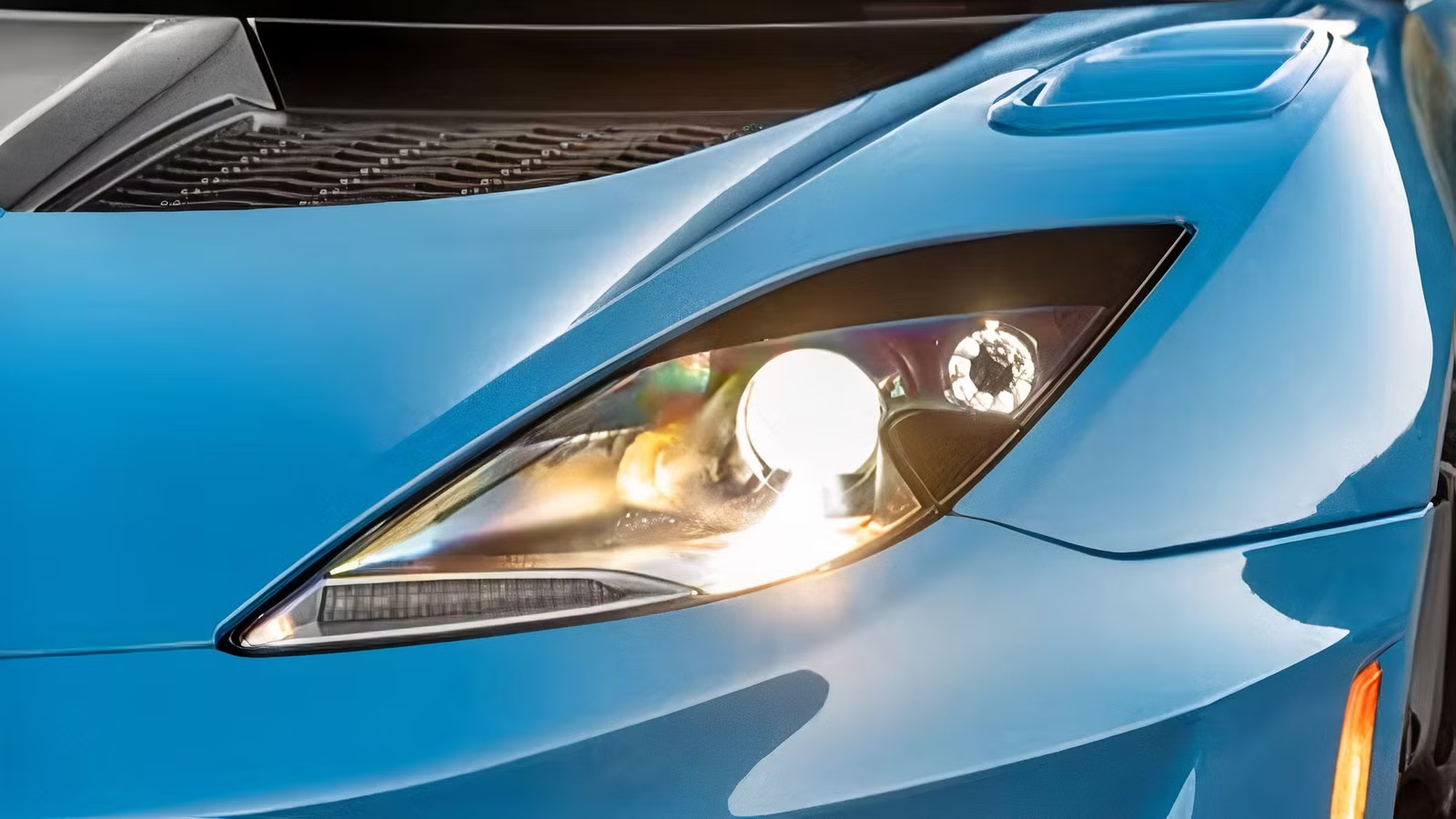
Modern performance cars are so powerful that it’s realistically impossible to enjoy anywhere near their full potential on public roads. That is why the Mazda MX-5 Miata, despite its sub-200-horsepower output, still sells well in 2026. Having fun in a car doesn’t have to mean having 500+ horsepower, but eventually you’ll want something with a bit more power than a Miata can provide. The real challenge is finding a car that delivers a powerful engine without sacrificing the lightweight character that makes sports cars come to life.
The Miata Proves You Don’t Need Much Power To Have Fun

The Mazda MX-5 Miata has been the benchmark for low-cost, low-horsepower fun since its debut in the 1980s, and that remains true today.
The Lightweight Formula That Makes Every Horsepower Count
Starting at $30,730 for the Sport trim, the 2026 Mazda MX-5 Miata is the most affordable sports car on the market, a title it has held for many years. The Miata has always been criticized for not offering more interesting engine variants that produce additional power, but Mazda responds by arguing that its lack of power is a key part of its personality. The current Miata produces 181 horsepower and 151 pound-feet of torque from its 2.0-liter inline-four, which is still more than what the only turbocharged Miata ever produced—the 2004–2005 Mazdaspeed MX-5 Miata—offered.
More Power = Less Fun?

The reality is that Mazda is right: more power can actually mean less fun. The Miata’s appeal comes from its featherweight design and near-perfect weight balance, which allow for an intimate connection to the drive that bloated modern performance cars could never provide. Even an increase you might consider negligible, such as 150 pounds, could upset the car’s carefully optimized balance.

Something like a 2026 BMW M340i xDrive delivers impressive horsepower and acceleration, but you won’t be able to experience a fraction of its capabilities on public roads. Yet what if there were a car that optimized the Miata formula while also offering a more powerful engine?
The Lotus Evora Delivers Supercar-Level Engagement Without Supercar Power

If you want Miata-like dynamics and a big engine, few cars can satisfy that need better than the Lotus Evora.
A Mid-Engine Layout And Lightweight Construction Change Everything
First produced for the 2010 model year, the Lotus Evora was Lotus’ first true road car designed to appeal to a more mainstream audience. Despite its petite proportions, it could accommodate passengers over six feet tall with ease, something that could not necessarily be said of its predecessor.
The Evora uses a mid-mounted, transversely installed 276-horsepower Toyota 3.5-liter 2GR-FE V-6, available with either a six-speed manual or a six-speed automatic transmission. Despite offering a substantial boost in power over a modern Miata, the Evora shines because of its superb mid-engine balance and the satisfying feedback provided by its hydraulic steering.
The Evora’s Different Variants Offer More Than Enough Power

Shortly after the original Evora debuted, the 345-horsepower supercharged Evora S also entered production. While it’s difficult to feel a real sense of danger in a Miata, the Evora S provides enough power to demand greater throttle discipline if you want to avoid putting the car into a wall unintentionally. That extra performance is complemented by the suspension and steering recalibration the more powerful variant received.
Then, for the 2017 model year, the Evora 400 debuted with 400 horsepower, making the car impressively quick in a straight line for a vehicle of its size. The Evora GT, which debuted in 2020 with 416 horsepower, would become the most powerful Evora ever produced for the U.S. market.
The Used Lotus Evora Makes Its Performance Even More Appealing

Now that you understand how the Evora combines a powerful engine with lightweight sports-car dynamics, how much does one actually cost on the used market?
Used Evora Prices Range From Affordable To Exclusive
According to Classic.com data, the Evora’s one-year average sale price is $54,406, based on 33 verified sales. The original Evora is the most affordable option, averaging $37,174 across 15 verified sales, while the supercharged Evora S averages $40,646 across four sales.
The newer, more powerful variants command significantly higher prices, with the Evora 400 averaging $65,775 across four verified sales and the Evora GT averaging $81,209 across 10 sales. Overall, the Evora has a remarkably wide price range, with reported sales ranging from $24,500 to $94,000, demonstrating how factors such as model year, condition, mileage, and specification can significantly affect pricing.
The Evora Offers A Different Kind Of Performance Value


If you think there is an equivalent to the Lotus Evora in today’s new-car market, we’re here to tell you that there isn’t one outside the Lotus lineup. Pure sports cars like the Toyota GR86 and Mazda Miata simply don’t offer the same level of power.
A closer comparison would be the 2027 Nissan Z and its 400-horsepower twin-turbocharged V-6, but the Z weighs approximately 350 to 450 pounds more than an Evora 400, depending on the specific configurations being compared. Given the emphasis placed on 150 pounds earlier, an additional 400 pounds can make a substantial difference. In terms of driver engagement, few modern sports cars can match the Evora, demonstrating that power is important, but it’s not everything.
The Lotus Emira Continues The Same Driver-Focused Philosophy

As we mentioned, if you want a modern equivalent of the Evora experience, your best option is, well, another Lotus.
The Emira Carries The Evora’s Philosophy Into A New Era
The Lotus Emira, the Evora’s successor, continues its raw and engaging driving formula while adding a significant degree of modern refinement. The 400-horsepower supercharged V-6 remains a key powertrain option, but an AMG-sourced turbocharged inline-four is also available. If you want a manual transmission, you’ll need the V-6, which offers a precise shifter and an engaging driving experience.
If a third pedal isn’t for you, the turbo-four pairs with a quick-shifting eight-speed dual-clutch transmission. Perhaps the biggest difference between the Evora and Emira is the interior quality, with the newer model introducing modern creature comforts that were largely absent from its predecessor, including a touchscreen display and smartphone integration.
The Used Emira Market Shows Where Lotus Is Headed

As a newer model, the Emira is significantly more expensive than the Evora; Classic.com puts its one-year average sale price at $87,807, based on 29 verified sales. Looking at individual variants, the First Edition 2.0 averages $80,833 across three sales, while the significantly more popular First Edition V6 averages $87,225 across 22 verified sales.
The base V6 averages $110,900, although that figure is based on just two sales. Meanwhile, the V6 SE, introduced for the 2026 model year, has 22 examples listed but no verified sales yet. If you want a genuinely exceptional sports car that makes every bit of its performance feel meaningful, both the Evora and Emira deliver on that promise. Which one you choose ultimately depends on your budget and how much you value modern refinement.
Sources: Lotus, Mazda, BMW, Classic.com, Edmunds

Related posts


Latest Post


No Comments