
The Japanese Motorcycle That Just Outsold A New Ferrari At Auction
The 2026 Ferrari Roma Spider is a stunning grand tourer, featuring a powerful 612-horsepower twin-turbo V8, gorgeous exterior design, and posh interiors. It also comes with an equally posh price tag, starting at $280k. While that might be the usual price for cars like this, even classic cars for that matter, few motorcycles ever cross that threshold at auctions.

Until recently, no classic Japanese motorcycle had crossed that barrier, but that has changed recently. There’s one Japanese classic that sold for well over $300k at the 2026 Mecum Las Vegas Auction, making it the most expensive Japanese classic bike ever. Here’s what you need to know about this classic bike and what it says about the rising wave of classic Japanese motorcycles.
Classic Bikes Rarely Fetch Supercar-Level Money At Auctions
Motorcycles have been around for over 140 years, and since then, manufacturers have produced thousands of motorcycles. From small-displacement mopeds to race replicas and from dirt bikes to big twin cruisers. Most of these motorcycles, as good as they were, are now forgotten, but some of them have stuck around in the motorcycling collective consciousness for their influence on racing, culture, and future motorcycles.


Today, these iconic motorcycles are among the most collectible vehicles out there, with many of them demanding six figures at auctions. Bikes like the Vincent Black Lightning and Cyclone Broad Tracker have even breached the million-dollar mark, which was previously reserved for rare classic cars. Meanwhile, bikes like the Crocker Small Tank, Brough Superior SS100, and BMW R32 remain some of the most expensive six-figure bikes sold at auction.

Look closely at these auctions, and you’ll quickly notice one thing: the lack of Japanese motorcycles. Even the most iconic Japanese motorcycles, like the Yamaha R7 OW02 or the Kawasaki Z1, still cost well under $100k. And until very recently, the most expensive Japanese bike ever sold at an auction was the Honda RC213V-S for $237,700. Put simply, classic Japanese bikes have been eclipsed by European and American classics, but that’s set to change in the coming future. Japanese classic bikes are set to get more expensive. What makes us say that? The 1968 Honda CB750 Sandcast prototype.

10 Hondas That Hold Value Better Than Their Rivals
The Honda bikes that have now become collector specials.
The 1968 Honda CB750 Sandcast Prototype Is Proof Of That

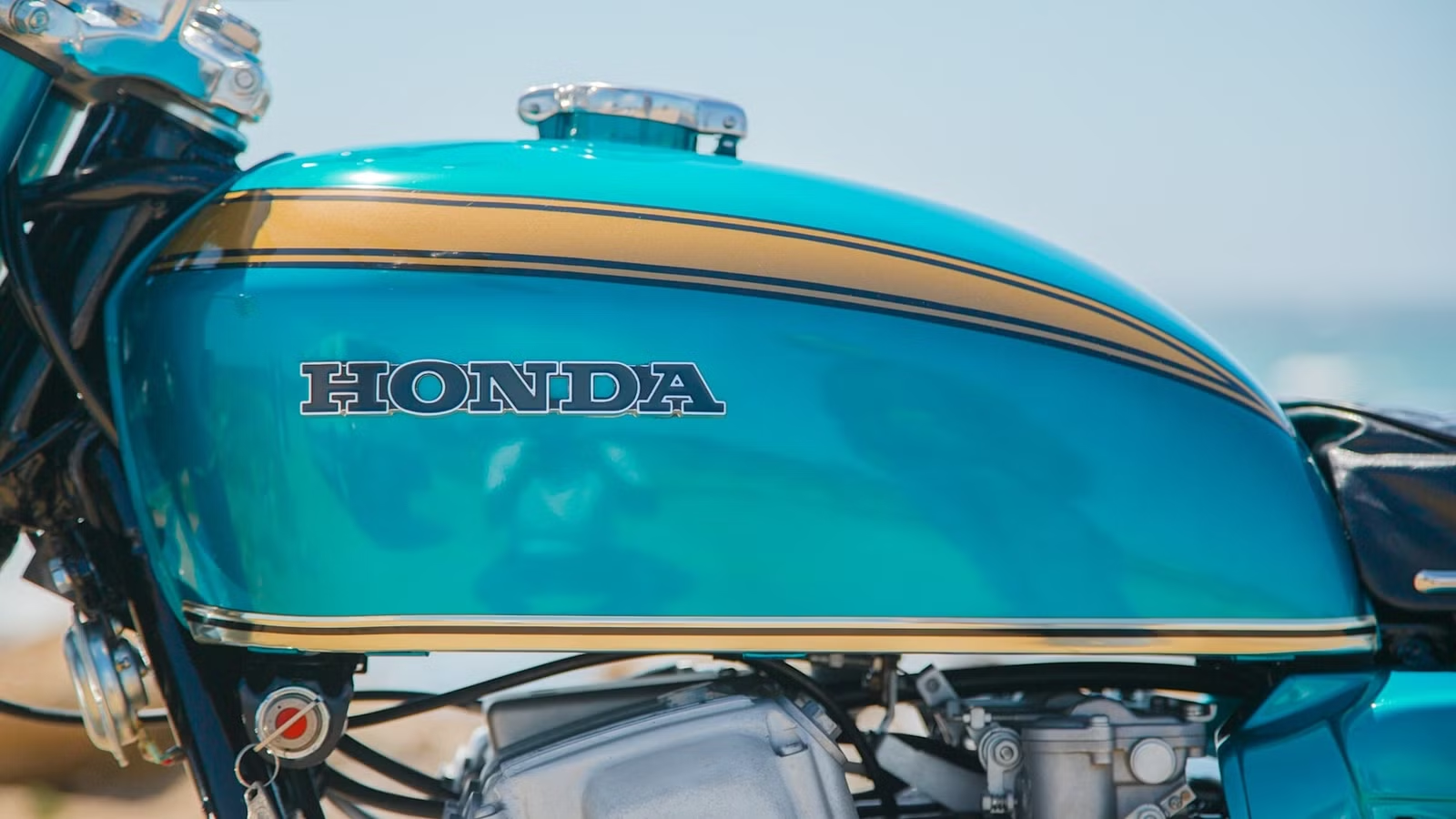
The Honda CB750 is often regarded as the world’s first superbike, and the initial 1969 edition is particularly special. The early model featured a transversely-mounted inline-four engine whose block was sandcast rather than die-cast, earning it the Sandcast title. Roughly 7,414 Sandcast engines were produced before Honda transitioned to diecast ones. Today, these CB750 Sandcast are worth a premium, with collectors willing to pay double what the standard CB750 does, of course, with well-documented provenance and original cast crankcases.
The bike in question, however, is not one of the 7,414 Sandcast models made. The CB750 Sandcast prototype is special because it was the first CB750 ever sent to the US, before official production even began. This one-of-one motorcycle was sent from Soichiro Honda himself to American Honda’s Bob Hansen, and it features a number of details that differ from later CB750 Sandcast models. For example, the valve cover has the word Honda rather than OHC 750 on production models, and even the starter motor cover’s shape is different.
This Is The Most Expensive Japanese Bike Sold At Auction

No doubt, this is the rarest version of one of the most iconic motorcycles ever made. It’s not only an important part of motorcycling history, but also a milestone for Honda and American Honda. So, it’s no surprise that it sold for an eye-watering price of $313,500 at the 2026 Mecum Las Vegas Auction, making it the most expensive Japanese motorcycle sold at an auction. This price, by the way, eclipses prior benchmarks, like the pre-production CB750 that switched hands for $222,995 in 2018 and the ex-Steve McQueen Sandcast that sold for $155,000 in 2022.
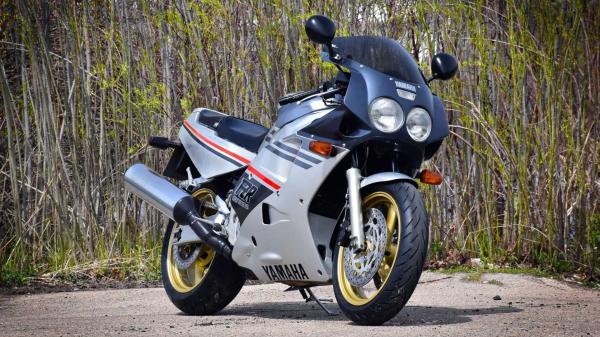
10 Powerful Sports Bikes From The 1980s That Are Dirt Cheap Today
If you are looking for a powerful motorcycle on a budget, one of these incredible sports bikes from the 80s might be for you
There Is A Rising Wave In The Used Market For Classic Japanese Motorcycles

The Sandcast prototype going for over $300k only goes to show that classic Japanese motorcycles are gaining traction in the used market. It isn’t the only one, though. In 2018, a CB750 Sandcast prototype was auctioned for $161,000, hinting at where the Sandcast prices will head in the culture. Later in May 2022, a 1990 Honda VFR750R Type RC30 was sold for $65,250 at Silverstone Auctions, now Iconic Auctioneers. According to auction experts, these classic bikes must increase further in value, making it a good time to jump in and get yourself a classic Japanese bike right now.
Classic Car Money Is Pouring Into Classic Motorcycles

A poorly restored 1973 Kawasaki Z900 went for $55,000 at Mecum Auctions in 2023. Apparently, two car buyers with little knowledge about classic bikes bid against each other for the Z900. Reportedly, they thought they were bidding on a 1972 model, which is rarer. This incident is evidence that classic car money is pouring into classic motorcycles. Essentially, classic car collectors are now looking at classic motorcycles, too.

Classic car collectors are now realizing how great value motorcycles are. For example, they can fit five classic bikes in the same space as one classic car; plus, the market is global as there’s no left- and right-hand drive issue with bikes. The bikes are also easier to move. According to Paul Jayson of The Motorcycle Broker, “All of this is a head of steam building up under Japanese classic motorcycles, which will drive prices upward very soon.”
Plus, Japanese Motorcycles Are Currently Undervalued

While European and American classic motorcycles have appreciated a lot in value, especially from now-defunct brands like Vincent and Crocker, the same can’t be said for Japanese bikes just yet. And there are a few factors that point to them being undervalued today. Unlike a new bike that’s built quickly on an assembly line, a classic bike is stripped down, restored, put back together, and shaken down for any issues. That can become an expensive affair very fast. Here’s why Japanese classic bikes are undervalued today.
They Require A Lot Of Work

Japanese classic bikes, due to age and how they were manufactured, require a lot of work today. Most vintage Japanese bikes used overhead camshaft engines with nylon cam chain tensioners. After 4 to 5 decades on the roads, the nylon is now brittle and falling to pieces. And to change that, the full engine needs to be stripped down, which is quite a bit of work already.

At the same time, nearly all Japanese classics require cylinder head skimming during the engine rebuild. That’s because decades of heat cycles and aging aluminum cause distortion when the head is removed. Additionally, the restorer also needs to take care of painting, plating, wiring, aligning, and the cost of parts. That’s a lot of work for a vintage motorcycle (though iconic) that won’t attract the same kind of money at an auction.
Costs Of Parts Have Increased, Too

If you’re a grease monkey, you can surely do all that at home and save costs on labor, but parts are another problem you’ll have to deal with. Classic bike parts are rare, since fewer and fewer parts are being manufactured. They are also hard to find, so you have to pay the cost the owner wants to sell them at. Even high-quality replica parts are expensive, and used parts can be costly and still require restoring. That adds further costs to restoring classic Japanese motorcycles.
They Weren’t Made In Huge Numbers, Either

Older bikes weren’t made in huge numbers, and many of them have been crashed, stolen, broken for parts, or worse, turned into shoddy café racers. As a result, while you can still find plenty of Japanese classics on the used market, very few of them will be good enough to be investment-grade. Those bikes are now snapped up by collectors, too, who don’t mind waiting for prices to seriously increase before they consider selling them off.
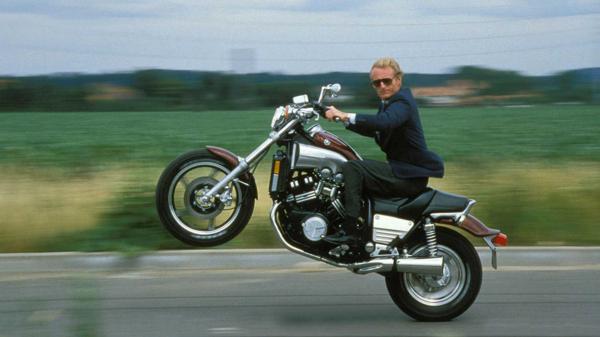
10 Vintage Japanese Bikes That Turn Heads Like Supermodels
These ten Japanese bikes will give any enthusiast whiplash when spotted. Here’s why.
Confident Japanese Classics To Look Out For

If you’re considering getting your hands on a classic Japanese motorcycle that will actually appreciate in value, you need to be smart and avoid shabby motorcycles that look investment-grade. Instead, you need to sniff out bargains that are investment-grade already instead of looking at cheaper bikes with good potential. The latter is likely to cost you a lot of money in restoration. Fortunately, experts suggest a bullet market for Japanese classics is on the horizon, so you can still find plenty of investment-grade models for a good price. Here are a few of them.

The 1972 Kawasaki Z1 was introduced to dethrone the Honda CB750, and it certainly did that. This engineering masterpiece was the quickest and fastest bike of its time, with its 903cc inline-four engine with air-cooling, DOHC, and four carbs producing just over 80 horsepower. With a top speed of 103 miles per hour, this was also the first large-displacement Japanese bike to feature a DOHC valvetrain.

Today, the Z1 is the UJM icon for many motorcycling enthusiasts, and it’s still relatively affordable in the used market. Good examples are out there for $16,000, according to Hagerty. Meanwhile, J.D. Power estimates a value of $18,000 for good condition models. Excellent condition models, however, are already getting expensive, with J.D. Power estimating its value at over $30,000. In fact, a 1974 model with fewer than three push miles on the odometer switched hands for a whopping $82,500. This one is already rising in value fast.

If the Z1 is too expensive, don’t worry, there’s one more UJM you can watch out for. Like Yamaha, Suzuki Cycles solely focused on producing 2-stroke motorcycles throughout the ‘60s, but in the ‘70s, the Japanese manufacturer moved to 4-strokes, considering the market trend at the time. The result was the early GS750 model, which demonstrated the UJM principle to the fullest. It was Suzuki’s first large displacement bike with a 4-stroke engine. The 750cc inline-four here used a DOHC design, producing 67 horsepower.

Reviewers at the time praised the bike for handling better than its rivals, like the legendary Kawasaki Z1. The bike also started the Suzuki trend of producing over-engineered motorcycles that can handle all kinds of abuse, even on a racetrack. Today, the GS750 is valued at around $5,000 for excellent condition models, according to J.D. Power. Meanwhile, Hagerty estimates its value at $3,500 for good condition models.

Another icon from the ‘70s is the Yamaha XT500, which is regarded as one of the most influential dual sport motorcycles ever made. Synonymous with off-road ability and durability, the XT500 featured a 499cc single-cylinder engine making 32 horsepower, hung in a half-duplex cradle frame on long-travel suspension. The bike once dominated the Paris Dakar and Paris Abidjan Nice rallies, and it can still be found hanging with much newer dual sports on trails today.

The XT500 is also very dependable even after half a century. You can thank Yamaha’s intensive testing, where the XT500 was run at full throttle in harsh desert conditions to identify its weaknesses before it went into production. Today, Hagerty estimates its value at $5,000 for good-condition models, while J.D. Power estimates $8,000 for excellent-condition models.

The Kawasaki Z1, Suzuki GS750, and Yamaha XT500 aren’t the only Japanese classics that you should watch for. There are many more. The CB750 will always be the default option, but other options include the Suzuki RGV250, Honda CB1100R, Kawasaki H1 Mach III, Kawasaki GPz900R, and more. If expert predictions hold true, these bikes have the potential to gain a lot of value. Who knows, perhaps a used UJM you buy and restore today could fetch you six figures at an auction later?
Source: Honda, Mecum Auctions, J.D. Power, Hagerty, The Motorcycle Broker, etc.

Related posts
Latest Post


No Comments