
The Sport Tourer That Gives You Premium Features For Thousands Less
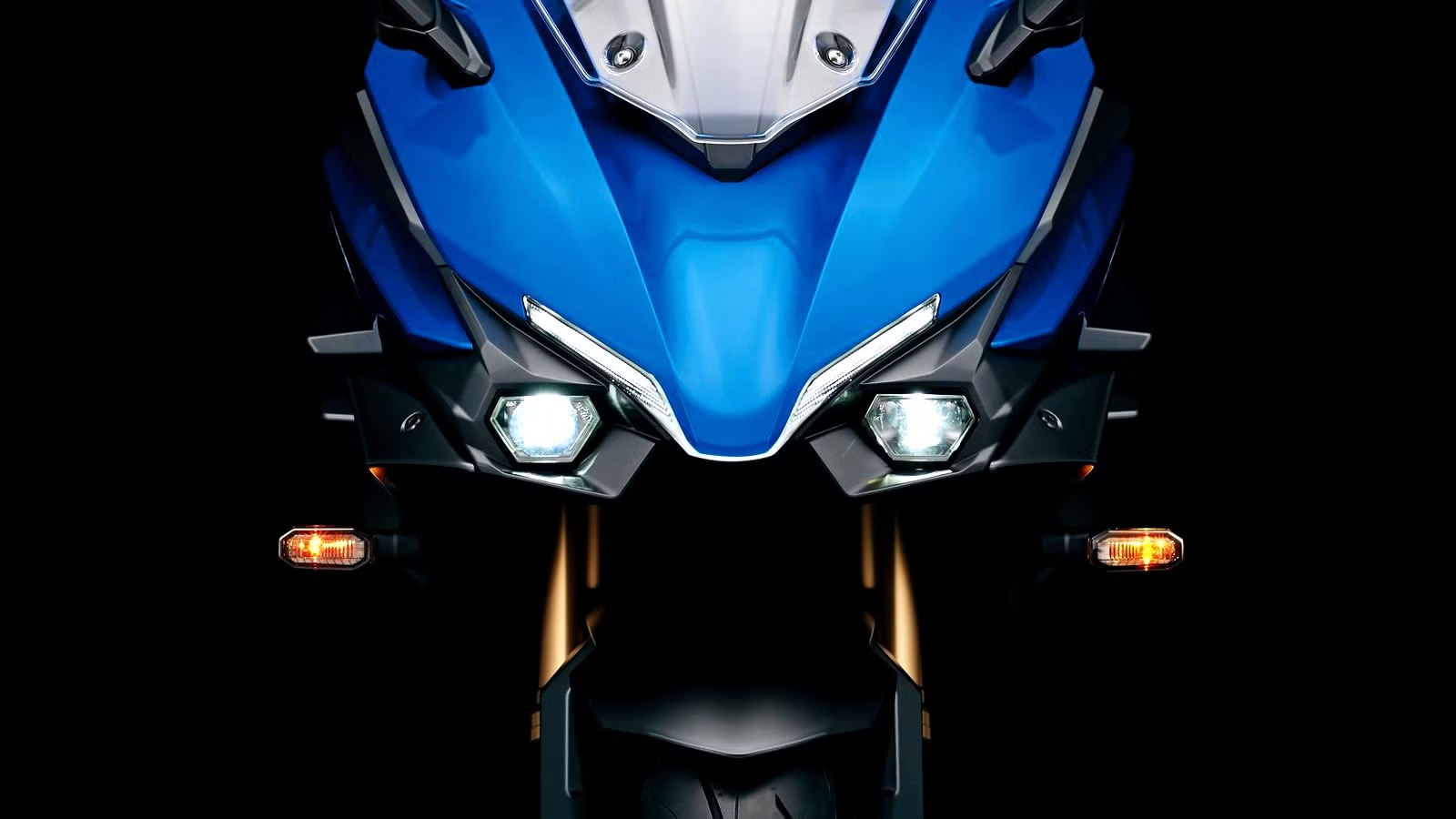
There was a time when buying a sport-tourer meant being the sensible one. You wanted speed, but you also wanted to get to work on Monday without a wrecked back. So you skipped the superbike, picked something with a comfier seat and a fairing, and felt good about the money you saved. But that math has changed.

The headline sport-tourers now cost what a track-focused sports bike used to. Premium machines, with electronic everything, are pushing past $20,000 before you have added a single accessory, and the segment that used to be about value has quietly turned into a luxury aisle. What do you do if you want things on a budget, then? Well, lucky for you, one machine still does the whole job for thousands less, and it does not feel like the cheap seat.
The Average Price Of A Premium Sport-Tourer Is Higher Than Ever
Walk into a dealership shopping for a do-it-all sport-tourer, and the sticker shock is real. The bikes that get all the magazine covers have crept into territory that used to be reserved for flagship superbikes and small cars. Take the new BMW R 1300 RS. It starts at $16,995, which already sounds like a lot, but that is the bare number. Spec it the way most buyers actually want it, with the Comfort and Touring packages plus the luggage, and the as-ridden price climbs into the low-to-mid $20,000s on the dealer floor.


Look overseas, and the ceiling rises further still. KTM’s 1390 Super Duke GT, a 175 hp sport-tourer that barely pretends to be sensible, is not even sold in the United States. The closest thing KTM will hand a US buyer is the 1390 Super Duke R EVO, and that lists at $22,149. So to break it down: the going rate for a genuinely premium sport-touring experience now starts around $20,000 and only goes up from there.
Now hold all of that in your head and picture a bike that delivers a similar core experience for under $15,000. Not a stripped-out budget special, but a fully faired, hard-luggage-equipped, electronics-loaded sport-tourer built around a real superbike engine. It exists, it has been hiding in plain sight, and it undercuts every flagship on this list by thousands.
The Suzuki GSX-S1000GT+ Gets You A Premium Sport-Touring Experience At An Affordable Price

The bike is the Suzuki GSX-S1000GT+, and for 2026, it carries a $14,399 MSRP. That is the whole pitch in one number. It undercuts the loaded BMW R 1300 RS by a massive sum and offers more value than its arch-rival: the Kawasaki Ninja 1100SX. The ‘+’ badge means it ships with color-matched 37-liter hard cases as standard, the kind of touring kit that lands on the options sheet of the pricier bikes and pads their final number even further. What this really means is that the Suzuki is not the compromise choice in this comparison. It is the bike that makes you wonder what the extra money on the others is actually buying. The rest of this story is about why that question is so hard to answer.
The GSX-R-Derived Engine Does The Heavy Lifting

The heart of the GT+ is a 999cc inline-four, and its bloodline is the good stuff. This motor traces back to the legendary K5-generation GSX-R1000, the bike a lot of riders still call the best liter bike Suzuki ever built. Reworked and retuned for the street, it makes around 150 hp here, fed through ride-by-wire throttle bodies and a stainless 4-2-1 exhaust. These are big, honest numbers from an engine with nothing left to prove.
Real-World Delivery, Midrange Muscle, And A Bombproof Reputation

Peak power is only half the story. The thing that makes this engine special on a real road is the midrange. Suzuki tuned it for strong low-to-mid torque, so you get a fat, usable surge right where you actually ride, rolling out of a corner or passing a truck in sixth without dropping two gears. And because the architecture has been in production for two decades, it has earned a reputation for being close to bombproof. Riders pile on serious mileage and just keep going. For a bike meant to cross states, that kind of durability is worth as much as any spec sheet figure.
Sporty Underpinnings With Quality Suspension

The GT+ rides on a twin-spar aluminum frame with a swingarm lifted straight from the GSX-R1000, and the suspension is fully adjustable KYB at both ends. As for the riding position, there is a slight forward lean that keeps the front end planted and the bike feeling sporty, but the bars sit high and close enough that you are not folded over the tank after an hour. The seat is shaped for distance.
This is where the plus sign earns its keep. The 37-liter color-matched side cases are styled with the bike rather than bolted on as an afterthought, and they swallow most full-face helmets. A real touring day looks like this: load the cases, thumb the cruise control on the highway, settle into that mild lean, and let the midrange do the work between fuel stops.
The Features List Reads Like A Bike Costing Far More

Sit in the saddle, and the value story keeps going. A full-color 6.5-inch TFT dash anchors the cockpit, and it pairs to your phone over Bluetooth through Suzuki’s mySPIN system. From there you get contacts, calendar, music, and turn-by-turn navigation right on the screen, with a USB outlet to keep everything charged. This is the kind of connected, navigation-ready dash that felt cutting-edge on bikes costing far more, and here it is standard on a sub-$15,000 machine.

The electronics suite is where the GT+ really stops feeling cheap. Standard kit includes Suzuki’s five-mode traction control, three ride modes through the Drive Mode Selector, a bi-directional quickshifter for clutchless up and down changes, Smart Cruise Control that keeps working even through quickshifts, ABS, and a ride-by-wire throttle. That is a flagship-grade rider-aid package, the same broad toolkit the $20,000 bikes lean on, pulled from the wider Suzuki GSX-S family and delivered here without the flagship price.
Source: Suzuki Cycles

Related posts

Latest Post


No Comments