
The Rarest Chevrolet Muscle Car Produced In The ’60s
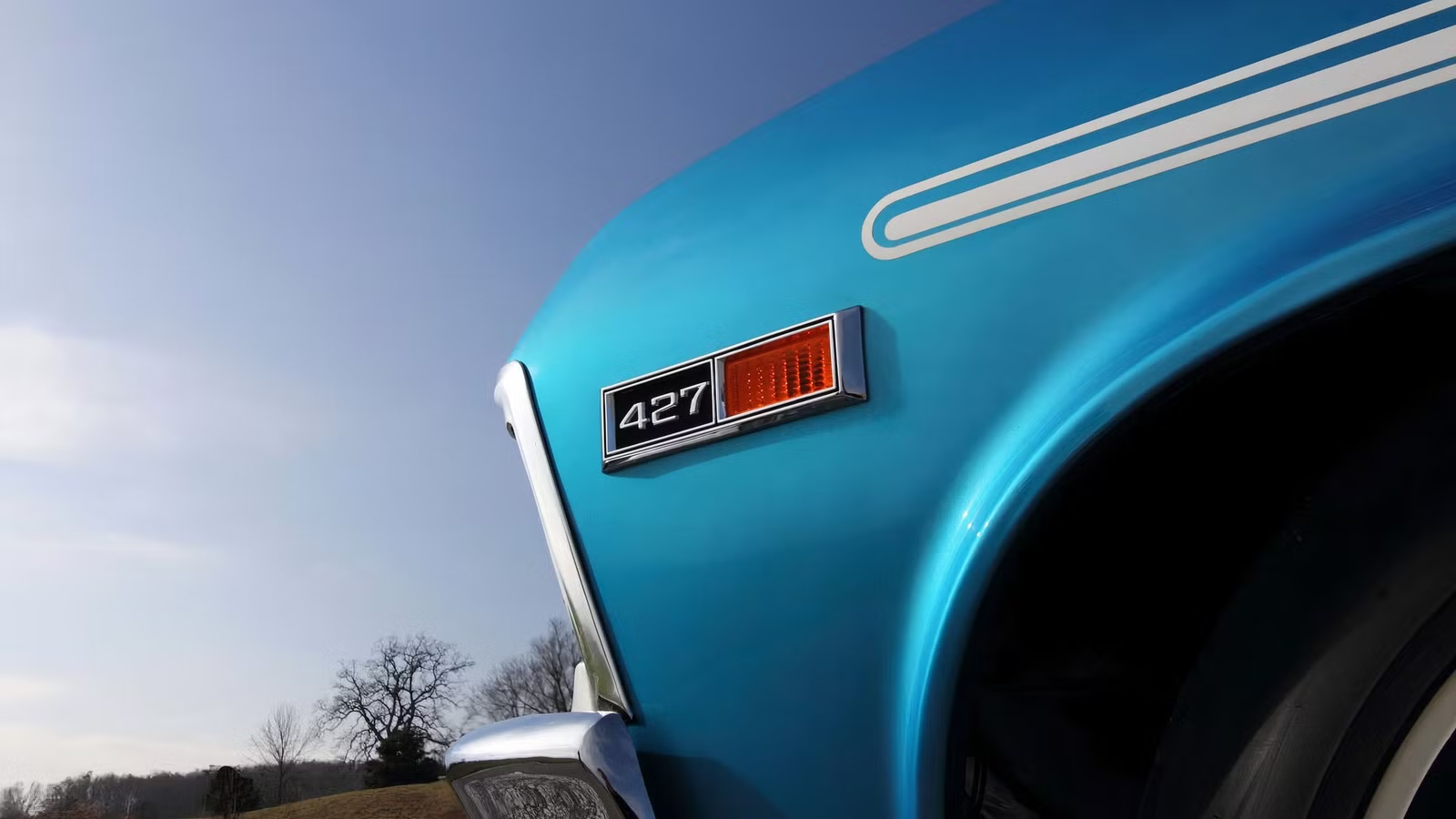
Few eras in automotive history ignite as much passion as the 1960s muscle car boom — and for good reason. Chevrolet was right at the center of it, flooding showrooms with fire-breathing machines like the Camaro and Chevelle that still command serious money at auction today. But buried beneath the headline-grabbers is a car so rare that most enthusiasts have never seen one in the metal — a machine that even its own creator called the wildest thing he ever built.

Chevrolet’s prodigious output hasn’t hurt the collectability or values of its muscle cars, and good-condition mass-produced models can easily fetch $100,000 or more if the numbers match. That said, many hardcore collectors want something a bit more special and rare, and Chevrolet delivered what would go on to be easily one of the rarest muscle cars of all time in the 1960s.
Where things get interesting with these cars is when they have been modified or upgraded by a dealer or OEM representative. Don Yenko was one such person in the 1960s and 1970s. His Yenko Chevrolet dealership in Pennsylvania modified a handful of Chevy models over the years, starting with the Corvair. The original Yenko Camaro sported a 427 V8 and was popular enough that the dealer leaned into the Chevrolet Central Office Production Order (COPO) program to have the engines installed at the factory.
Yenko is the reason we’re here today talking about the rarest Chevy muscle car from the 1960s. While the dealer modified hundreds of Camaros and Vegas, more than 100 Corvairs, Corvettes, and almost 100 Chevelles, there was one car ordered by the store in far fewer numbers. It was a tough seller for Yenko, leading the dealer to do the modifications in-house.

The information in this article was sourced from well-known publications and experts on Chevrolet Muscle cars. Sources include Mecum Auctions, Hagerty, Chevrolet and General Motors, and MotorTrend.
The 1969 Yenko Nova S/C 427 Is The Rarest Chevy Muscle Car Of The 1960s
The 1969 Chevrolet Nova was and remains a desirable muscle car, but the legendary Yenko got hold of a few dozen and fitted them with a 427 V8 engine. Chevrolet wouldn’t stuff a 427 into the Nova for safety reasons, but the dealer ordered 38 Nova SS 396 cars (37 production cars and 1 automatic prototype) and converted them with crate engines after the fact.
Customers were just as wary of the car as Chevrolet was, leading Yenko to convert only around half of the Novas he ordered with the larger engine. It’s worth noting that there are rarer Corvette models, but that car is typically considered a sports car rather than a full-on muscle car. Of the 38 production cars ordered, only nine Yenko Chevy Novas are known to remain today.
The car’s performance upgrades did not come with shouty cosmetic changes. Other than the four colors — Fathom Blue, Le Mans Blue, Rally Green, and Garnet Red — the cars wore a few small Yenko badges and a Yenko/SC graphic on the rear fenders. The understated interior featured a bench seat and a simple dash layout, though Yenko added a tachometer in front of the gauge cluster.
1969 Chevrolet Nova Yenko S/C 427 Highlights
- Converted from a 396 cubic-inch V8 to a 427 cubic-inch
- 38 Yenko Nova 427 Were Ordered, but only nine are estimated to still be in existence (Hemmings)
- Four colors were available in 1969 (MotorTrend)
- The car runs 0-60 mph in under five seconds (MotorTrend)
Chevrolet Yenko Nova S/C 427 Performance
While the standard Nova SS 396 was no slouch, the 427 V8 transformed it into a legitimate screamer. It was said to run from 0–60 mph in around 4.7 seconds and could complete the quarter mile in under 11 seconds. The big V8 could easily overwhelm the Nova’s narrow 14×7 wheels and stock Goodyear or Firestone tires, and it required drag slicks to extract the most from its massive horsepower and torque.
The interesting thing about the engine is that Yenko’s tuning pushed its factory output from 425 to something closer to 450 horsepower, though there is some speculation that the upgraded engines produced even more than that. Factory torque was rated at 460 pound-feet.
The problem with that performance is that the Yenko Nova scared people. It was too much for Chevrolet to sell as a factory car, and despite having a professional engine swap, buyers were concerned about such a lightweight car carrying a big V8. Yenko himself said the car was “barely street legal at best,” describing it as the “wildest thing we ever did.”
The 396-equipped cars were chosen for the transplant because they carried reinforced frames and upgraded brakes, suspension, and drivetrain components. They came with Muncie transmissions and two choices of a GM Positraction rear end.
Performance Specifications
|
427 Cubic-Inch V8 |
|
|
Horsepower |
450 HP @ RPM |
|
Torque |
460 LB-FT (Before Yenko upgrades) |
|
Transmission |
Four-Speed Manual |
|
0-60 MPH |
5.1 Seconds |
|
Quarter-Mile Time |
Under 11 seconds |
(Specs: Chevrolet)
How Much Is The 1969 Chevy Yenko Nova S/C 427 Worth Today?

Though Yenko ordered 38 Novas with the intention to modify them, the dealer only managed to convert around half. Today, fewer than ten are thought to exist, making the remaining cars exceedingly valuable. That rarity has driven prices toward the half-million-dollar mark for fully restored examples, while even fair-condition cars regularly bring more than $250,000.
1969 Chevy Nova Yenko SC/427 Pricing
|
Condition |
Value |
|
Fair |
$253,000 |
|
Good |
$322,000 |
|
Excellent |
$399,000 |
|
Concours |
$480,000 |
(Source: Hagerty)
Those values are enough to take the wind out of any collector’s sails, but it’s important to note that they depend on the cars having all of the correct parts in place. Since the engine was swapped after the car left the factory, it won’t have a matching VIN with the body components, but third-party replacement parts and modifications can significantly hurt the Nova’s value.
Some of the early owners added gauges, upgraded stereos, and aftermarket wheels to these cars, not knowing that their extreme rarity would one day make them worth more than a decent house in many parts of the country. It’s also worth pointing out that it would be relatively easy for someone to dress a Nova SS up with a 427 V8 and exterior graphics to create a faux-Yenko.
The values make it tempting for unscrupulous sellers to advertise a regular Nova as a Yenko, but the good news is that the existing cars are fairly well-documented in collectors’ circles, so it’s unlikely that someone could pull it off without being noticed.
Final Thoughts On The Yenko Nova S/C 427

Collector’s cars like the Nova Yenko S/C 427 are so rare that most people would feel uneasy driving them. Every mile, scratch, and blemish affects the value, and the difficulty of sourcing correct parts for repairs is enough to deter almost anyone.
That said, the Nova’s upgraded performance is on par with some sports cars, though only in a straight line. Its impressive specs are tempting, but there are better options for enthusiasts who don’t have half a million dollars on hand and actually want to drive the car without worrying about depreciation. The Nova SS 396 is a great alternative, though its values are also climbing. Slightly larger cars like the Camaro and Corvette from the same era are equally desirable, but their added weight means they may not deliver quite the same raw, seat-of-the-pants thrill as the lighter Nova.
Sources: Mecum, Hagerty, MotorTrend, Chevrolet

Related posts



Latest Post


No Comments