
The Honda CBX Inline-Six Superbike Purists Rank Above The Z1300
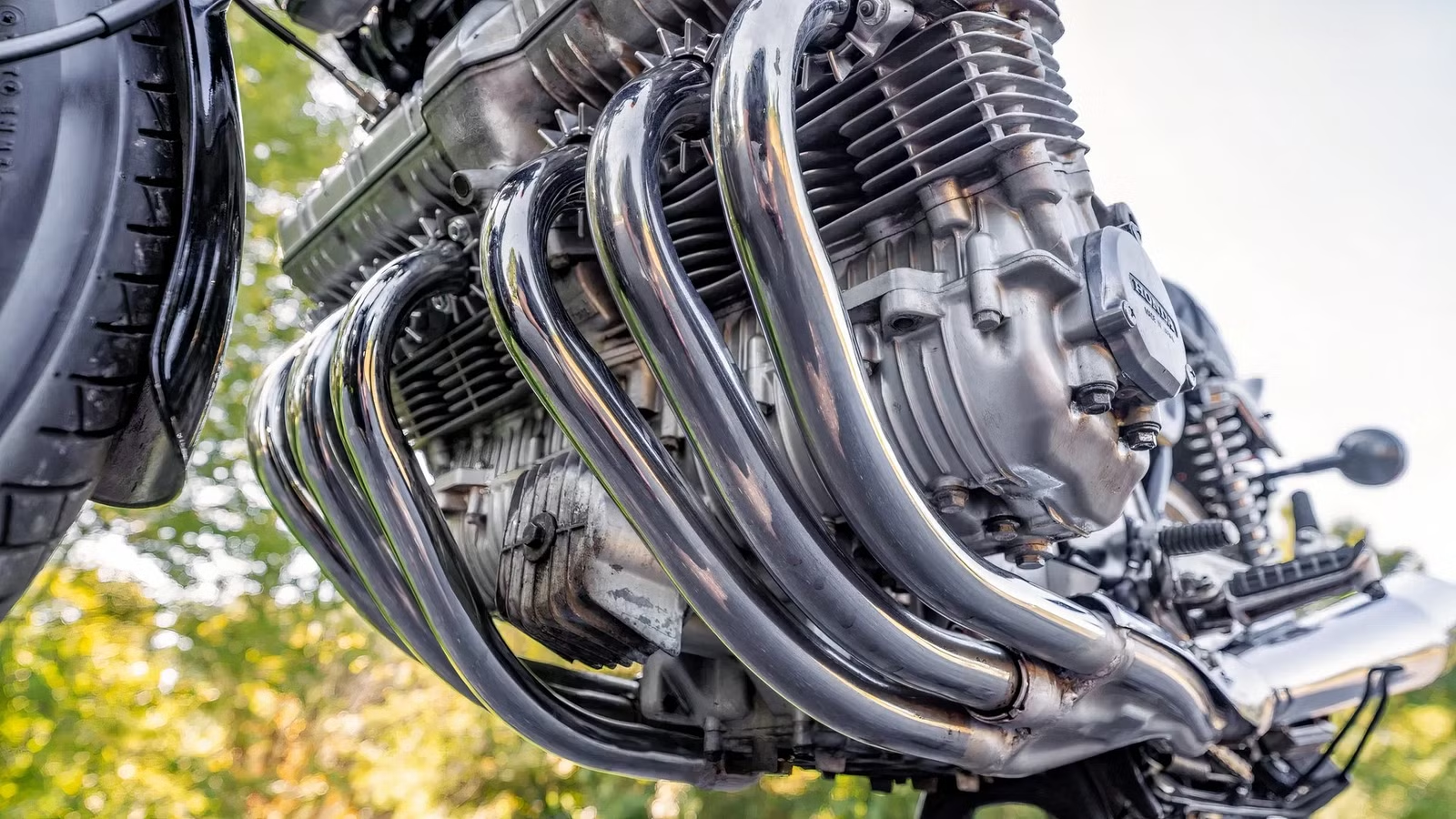
There’s an obvious way to win a superbike war: build the bigger engine and put a larger horsepower number beside it. Kawasaki followed that playbook almost perfectly at the end of the 1970s.

Yet among classic Japanese motorcycle enthusiasts, particularly collectors in the USA, brute force hasn’t settled this rivalry. The six-cylinder machine that earned the stronger reputation did it with less displacement and less power, proving that a memorable superbike needs more than an intimidating spec sheet.
Kawasaki’s Z1300 Won The Spec Sheet
When Kawasaki launched the Z1300 for 1979, the numbers looked devastating. Its 1,286cc liquid-cooled inline-six was rated at 120 hp, giving it a clear displacement and horsepower advantage over Honda’s existing six-cylinder superbike. In an era when Japanese motorcycle manufacturers seemed determined to prove that excessive cylinder counts were perfectly sensible, Kawasaki went all in.
Three 32mm carburetors fed the six cylinders, while a five-speed transmission sent power to the rear wheel through a shaft drive. The mechanical package gave the Kawasaki Z1300 a distinctly serious character. Liquid cooling looked advanced for the period, and the shaft-drive setup suited riders who wanted big-engine performance without dealing with chain maintenance.
Undeniably Impressive


For an American motorcycle enthusiast walking into a dealership in the late 1970s, it would’ve been difficult to ignore. More than 1,200cc from a Japanese six-cylinder motorcycle was extraordinary stuff. The Kawasaki had the sort of specifications that made comparison charts feel unnecessary.
But as any serious gearhead would attest, superbikes aren’t ridden inside comparison charts. The hardware that gave the Kawasaki its impressive numbers also created one of the biggest differences between these two Japanese classics: weight.
Bigger And Stronger Still Came With A Catch
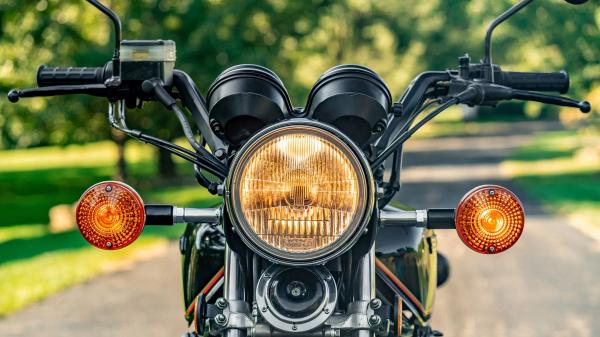
The Kawasaki Z1300 was a substantial motorcycle. Its liquid-cooling system added extra equipment around the engine, while the shaft drive brought more mass into the driveline. Kawasaki had built a fast six-cylinder machine, but it leaned closer to heavyweight grand-touring territory than the more stripped-down superbikes that defined the era.
Compared to its Honda rival, the difference became pretty stark. Honda relied on air cooling, which left its six-cylinder engine woefully exposed instead of hiding plumbing behind bodywork. Final drive came through a conventional chain. The whole motorcycle felt mechanically simpler even though there was absolutely nothing simple about squeezing six cylinders across a motorcycle frame.
Different Paths

The fueling arrangements reveal how differently Honda and Kawasaki approached the same six-cylinder idea. Kawasaki used three 32mm carburetors to feed its engine, and Honda gave every cylinder its own 28mm Keihin constant-velocity carb. Six carbs sound ridiculous today, which is why classic motorcycle enthusiasts love looking at them.
Kawasaki had made the stronger argument for outright size and horsepower. Honda’s approach was heading somewhere else, placing more emphasis on mechanical drama and the sort of connection that would later matter enormously to vintage motorcycle collectors in North America.
The Honda CBX Made 105 HP Feel Far More Exotic
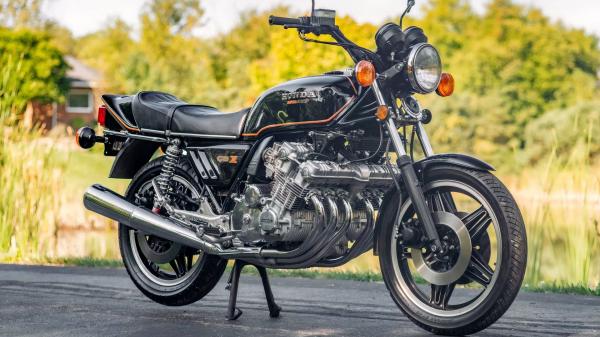
Honda’s answer was the 1978 Honda CBX 1000, one of the most recognizable classic Japanese motorcycles ever built. Its 1,047cc air-cooled inline-six used double overhead camshafts and four valves per cylinder, giving it 24 valves in total. Output was rated at 105 hp at 9,000 rpm, which put it behind the larger Kawasaki on paper but hardly made the Honda feel second-best.
Honda could’ve taken an easier route. During development, the company also experimented with a 1,000cc four-cylinder engine that wasn’t dramatically weaker. The six-cylinder layout won because smoothness and character mattered as much as horsepower. Project leader Shoichiro Irimajiri had experience with Honda’s multi-cylinder Grand Prix racing engines, and that background helped turn the CBX into something far more exotic than another big Japanese superbike.
Dangerously Exposed
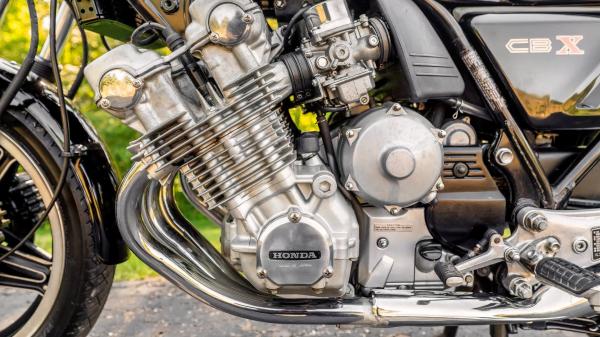
Packaging the engine was clever too. Honda used a jackshaft and angled the carburetors inward, helping keep the six-cylinder engine to roughly 23.4 inches across. That made it only around two inches wider than the engine in Honda’s CB750, which is impressive considering the CBX had two extra cylinders hanging across the frame.
The original Honda CBX weighed 544.5 pounds dry and paired its engine with a five-speed transmission and chain drive. Seat height was 31.9 inches, while top speed was around 136 mph. For American superbike fans in the late 1970s, those numbers were serious enough. The real hook was that enormous six-cylinder engine sitting completely exposed.
Six Carbs And Less Weight Changed The Equation
Calling the Honda CBX lightweight would be generous, but compared with the Kawasaki Z1300 it had a much stronger sporting flavor. Honda relied on air cooling and chain drive, while Kawasaki’s liquid cooling and shaft-drive system added more hardware. When these two left the highway and started asking their chassis to work, that was a pretty big distinction.
Riding impressions at the time didn’t pretend the CBX handled like a modern sportbike. Its high center of gravity demanded smooth steering inputs, and the early rear suspension could become unsettled when pushed hard. Once the chassis settled, though, high-speed stability was strong, and Honda managed to make the wide-looking motorcycle surprisingly comfortable for the person sitting behind that huge engine.
All Part Of The Deal
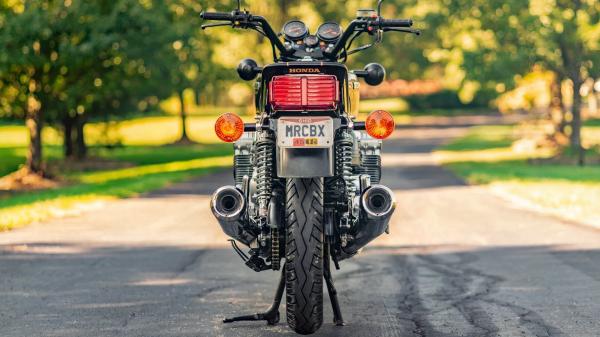
Then there were the six individual 28mm Keihin carburetors. Each cylinder had its own carb, compared with the Kawasaki’s three-carb arrangement, giving the Honda’s intake side a more intricate mechanical appearance. Keeping six carburetors synchronized can make ownership more involved, especially on a vintage motorcycle that has spent years sitting with old fuel. Purists tend to see that complexity as part of the CBX experience rather than something to engineer away.
Collectors Still Put The CBX On Top
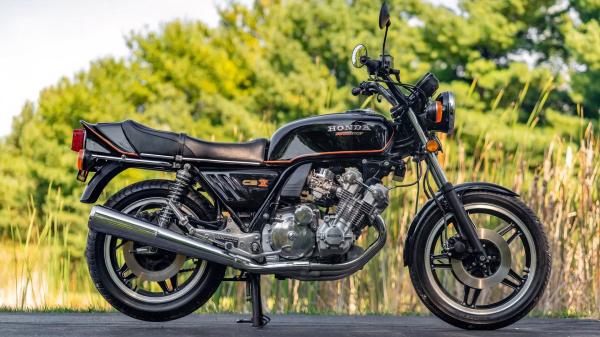
Honda changed the CBX significantly for 1981 and 1982, shifting it toward sport-touring duty with a fairing and its Pro-Link single-shock rear suspension. Collectors sometimes use ‘CBX-B’ as shorthand for these later Pro-Link and fairing-equipped motorcycles, though that isn’t an official Honda factory model designation.
The chassis changes were substantial. Fork diameter increased from 35mm to 39mm, while rake moved from 27.5 degrees to 29.5 degrees to improve straight-line stability. The rear gained Honda’s rising-rate Pro-Link suspension, and the front brakes also grew. Honda charged $5,600 for the sport-touring CBX, compared with $3,350 for the 1981 CB900F, so six-cylinder ownership carried a serious premium.
Lofty Premium
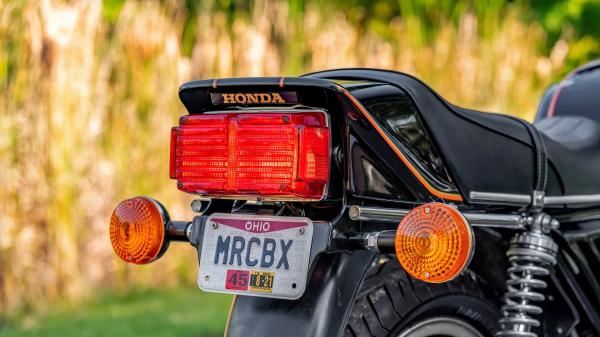
Today though, that premium looks different. Sales over the past decade have generally placed CBXs at an average sale price of about $17,000. Originality matters heavily in the classic motorcycle market, and heavily modified examples can lose some of the appeal that draws vintage Honda collectors to the CBX in the first place.
The Kawasaki Z1300 still deserves respect for its 1,286cc inline-six and 120 hp rating. Yet the Honda CBX 1000 built a stronger identity around the engine itself, pairing six individual carbs with an exposed air-cooled design and a noticeably lighter package. For classic Japanese motorcycle enthusiasts across America, that combination explains why the CBX still occupies such a lofty place in six-cylinder superbike history.
Sources: TopSpeed, Motorcycle Specs, Motorcycle Classics, Rider Magazine, Hagerty.

Related posts
Latest Post



No Comments