
The Pickup That Quietly Borrowed A Muscle Car Engine
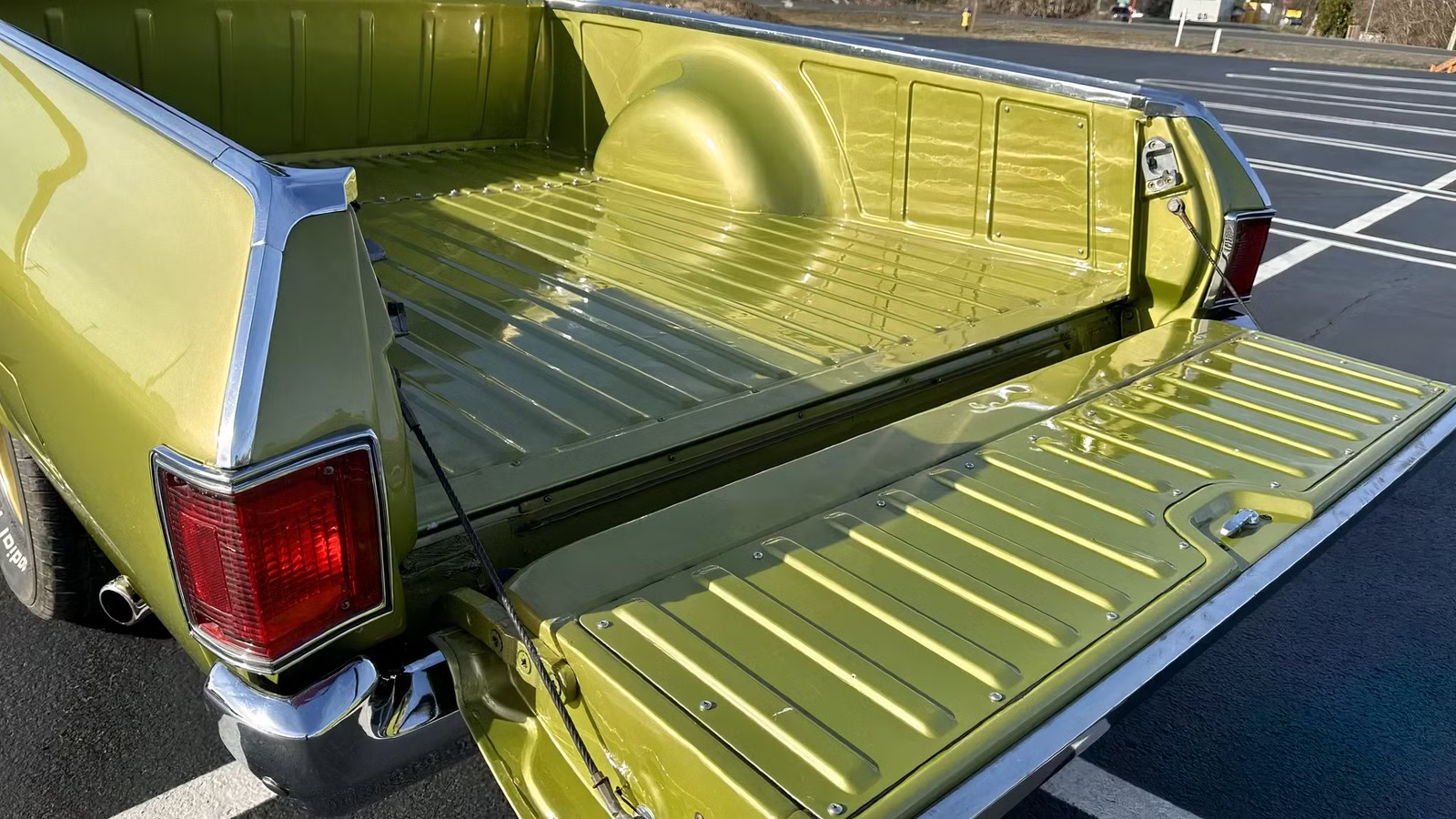
A GMC buyer in the early 1970s would have expected durability, cargo space, and useful V8 power. The brand sold machines for jobs, not street-racing glory. Yet one low-slung pickup could hide an engine closely tied to one of Detroit’s most feared muscle cars. It offered a real bed, serious torque, and enough power to make an empty rear end feel especially lively. Still, the truck never gained the fame, reputation, or cultural pull of the car that shared its powerplant. Its forgotten story starts where work duty and muscle met.
Muscle-Car Power Was Not Supposed To End Up In A Pickup

Detroit liked clear labels during the muscle-car era. A family sedan carried groceries, a pickup hauled lumber, a performance coupe carried a large engine, loud stripes, and at least one insurance agent’s raised eyebrow. Carmakers built whole identities around those roles. Chevrolet, Pontiac, Buick, Oldsmobile, Ford, Dodge, and Plymouth promoted their quickest passenger cars with bold names, hood scoops, special suspension parts, and horsepower figures printed large enough to read from across a showroom. Trucks lived in another part of the brochure rack – their ads talked about payload, towing, strong frames, and long service life.
That separation also shaped engineering choices. Passenger-car divisions stuffed high-compression V8s into midsize platforms and turned them loose with four-speed manuals, steep axle gears, and performance packages. Pickups could use big engines, but manufacturers usually tuned and sold them as tools. Torque helped a truck pull a trailer or climb a grade and did not automatically make the truck part of the muscle-car club.
By 1971, the party had already started to change. Lower compression ratios allowed engines to run on lower-octane fuel, while emissions rules and rising insurance costs placed new pressure on performance cars. Muscle had not disappeared, but it had begun cleaning up before coming inside. Against that backdrop, putting a passenger-car big-block into a cargo-carrying vehicle looked even stranger. A car-based pickup could blur the line, of course, but most buyers still did not expect a GMC dealer to offer the mechanical heart of a headline-making street machine.

The Badges Hid A Familiar Performance Formula

The mystery machine had a roof that sat low, and its hood stretched forward like the nose of a proper muscle car. The cabin held two adults, or three if the middle passenger had made peace with limited personal space. Behind them sat an open cargo bed with 38.5 cubic feet of space. The whole vehicle measured about 206 inches long on a 116-inch wheelbase, giving it the stance of a long passenger car rather than a tall pickup.
Underneath, it used passenger-car roots instead of a conventional pickup layout. Its chassis came from General Motors’ A-body family, with the longer wheelbase used by the Chevelle sedan and station wagon. Much of the front sheet metal, suspension design, cabin structure, and drivetrain architecture belonged to that same well-known performance family. Coil springs supported the rear rather than the leaf springs common to many trucks. The result offered a lower center of gravity, a smoother ride, and steering that felt more like a midsize car. It could still haul plants, tools, or camping gear, though.
The engine list completed the disguise. Buyers could choose an inline-six or several V8s, including small-block and big-block options. At the top sat a 454-cubic-inch V8 with a four-barrel carburetor. GMC’s 1971 engine chart rated the main version at 365 gross horsepower and 465 pound-feet of gross torque, with peak torque arriving at only 3,200 rpm.
The 1971 GMC Sprint SP 454 Is A Forgotten Muscle Pickup

The vehicle was the 1971 GMC Sprint SP 454. GMC introduced the Sprint for 1971 as its version of the Chevrolet El Camino, then added the SP package as the performance-minded counterpart to Chevrolet’s SS treatment. The Sprint came in standard and Custom forms, while the SP option sat on the V8-powered Custom. In basic shape and structure, the Sprint and El Camino shared nearly everything. However, GMC changed the identity, trim, grille details, and badges, then sold the result through its own truck-focused dealer network.
The key option carried Chevrolet’s LS5 code. The 454 used a cast-iron block and heads, hydraulic lifters, an 8.5:1 compression ratio, and a Rochester Quadrajet four-barrel carburetor. GMC rated it at 365 gross horsepower at 4,800 rpm and 465 pound-feet at 3,200 rpm. Those figures need period context: gross horsepower came from an engine tested without the full drag of production accessories and exhaust equipment, so it does not compare directly with modern net ratings. GMC also listed 285 net horsepower for that engine. The smaller number sounds less exciting, but the 465-lb-ft gross torque figure explains the truck’s real character. It delivered a thick shove without demanding high engine speed.

That engine connected the Sprint directly to the Chevelle SS 454. Both used the same LS5 formula, down to the displacement, compression ratio, four-barrel carburetor, power rating, and broad torque curve. The Chevelle wrapped that hardware in one of the muscle era’s best-known names. The Sprint placed it behind a GMC grille and ahead of a steel cargo bed.
Naturally, the Sprint never escaped the El Camino’s shadow. Chevrolet had already spent years building the El Camino name, and the SS badge carried instant weight among performance buyers. GMC started from scratch and placed its version beside commercial trucks, vans, and heavy haulers. Enthusiasts commonly cite only 249 Sprint SP examples for 1971 and roughly 25 with the 454, though surviving factory records available online do not settle every production detail. Even the total number of 1971 Sprints varies among references.
More Than An El Camino With Different Badges

From a distance, the Sprint could pass for its Chevrolet relative. Up close, GMC gave it enough detail to establish a separate identity. A broad GMC emblem sat in the grille. Sprint and engine badges appeared on the body, while GMC-specific trim and wheel covers changed the presentation. The 1971 grille used a strong horizontal theme with a dark center, a look that suited GMC’s tougher image. The changes did not require a new body shell, but they mattered in the showroom.
Chevrolet dealers could place an El Camino SS near Chevelles, Camaros, and Corvettes. Customers already visiting for a performance car could see the car-pickup as another playful choice. GMC stores attracted buyers who wanted trucks, fleet vehicles, or commercial equipment. Those customers could appreciate a stylish pickup, but fewer arrived hunting for muscle. GMC’s advertising leaned into versatility, towing, cargo space, durability, and leisure use. One brochure showed the Sprint pulling a camper and another showed someone loading flowers into the bed. Neither scene suggested a stoplight duel, unless the flowers had insulted the driver’s mother.

The SP package added the visual and mechanical clues that separated a performance model from an ordinary Sprint. The formula was simple: power front disc brakes with rear drums, a blacked-out grille, SP emblems, a special domed hood, bright hood pins, hood stripes, sport wheels, and larger white-letter tires. Buyers could also add bucket seats, a center console, gauges, power steering, air conditioning, and other comfort equipment. A cowl-induction hood appeared on a limited number of early trucks. The options could turn the Sprint from a vinyl-bench work vehicle into a convincing two-seat grand tourer with a bed attached.
Different Than Today’s Performance Trucks

On the road, the 454 defined the experience. Its low-end torque suited both jobs that the Sprint claimed to handle. It could pull away hard when lightly loaded, and it could move a trailer or a bed full of cargo without constant downshifts. GMC equipped the rear with adjustable air-assist shock absorbers to help manage changing loads, while the coil-spring chassis gave it a more settled ride than many traditional pickups. That pairing explains why the big-block made sense beyond pure speed.
Still, the Sprint SP 454 did not behave like a modern performance truck. Its long body, period tires, basic steering, rear drum brakes, and heavy iron V8 placed limits on braking and cornering. An empty cargo bed left less weight over the driven wheels, so the huge torque supply could overwhelm the rear tires. The driver needed a measured right foot, especially on wet pavement. Straight-line acceleration provided the main event, and fast bends served as a reminder that physics had also ordered the big-block option. The Sprint’s appeal came from its mix of speed and utility, not from beating every sports car through every corner.

That balance also explains why the model deserves more respect. It could carry bulky items that would never fit in a Chevelle trunk, yet it shared the same kind of engine and much of the same chassis design. GMC even promoted the bed’s double-wall construction, ribbed steel floor, and useful cargo volume. Owners could use the truck as intended, which likely hurt long-term survival. Work vehicles collect dents, moisture, overloaded springs, and creative repairs involving hardware-store bolts. Low production made replacement GMC trim harder to find, while shared Chevrolet parts made it easy for later owners to build or clone something that looked more like an El Camino.
The Sprint SP also predicted a market that Detroit would explore much more loudly later. Chevrolet launched the 454 SS pickup for 1990. GMC followed with the turbocharged, all-wheel-drive Syclone for 1991, while Ford introduced the SVT Lightning in 1993. Those trucks arrived with clear performance missions and marketing that treated speed as the main attraction. The Syclone, in particular, made headlines by challenging sports cars and became one of the best-known factory performance pickups of its decade. The Sprint had combined a fast-car drivetrain with cargo ability about 20 years earlier, but GMC never gave it the same theatrical entrance.
The Sprint SP Proved A Muscle Car Did Not Need A Trunk

That quiet approach created the perfect contradiction. GMC built its name around serious trucks, then sold a low-roof pickup with one of Chevrolet’s most recognizable muscle-car engines. The Sprint SP 454 could haul supplies, tow recreational gear, and carry two people in passenger-car comfort. It could also deliver 465 lb-ft of gross torque before the tachometer reached 3,500 rpm. Few vehicles made yard work sound so much like a threat.
The truck borrowed the Chevelle SS 454’s basic LS5 power formula without borrowing its fame. The Chevrolet became a muscle-car landmark, but the GMC remained an answer to a trivia question that most enthusiasts never thought to ask. Its obscurity makes its story even better.
Later performance pickups shouted about speed through lowered suspensions, special bodywork, magazine tests, and clear branding. The Sprint SP arrived before Detroit fully accepted the idea that a pickup could serve as a factory performance vehicle. It slipped into the market dressed as a useful GMC, carrying a muscle-car bloodline beneath its long hood.
Source: GMC, Car and Driver, Hemmings, HotRod

Related posts



Latest Post


No Comments