
The Performance Car That Hid Lotus DNA Under A JDM Hatchback
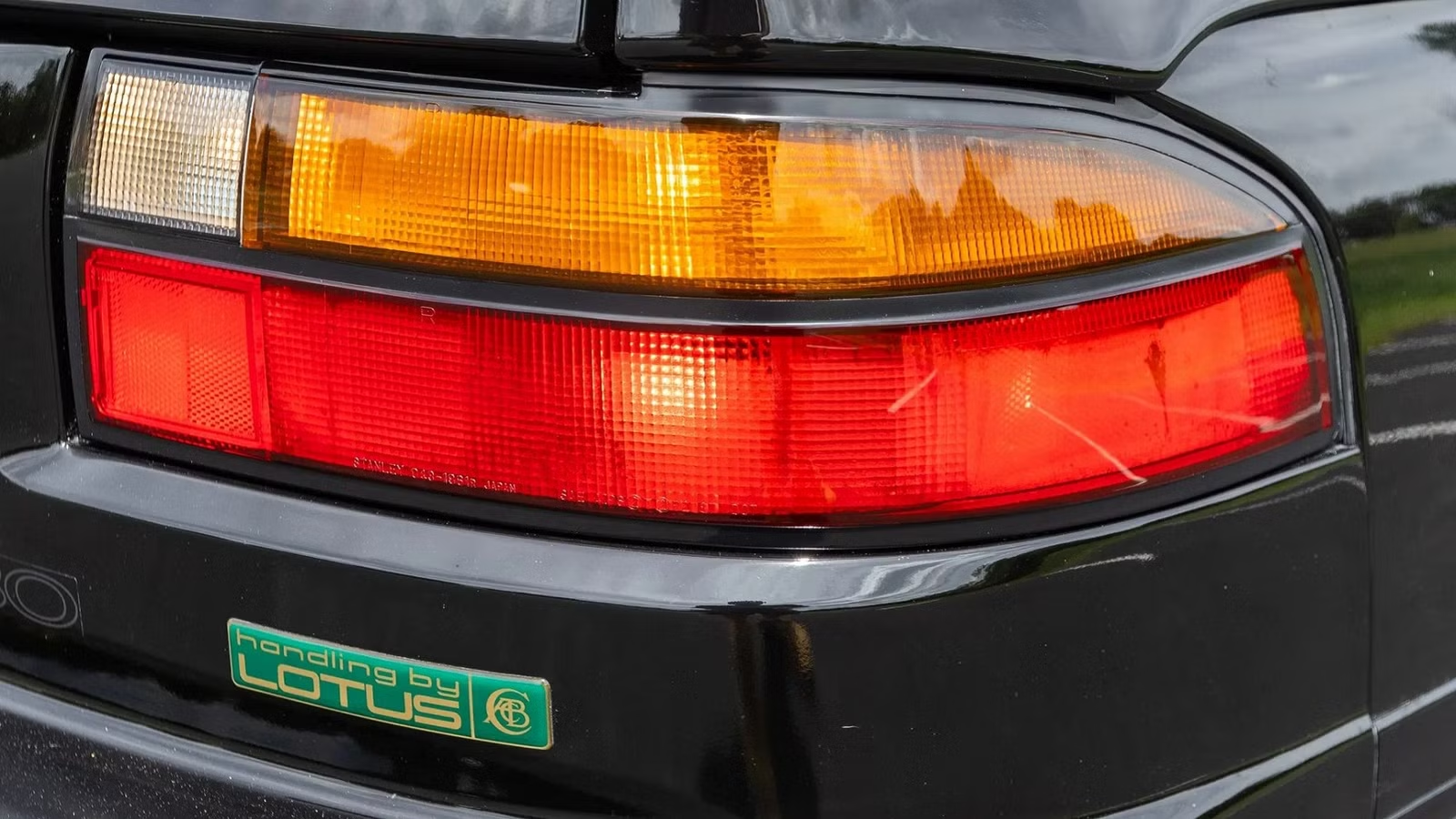
Turbocharged twin-cam engine, five-speed manual, full-time all-wheel drive with more torque sent toward the rear, and British sports-car experts sorting the chassis. Put those ingredients on a spec card today, and collectors would start throwing elbows before the auction photos finished loading. Yet one early-’90s Japanese hatchback that carried all of them slipped through the cracks.
The ’90s Performance Boom Left Some Serious Cars Behind

Enthusiast memory rarely treats every good car fairly. It tends to favor machines with a clear identity and an easy story, and a famous performance badge certainly helps. So does a shelf full of racing trophies, a long production run, strong dealer support, and decades of magazine coverage. Add a large modification scene, and a car can remain visible long after its last factory warranty expires. Owners build them, race them, break them, post about them, and build them again. That cycle creates legends.
One mystery hatchback lacked nearly all those advantages. Its manufacturer had built interesting passenger cars, but American buyers increasingly connected the company with rugged SUVs, pickups, and diesel engines. Walking into one of its showrooms for a small technological showcase required a strange mental gear change. The car also shared its general shape and corporate roots with a cheaper sibling that enjoyed more advertising and a much larger sales network.
Timing completed the disappearing act. The strongest version arrived just as its maker’s passenger-car program started losing its future. It received little time to develop a following, almost no chance to build a second generation of loyal owners, and limited support after production ended. Many examples simply became used hatchbacks before collectors understood what sat underneath them. Some suffered the normal fate of cheap turbo cars: deferred maintenance, questionable boost adjustments, and owners who believed every warning light meant the dashboard had entered party mode.

Much More Serious Hardware Than Everyone Expected

The engine provided the first clue that this hatchback had larger goals, though. It used a turbocharged and intercooled 1.6-liter four-cylinder with dual overhead camshafts and four valves per cylinder. Factory output reached 160 hp, while torque peaked at 150 lb-ft at 4,800 rpm. Those numbers look modest beside modern hot hatch figures, but the engine powered a compact car from an era when 160 horsepower still counted as real speed. A five-speed manual handled shifting duties.
The drivetrain made the package far stranger. Full-time all-wheel drive used viscous differentials and divided torque in a fixed 43:57 front-to-rear split. That rear bias gave the hatchback a different attitude from the front-heavy compact performance cars common at the time. The system did not wait for the front tires to surrender before sending help backward. It constantly delivered more torque to the rear. In a small early-’90s hatch, that layout bordered on exotic.
Then came the British clue. Lotus helped calibrate the suspension and approved the result for “Handling by Lotus” branding. The badge appeared on the car as more than a decorative wink toward sports-car history. Lotus engineers worked on the spring, damper, and anti-roll-bar balance to help the chassis deal with the added mass and traction of the all-wheel-drive system. Still, the badge created a myth that lasted longer than the car itself.
The Isuzu Impulse RS Turbo Was The Sleeper Almost Nobody Bought

That car was the 1991 Isuzu Impulse RS Turbo AWD, one of the strangest and most ambitious Japanese performance cars that American buyers could purchase from a regular dealership. The Impulse did not simply wear a fashionable Lotus badge and hope nobody asked difficult questions, because it combined meaningful Lotus chassis work with an unusually dense collection of Isuzu-developed technology. The result looked like a sporty economy-car offshoot but carried hardware that would have made sense in a far more expensive coupe.
Under the hood sat Isuzu’s 4XE1-WT, a turbocharged and intercooled 1.6-liter DOHC four-cylinder producing 160 hp and 150 lb-ft of torque. A five-speed manual sent that output through the rear-biased all-wheel-drive system. The chassis added four-wheel disc brakes, with anti-lock braking available, while curb weight landed at roughly 2,738 pounds depending on the published specification. A functional NACA-style hood duct fed the performance image up front.

That combination made the RS a genuine sleeper. Its rounded hatchback body shared clear visual DNA with the Geo Storm, and the Isuzu badge suggested sensible transportation more than special-stage aggression. Underneath, however, the RS carried a turbocharged twin-cam engine, permanent AWD, a rearward torque bias, passive rear steering, four-wheel discs, and Lotus-tuned suspension. Several better-remembered sport compacts offered fewer ideas at once. The Impulse hid its complexity so effectively that many people still assume it amounted to a Geo Storm with badges and a hood scoop.
Isuzu officially sold it in America for the 1991 model year. Bring a Trailer descriptions commonly cite approximately 600 U.S.-market RS Turbos for 1991, though surviving factory documentation has not produced a universally accepted final count. That estimate also remains separate from the fewer than 10,000 second-generation Impulses of all trims reportedly sold in the United States.
What Lotus Tuned, And What Isuzu Engineered Itself

Lotus handled the final chassis tuning and supplied the “Handling by Lotus” certification. Period accounts describe changes that included firmer struts, revised or thicker anti-roll bars, and springs selected to maintain compliance rather than simply punish every cracked road. The exact front-to-rear revisions varied among contemporary descriptions and Impulse versions, but the overall method stayed clear: Lotus adjusted the relationship among roll control, spring movement, and damper response.
That approach mattered because the AWD hardware carried a real weight penalty. Published figures place lighter front-drive Impulses more than 300 pounds below the RS, depending on trim and equipment. Lotus needed to keep the heavier car controlled without making it brittle. Softer or carefully balanced spring rates allowed the tires to follow imperfect pavement, while firmer damping and stronger roll control managed body movement. That sounds less exciting than bolting on the hardest springs available, but it reflects proper chassis engineering.

In fact, the relationship went deeper than one company lending another a famous badge. General Motors held major interests in both Isuzu and Lotus during this period, which opened the door for engineering exchanges. Lotus chose an Isuzu-built 1.6-liter engine and five-speed transmission for the front-wheel-drive Elan M100. In other words, British influence traveled toward the Impulse while Japanese powertrain engineering traveled toward Hethel.
Isuzu, however, created much of the Impulse RS’s unusual foundation. Its engineers developed the AWD system, the fixed 43:57 torque split, and rear-suspension geometry specific to the all-wheel-drive model. They also developed the Nishiboric passive rear-wheel steering system. Nishiboric used suspension geometry and controlled compliance instead of electronic motors, computers, or steering actuators. As the rear suspension moved and cornering forces loaded its links and bushings, the geometry altered rear-wheel toe. That small change helped the rear of the car respond during a turn. Lotus refined how the complete chassis acted near the limit, but Isuzu supplied much of the architecture that made the limit interesting.
America Missed It, But The Market Is Starting To Notice

The Impulse RS first suffered from a positioning problem. The closely related Geo Storm cost less, appeared through a far larger General Motors dealer network, and received stronger marketing support. Buyers could park the cars beside each other and recognize the shared proportions, glass, and general structure. Explaining why the Isuzu deserved more money required a salesperson to discuss torque distribution, chassis calibration, rear-suspension geometry, and passive steering. Selling the Geo required pointing at the price.
The brand’s changing identity created a second problem. By 1991, the Trooper, Rodeo, and Amigo had pulled American attention toward Isuzu’s trucks and SUVs. A technologically packed sport hatch no longer matched what many buyers expected to see in an Isuzu showroom. The RS Turbo appeared for 1991 and disappeared after that model year. Naturally aspirated Impulses continued for a short period, but the company announced in December 1992 that it would stop developing and building its own passenger cars as weak sales and high costs forced a retreat toward trucks, utility vehicles, and diesel engines. The RS arrived at the party while someone folded the chairs.
Rarity now makes the RS difficult to price. As of July 2026, there are no available examples for sale in the United States across Bring a Trailer and Classic.com. For reference, previous sales show a wide price range: a 104,000-mile example sold for $8,900 in April 2020, and a 90,000-mile car brought $11,500 in August 2021, while in August 2024, a black example showing only 27,000 miles sold for $18,940.
Classic.com currently reports a $12,320 average for the Isuzu Impulse, but that figure mixes both generations, several model years, naturally aspirated cars, rear-drive first-generation models, and different turbo trims. It does not represent an Impulse RS Turbo AWD valuation. The documented sales suggest that an exceptional, low-mileage RS can approach $20,000, while higher-mileage or modified cars sit much lower. Three transactions across several years cannot create a dependable price guide, especially for a model that may vanish from public sale for long stretches.

In the end, it is fair to say the 1991 Isuzu Impulse RS Turbo AWD missed the rewards that turned other Japanese performance cars into household names. It had no long racing story, no vast dealer network, no endless production run, and no huge aftermarket ready to keep every example alive. What it did have was a dense, thoughtful specification: a lively turbo engine, a manual gearbox, rear-biased AWD, mechanical rear steering, useful Lotus tuning, and a curb weight that kept the package compact.
That makes the Impulse more than an obscure answer to a trivia question. It captures a brief period when a company known for practical trucks gave its engineers room to build a small hatchback with almost every interesting idea they could reach. Lotus helped sharpen it, but Isuzu gave it the unusual bones. Collectors overlooked the result for decades, and they may not get many more chances to correct that mistake.
Source: Isuzu, Car and Driver, Classic.com, Bring a Trailer

Related posts


Latest Post


No Comments