
The Once Budget-Friendly Ferrari Killer Is Now Worth Ferrari Money
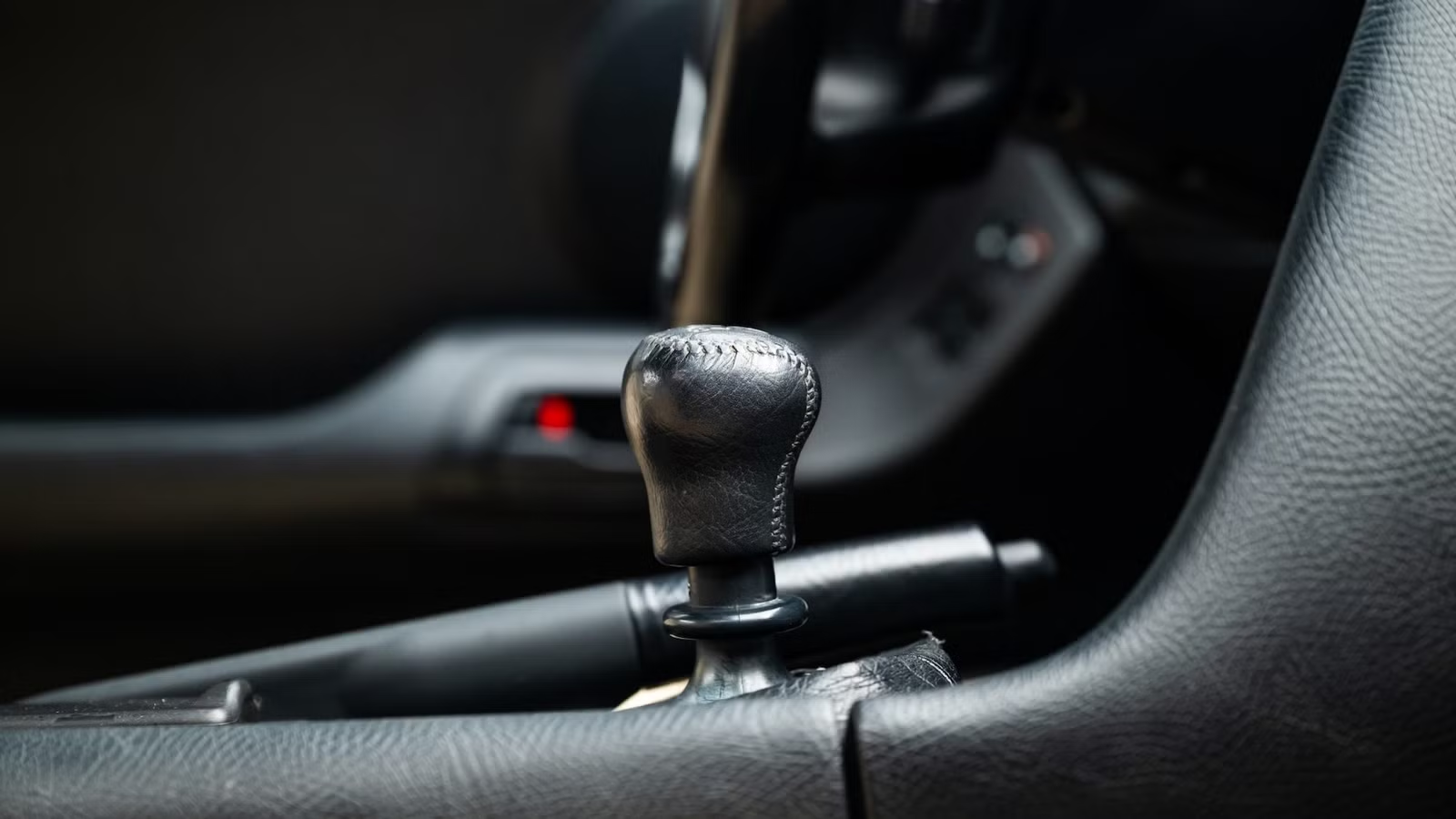
The scene’s so iconic that it inspired an entire generation of sports car enthusiasts. A young man’s finally finished his budget-friendly sports car build and is out for a test drive. He rolls up to a red light next to a Ferrari, whose snobby driver promises the supercar cost “more than you can afford.” The drag race is on.

The irony is that icon status can inspire classic car collectors as well as enthusiasts. Today, the budget-friendly Ferrari killer that came to symbolize grit, know-how, and sheer determination is worth Ferrari money on the used market.
Value Is In The Eyes Of The Key-Holder
How much is a classic car worth? Exactly as much as two collectors are willing to pay at auction. Sometimes, this perceived value is dictated by a vehicle’s original MSRP. Other times, it’s decided by the cultural impact the vehicle has had since. In fact, used luxury cars and exotics often depreciate steeply. This can leave holes in the market for other “budget-friendly” vehicles to appreciate.

For example, Ford’s Mustang Boss 429 cost just $4,800 when new: it was exotic performance with a Detroit price tag. But today, a perfect example can sell for six figures or even half a million. It may even be worth more than the exotics it was originally engineered to compete with.

Another example is the Datsun 240Z, which was engineered by Japan to storm the U.S. market. The strategy was simple: BMW performance and Ferrari/Jaguar looks at Detroit pony car prices. Today, many enthusiasts would prefer a Datsun 240Z to the E-Type it targeted. It doesn’t matter that the Datsun 240Z originally retailed for $3,526 while a 1970 E-Type with some options could have cost you twice that.
The king of such glow-ups might be the original “budget-friendly” supercar killer. Thanks to its status as an icon of the tuner movement, this 90s JDM classic now resells for Ferrari prices.
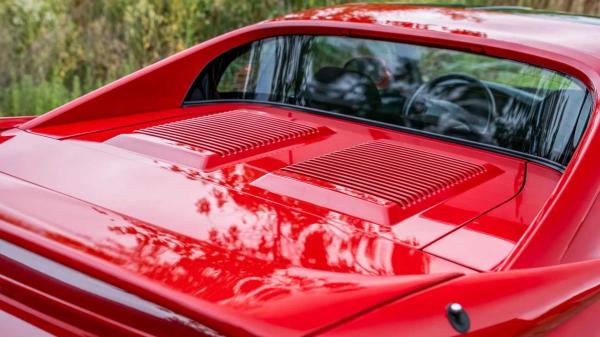
The Affordable Exotic With Ferrari Looks And Honda Running Costs
This mid-engine sports car delivers Ferrari-style looks and exotic performance without the supercar price tag or maintenance drama.
Japan’s Supercar Killers

With Japanese reliability and European sports car performance numbers, the 1970 Datsun 240Z put the world on notice. Thanks to an overhead cam inline-six, front disc brakes, and independent rear suspension, it changed the reputation of the Japanese auto industry. Japanese cars were suddenly considered sporty and cool.
In 1979, Mazda threw its hat in the ring with the RX-7. This car introduced America to the rotary engine and Mazda’s lightweight sports car philosophy. In 1991, Honda shocked America by debuting the Acura NSX—proving Japan could build a true supercar. Also in 1991, the Mitsubishi 3000GT VR-4 hit the market with its own cutting-edge tech. Features included active aerodynamics, AWD, four-wheel steering, and twin turbos. By the early 1990s, Toyota knew it would need to make big moves to catch up.
1994 Toyota Supra Mk IV Turbo
The Budget-Friendly Ferrari Killer

Toyota introduced its flagship “Supra” nameplate in 1978, and improved it across multiple generations. The Mk I, Mk II, and Mk III debuted with bigger engines, turbocharging, and increasingly sophisticated suspension systems. But all three remained more comfortable highway cruisers than track-focused machines. By the early 1990s, Toyota faced a choice between a lightweight sports car (with a philosophy similar to Mazda) and an advanced supercar (to go toe-to-toe with the Acura NSX and Mitsubishi 300GT). It took a swing at both.
1994-1998 Toyota Supra Turbo Specs
|
Engine |
2JZ-GTE I6 |
|
Displacement |
2,997 cc. |
|
Bore x Stroke |
86mm x 86mm |
|
Horsepower |
320 hp @5,600 rpm |
|
Torque |
315 lb-ft @4,000 rpm |
|
Aspiration |
Twin sequential turbochargers |
The headline feature of the Mk IV “Turbo” trim is its straight-six engine with sequential turbochargers. The 2JZ-GTE engine had a symmetrical bore and stroke of 86 mm, displacing 2,997 cc. It was a sturdy iron block with a 24-valve aluminum head that redlined at 6,800 rpm. Its sequential turbochargers offered tons of low-end power. Toyota claimed 320 horsepower @5,600 rpm and 315 lb-ft @4,000 rpm. But this advanced engine may have been the least interesting part of the Mk IV.
Toyota’s track machine

Toyota also got serious about track times. Engineers started with a premium Lexus SC300/400 chassis, then shortened it by 13 inches. They also reduced weight throughout the chassis with extensive use of aluminum. The result was lighter than the Mitsubishi 300GT and the Mk III Supra.
Toyota stiffened the structure, and upgraded the brakes with a four-channel ABS system to activate each wheel independently. When the Mk IV debuted, it laid down Car and Driver magazine’s best-ever production-car braking performance—a record that wouldn’t be broken until the 2004 Porsche Carrera GT.
The Supra retained the long-hood, rear-wheel-drive personality of a classic grand tourer. But thanks to its near 50/50 weight distribution, it achieved a 0.95g on the skid pad during road tests. It was a genuine supercar killer in the corners.
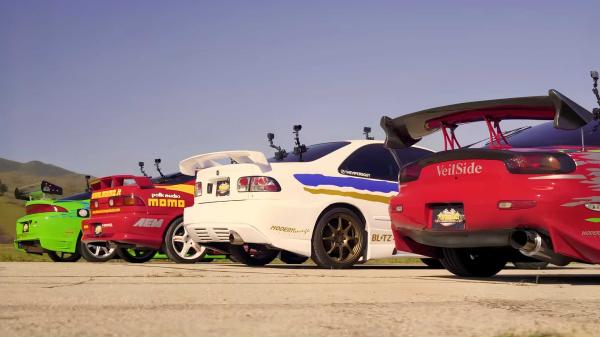
Every Iconic Fast & Furious Car Drag Raced In Real Life
This is one drag race you don’t want to miss.
“Smoke Him”

Toyota only sold the Mk IV Supra in the North American market for four model years, yanking the plug after 1998. The irony is that in June 2001, a movie called The Fast and the Furious hit theaters. The film introduced “tuner” culture to the mainstream. Its heroes were resourceful and scrappy street racers wrenching on and reprogramming budget-friendly cars to beat supercars in drag races. When Brian and Dom need to build a car for a big race in the film’s climax, they buy a totaled Mk IV Supra Turbo.
The canceled Toyota model had already achieved cult status, so enthusiasts weren’t surprised when the motorheads fixed it up and hot-rodded it. The two racers take the finished Supra for a test drive up the Pacific Coast Highway and pull up next to a black Ferrari F355 at a stoplight.

Brian O’Conner (Paul Walker), who’s driving, politely says, “Nice car. What’s the retail on one of those?”
The F355 driver sneers. “More than you can afford, pal. Ferrari.”
Dominic Toretto (Vin Diesel) quietly rumbles, “Smoke him.” And the race is on. After some harrowing swerves through oncoming traffic, the modified Supra leaves the F355 in the dust.
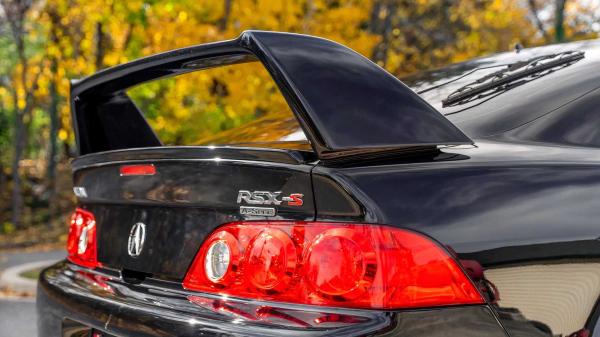
12 Used Japanese Sports Cars Nobody Is Buying
Not all great Japanese sports cars are celebrated, and these ten used examples are frequently overlooked by buyers.
“More Than You Can Afford Pal. Ferrari.”

Fast-forward to 2026, and the Supra Mk IV Turbo’s cult status has exploded as it’s become the icon representing an entire generation of tuner street racers. Now, some of the enthusiasts who watched The Fast and the Furious during their formative years have become collectors. And they want to own the car that started it all.
The Ferrari F355 followed a relatively standard supercar value curve, depreciating rapidly once out of factory warranty, becoming the “poor man’s Ferrari” for a time, and is just now getting some street cred back. According to Classic.com, 68 F355s of various configurations changed hands over the past year. The most expensive one cost $495,000 while the cheapest went for just $71,500. The average was $154,212, while the most recent sale was $116,000. There are currently 17 for sale with one that was bid up to just $53,500 without meeting its minimum.
Meanwhile, the same website noted 34 Supra Mk IV Turbos selling over the past year. The average price was $101,729, while the top of the market was $242,000. The most recent sale was Ferrari money, on-the-nose: $115,000. Of the 89 currently listed, five are asking $200,000. The highest asking price goes to one The Fast and the Furious tribute car wrapped in orange: a hair under $300,000. The 41,000-mile example pictured sold on Bring a Trailer for $144,000.
Perhaps at some Cars and Coffee or RADwood meet this summer, an enthusiast in a beater Ferrari F355 will pull up to a stoplight next to a pristine Fast and Furious tribute Supra. He’ll look over at the driver of the bright orange sports car and say, “Nice car. What did you pay for it?” And the Toyota driver will sneer, “More than you can afford, pal. Supra.
Sources: Classic.com, Toyota

Related posts


Latest Post


No Comments