
The Motorcycle That’s Best Kept Stock Than Modified

Motorcycle customization is part of the fun of ownership. A different exhaust, upgraded suspension, a set of aftermarket wheels, and a few cosmetic changes can make an all-too-common machine feel personal. Yet modifications don’t automatically mean the bike is better. Manufacturers spend years developing the synergies between an engine, chassis, electronics, and rider ergonomics, and changing one component can affect how the entire motorcycle behaves. Some motorcycles genuinely benefit from a thoughtful upgrade, while others already have the right ingredients from the factory. In those cases, the smartest thing to do would be to leave the toolbox shut and enjoy the machine as intended.
Why Stock Motorcycles Deserve More Respect

One of the biggest attractions of motorcycle ownership is the freedom to make the machine reflect its rider. Some owners want a louder exhaust, others prefer a cleaner silhouette, and plenty enjoy transforming a standard motorcycle into something suited to their particular riding style. An adventure bike might receive luggage and crash protection, while a naked roadster could get adjustable levers, bar-end mirrors, or a more comfortable seat. These changes can be useful when they address specific needs.
However, customizations can become expensive when you’re just getting improvements that are difficult to notice on the road. A lighter exhaust may save some weight, but it could also change the engine’s sound, fueling requirements, and low-speed character. Wider handlebars might look purposeful but make filtering through traffic less convenient. Even a supposedly premium component can disappoint if it is poorly matched to the motorcycle. Personalization works best when it solves a problem rather than simply creating a longer list of modifications.
When Aftermarket Upgrades Become Downgrades

Motorcycle manufacturers do not always get everything right, but their standard equipment is rarely an arbitrary collection of parts. Suspension settings, brake performance, engine calibration, and electronic rider aids are developed to work together within a particular design. Replacing one component without considering the others can upset that balance. A modification should have a clear purpose, measurable benefits, and a sensible relationship with the bike’s capabilities. Otherwise, the owner may spend a considerable amount of money making an already well-developed motorcycle less cohesive.
The Big-Capacity Rivals That Make a Strong Case for Staying Stock

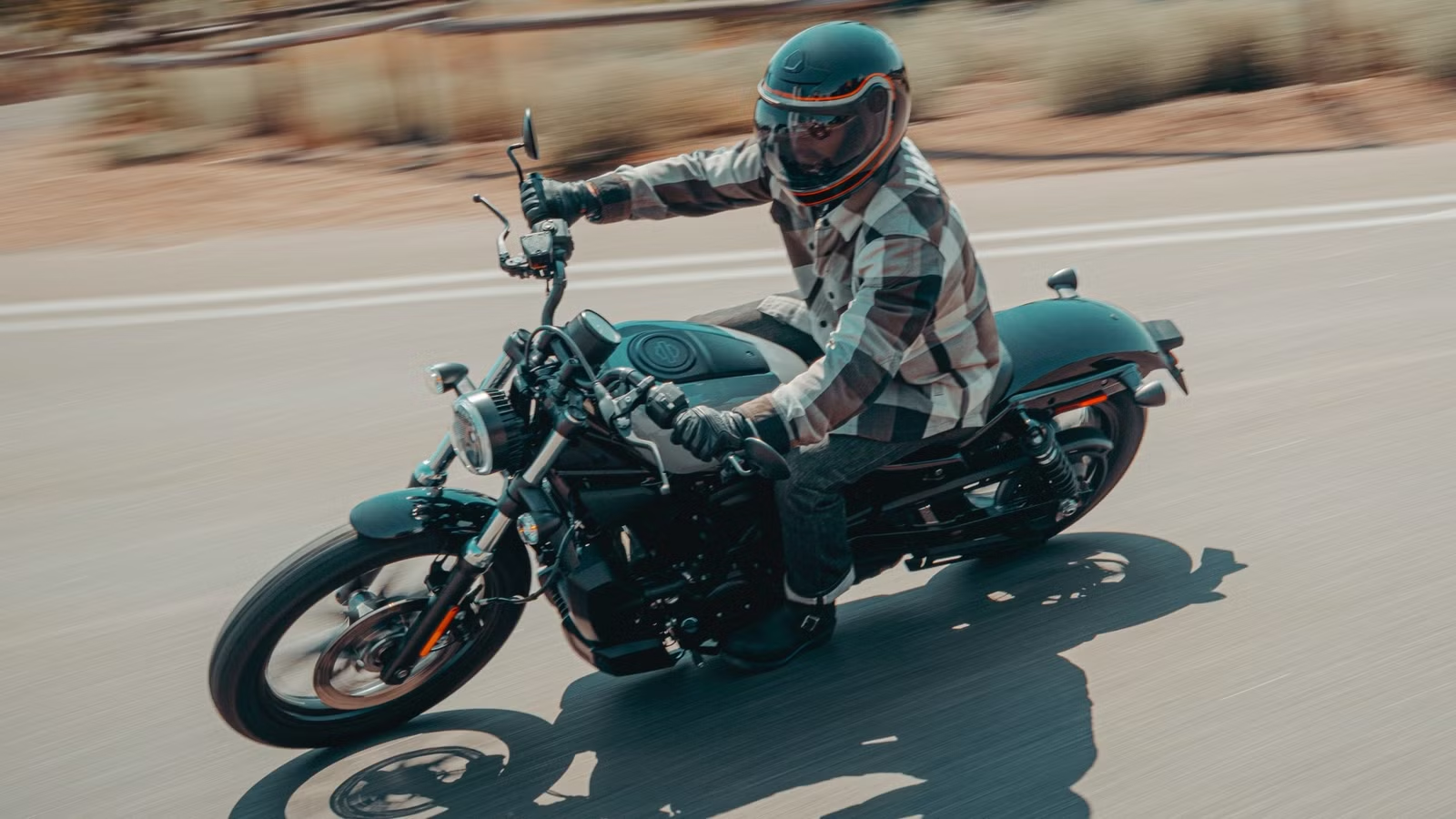
The power-cruise category is a particularly interesting space because its motorcycles already make bold statements straight from the factory. The Ducati Diavel V4 combines Italian styling with a powerful V4 engine and sophisticated electronics. Harley-Davidson’s Fat Boy takes a different approach, emphasizing traditional American cruiser proportions, a substantial V-twin and an unmistakable road presence. Both of these bikes offer plenty of character straight out of the factory, and owners tend to find more reasons to stick to basics before thinking about which mod they would like to see on their motorcycle.
The Triumph Rocket 3 Doesn’t Give You A Reason To Mod

The Triumph Rocket 3’s enormous 3-cylinder engine, distinctive single-sided swingarm, exceptionally broad rear tire, and carefully finished bodywork give it a personality that is difficult to reproduce with bolt-on accessories. But more importantly, its performance is already extraordinary. The Rocket 3 comes in two variants: Storm R and Storm GT, and both of them make a convincing case for keeping the bikes close to their original specifications.
They offer slightly different interpretations of the same formula, so where the R takes a roadster-oriented approach with a more upright riding position and a sportier attitude, the GT emphasizes relaxed cruising, with more touring-friendly ergonomics and a passenger backrest. Customization is most tempting when the motorcycle feels incomplete, but the Rocket 3 already covers many of the areas owners might otherwise rush to upgrade.
The Rocket’s 2.5-Liter Triple Is The Main Attraction

The Rocket 3’s engine is probably the clearest reason to resist unnecessary modifications. Triumph’s liquid-cooled inline-triple displaces 2,458cc, making it one of the defining features of the production motorcycle. This monster produces 180 horsepower at 7,000 rpm and a colossal 166 pound-feet of peak torque at just 4,000 rpm. Obviously, these figures tell us that the engine isn’t built to chase high revolutions, but there is an enormous amount of thrust making the bike super playful in the lower range. A six-speed gearbox connected to a shaft-drive transmits power to the rear wheels.
Premium Suspension, Brakes, And Wheels Make Expensive Upgrades Harder To Justify

Now, the Rocket 3’s chassis has a substantial job managing the mass of a large motorcycle while keeping its performance under control. For this, Triumph uses a full aluminum frame and a single-side cast-aluminum swingarm. The suspension is serious too. At the front, you get a 47mm Showa upside-down cartridge fork with compression and rebound adjustment. The rear uses a fully adjustable Showa piggyback-reservoir unit with a remote hydraulic preload adjuster.
Braking duties are handled by two 320mm discs at the front with four-piston Brembo Stylema monoblock calipers, and a 300mm disc with a four-piston Brembo caliper at the rear. The wheel and tire combination is very distinctive. The front uses a 17-inch cast-aluminum wheel with a 150/80 R17 tire, and the rear employs a 16-inch wheel that’s wrapped in a massive 240/50 R16 tire.
That big, broad rear footprint contributes enormously to the Rocket’s visual identity, but Triumph has made sure the torque from the engine is put down efficiently through this setup. Any changes here will change handling characteristics and cause discrepancies in the way the system works. For most owners, choosing the right replacement tires during maintenance and keeping the brakes in good condition will offer greater practical value.
The Factory Appearance Is Difficult To Improve

The Rocket 3 has the sort of presence that cosmetic customizations really can’t match. Any additions are wholly unnecessary and will only serve to load the bike with weight. Speaking of which, the Rocket 3 already weighs upwards of 698.9 pounds, depending on the variant you choose. The Rocket 3s also offer two very different riding styles.
So if you are more into sport cruising, you could opt for the Storm R with mid-mount foot controls, a short flyscreen, and a slightly forward-biased riding position. The laid-back Storm GT gets a larger windscreen, forward-mounted foot controls, a more touring-friendly seat, and a passenger backrest. You could choose to personalize the bike with some protection and luggage, but too many changes will dilute the bike’s presence.
What Might Be Worth Changing On The Rocket 3
Base Price: $26,695

The Triumph Rocket 3 starts at a price of $26,695 for the Storm R variant and $27,495 for the Storm GT variant. Now, keeping the motorcycle stock does not mean refusing every accessory or insisting that the manufacturer’s original setup suits every rider. It just means separating useful improvements from modifications that exist mainly to satisfy the urge to change something. Comfort and practicality are sensible places to start. The backrest on the GT could be suitable for riders who tour two-up regularly, and luggage could make the bike more useful. Overall, the Rocket 3 is a reminder that not every motorcycle needs to be a customization project. Sometimes, it is way more useful to learn the bike’s capabilities and leave the engineering that already works well alone.
Source: Triumph Motorcycles

Related posts

Latest Post


No Comments