
The Motorcycle Riders Keep Even After Buying Something Newer
There’s a familiar arc to owning motorcycles. You start small and eventually trade up to a bigger engine, more electronics, something that finally matches the rider you’ve become. Old bikes get listed, sold, handed off to whoever’s just starting out. It’s a natural cycle, and most riders go through it more than once, chasing whatever comes next until the last bike stops feeling like enough.

Except for one bike. It sits in the corner through every upgrade, every garage clean-out, every round of “I really should sell some of these.” It doesn’t get ridden every week, and there are months when it barely moves at all. But it never ends up on the for-sale list, and eventually you stop questioning why. That’s not really about logic. A bike that stays isn’t staying because it makes sense on paper. It stays because it still gives you something the newer, faster, more capable bike in the garage doesn’t, and no amount of upgrading ever quite replaces that.
What Makes A Bike Worth Keeping Around
Before getting into any one machine, it’s worth asking what actually earns this kind of staying power, because it’s rarely the bike with the best numbers. More often than not, it’s the one that’s cheap enough to ride without a second thought. There is no mental math about fuel, no wincing over wear items, and most importantly, no quiet dread about what a dropped bike or a bad decision might cost to fix.


It’s the kind of fun that doesn’t depend on speed. Riding a supersport motorcycle or a big adventure machine at the edge of its ability usually means a track day, a closed road, or a risk most riders aren’t willing to take on a random Tuesday. The bikes that riders keep even after buying something new tend to offer their fun at low stakes instead. It’s the kind you can access on a five-minute ride around the block rather than a closed circuit.

They also tend to be simple. It’s a motorcycle where there’s nothing standing between the rider and just going for a ride on a whim. Put those traits together — cheap, low-stakes fun, mechanically uncomplicated — and you get a bike that doesn’t ask to be anyone’s main bike. It just asks to stay. Few bikes have built their entire reputation around that exact role quite like one particular Honda.
The Honda Grom Was Never About Getting Anywhere Fast

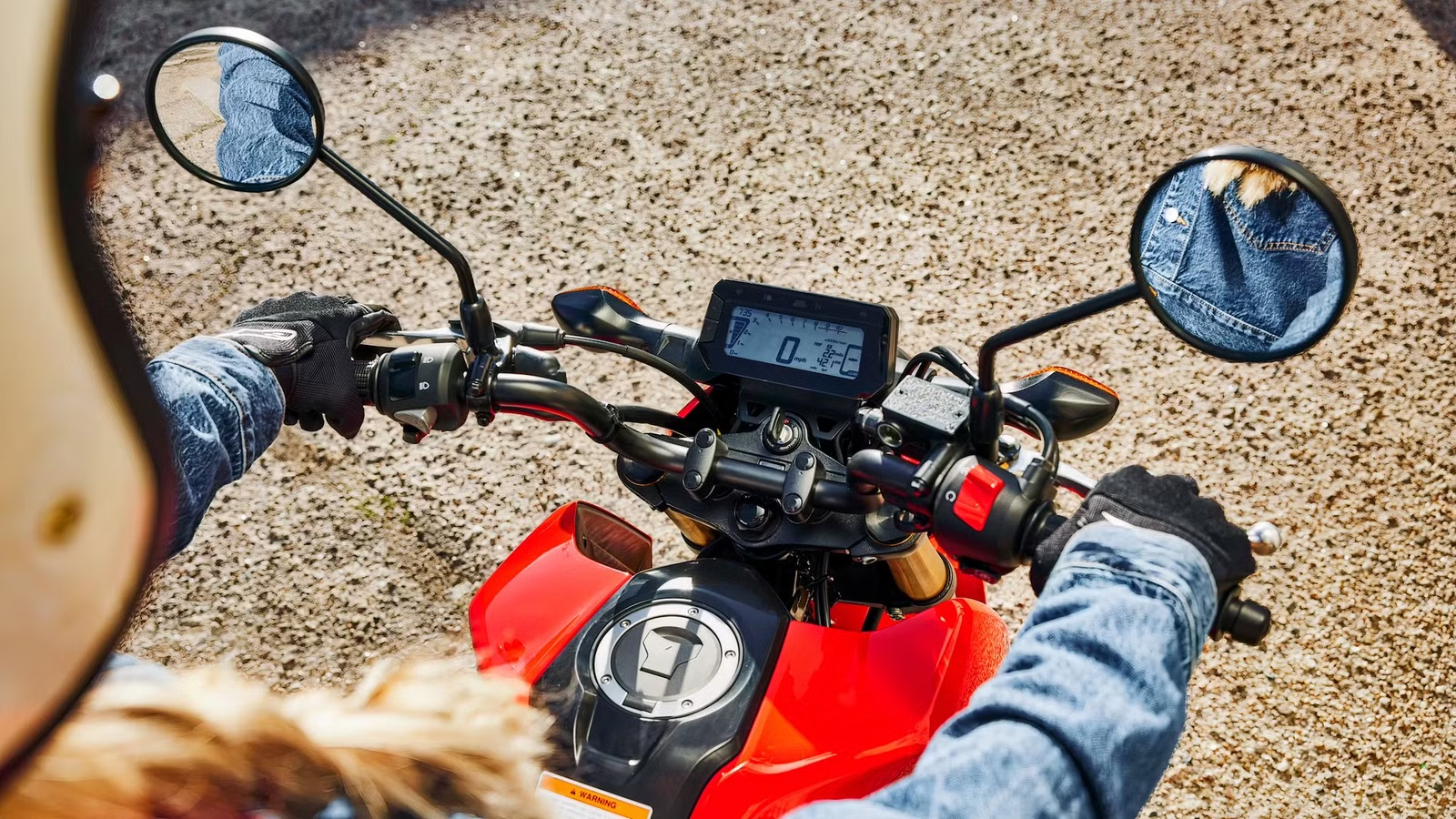
We’re talking about the world-renowned Grom. It runs a 124cc liquid-cooled single-cylinder engine, and the output numbers at ~9 horsepower and 7.7 lb-ft are exactly as modest as that displacement suggests. On a spec sheet sitting next to almost anything else in a rider’s garage, it looks like the odd one out. That’s precisely why it earns a permanent spot instead of a spot on Craigslist.
A low performance ceiling means you can actually reach it, and reaching it doesn’t require breaking any laws to do it. But it still feels like commitment, because you’re genuinely using everything the engine has to give. On a bigger bike, using the whole engine usually means finding a track, or taking a real risk on public roads. On the Grom, you can ride flat-out through a parking lot, an empty industrial park, or a quiet backroad and never once feel like you’re gambling with anything more than a slightly sore wrist from holding the throttle wide open continuously.
A Chassis That Turns Errands Into An Excuse To Ride The Grom

A compact steel frame, a low seat height, and a wet weight of 227 pounds add up to something that’s genuinely nimble. The Grom is light enough to flick around at low speed without any real effort, and small enough that a short ride never feels like a production to set up for. That matters more than it sounds like it should. A five-minute grocery run stops being an errand and becomes a reason to ride the Grom. The bike is so easy to throw a leg over and so uncomplicated to ride that there’s rarely a reason not to take it, even when the trip barely justifies pulling a motorcycle out of the garage at all. Where a bigger bike might sit idle because the ride doesn’t feel “worth it,” the Grom lowers that bar to almost nothing.
Small Enough To Never Compete For Garage Space

Another reason to keep the Grom around is how little it actually costs to keep it around. Its footprint is small enough that it never competes for space, so there is no need to shuffle three other bikes just to get it out. It just sort of stays, tucked into whatever corner is left over once everything else has claimed its territory.
Why The Grom Never Feels Like The Bike You’ve Outgrown

A lot of small bikes get outgrown. Riders start on something modest, and move past it within a season or two. The Grom has largely dodged that fate, and a big part of that comes down to the culture built up around it. It’s one of the most heavily modified platforms on the market, with an aftermarket deep enough to turn a stock Grom into just about anything a rider wants it to be — a mini streetfighter with an aggressive tail section, a track-day toy on sticky tires, or even a pit bike. That depth keeps the Grom interesting long after the novelty of just riding it stock might otherwise wear off.

Ownership loyalty follows the same pattern. Resale values of the Honda Grom have stayed strong for years, which on its own suggests plenty of owners simply don’t part ways with it. It’s not because the bike is worth a fortune on paper, but because nothing else quite replaces what it does for so little investment.
This Is A Great Teaching Tool, Too

The Grom’s low stakes make it one of the better tools around for getting someone else into riding. The power is forgiving enough that a nervous new rider can make real mistakes without real consequences attached. The size makes it approachable for almost anyone, regardless of height or experience. That’s another reason it tends to survive every round of garage clean-outs. It’s often introducing the next rider to the hobby, long after its original owner has moved on to something bigger. A bike doing that kind of work earns its keep in a way that’s hard to put a price on.
Practical Enough That Keeping The Grom Never Feels Like A Compromise

None of this would matter much if the Grom were expensive or high-maintenance to hold onto, but it isn’t. A full tank barely registers as a cost and the fuel efficiency is so good that fuel becomes an afterthought. There’s also very little to maintain beyond basic services. Insurance is negligible next to anything with real displacement. Most importantly, there’s no looming sense that keeping it around is quietly draining money the way a second “real” motorcycle might.
That’s really the whole equation. At an MSRP of $3,799 for the top variant, the Grom is cheap enough to keep, fun enough that you’d want to keep it anyway, and small enough that there’s never a real reason to let it go. Riders don’t hang onto it out of nostalgia or guilt, and they don’t keep it around as some kind of collectible waiting to appreciate. They hang onto it because, upgrade after upgrade, bigger bike after bigger bike, it just keeps doing the one job nothing else in the garage can — being ready, cheap, and fun, with absolutely nothing to prove.
Source: Honda

Related posts
Latest Post


No Comments