
The Most Sensible Performance Car You Can Buy Today
Ah, speed. We obsess over it. We pine after it. And what better way to do it than with a performance-oriented car equipped with some of the finest go-fast features around. Well, that’s that then, right? Find that mind-blowing performance car and call it a day? Not quite. There are a few concessions that come along with the performance. For starters, there’s practicality.

Sure, a small, two-door sports car can provide a thrilling drive. But if you want space and comfort, forget about it. A small trunk, tight interior space, and limited cabin storage mean a taut sports coupe like a Toyota GR86 or a sun-soaked drop-top like a G29 BMW Z4 isn’t the best candidate for a grocery-getting daily driver. There’s hope, though: a four-door, all-wheel drive rocket ship with hatchback practicality and a luxe enough interior to rack up some serious mileage.
Performance Doesn’t Have To Mean Impractical
Decades ago, a thrilling driving experience was all but reserved for small, light sports cars. The sort of philosophy of speed that led Lotus founder and car-building legend Colin Chapman to coin the phrase “simplify, then add lightness.” Those days are long gone. Sure, you can still get lightweight premium sports cars like the . But there are other options. Today, you can get a luxury sports sedan with a comfortable interior, explosive thrust, and usable cargo space.
Space And Pace


Raw, naked speed isn’t enough. I mean, what use is a muscular twin-turbocharged V8 without enough space to run errands or head out of town for the weekend? Ideally, your ballistically fast luxury sports sedan will have a usable trunk and enough space for the whole family. Bonus points if that world-class performance luxury car boasts hatchback practicality and grippy all-wheel drive. Doubt it exists? One German performance sedan promises to do it all, but it comes at a cost.
The Cheap V8 Grand Tourer That Feels Far Richer Than It Costs
Supercharged V8 fury wrapped up in a world-class GT car body without the sky-high price tag.
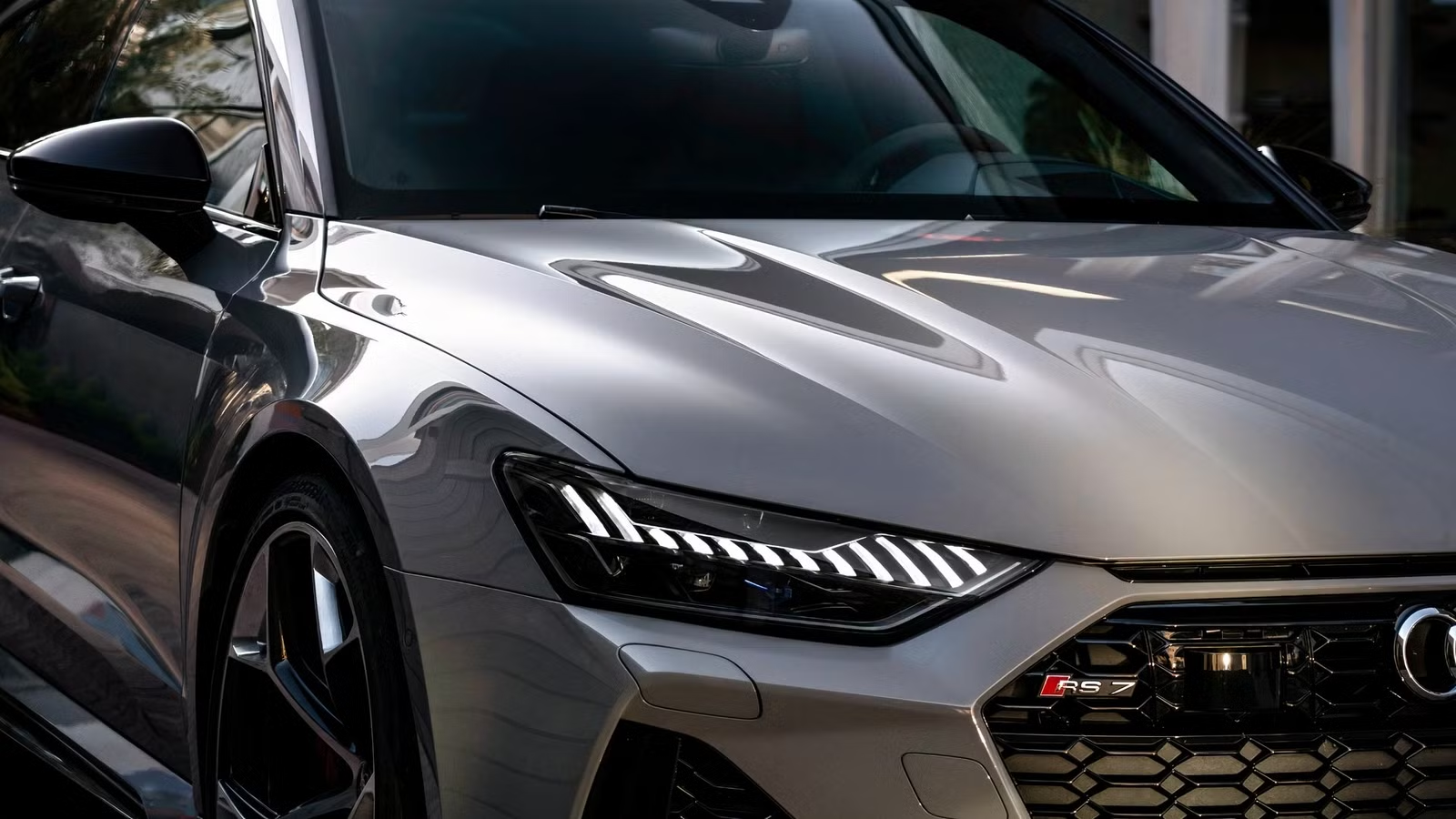
2026 Audi RS 7: Killer Performance, Daily Usability
Starting At $132,700

Audi likes to code its cars and SUVs with letters. Take the A-line models, for instance. In 2026, the Audi A5 takes a more relaxed approach to the compact luxury sedan segment. Swap an “S” into that equation, and you get the S5, a sports sedan take on the comparably sedate A5. Then you have the RS models, some of the German automaker’s most properly unhinged performance weapons. And none of the brand’s RS offerings are as swivel-eyed (yet sensible) as the 2026 Audi RS 7.
As the largest of the RS cars, the RS 7 has space for five and, well, whatever else you want to store under its fast-back rear hatch. And, at the other end of the car, the Audi RS 7 packs a volcanic twin-turbocharged V8 mated to a shiftable eight-speed automatic transmission. Throw in Quattro all-wheel drive, and the big, pricey Audi luxury sedan will handle just about anything. Oh, and did we mention pricey? For 2026, the Audi RS & is available in the Performance trim exclusively and starts at an eye-watering $132,700. Still, considering just how quick and useful the biggest RS sedan is, it might be worth every penny. Though with its A-and-S-badged siblings already discontinued, the RS 7 might not be around much longer.
Thunder Under The Hood

The 2026 Audi RS 7 is all about big numbers. Under the hood, the RS 7 packs a turbocharged 4.0-liter V8. A 48-volt mild hybrid system assists that muscular mill. The result? 621 horsepower and 627 pound-feet of torque. An eight-speed automatic gearbox is the only transmission option. All-wheel drive is also the only drivetrain option. No rear-wheel drive option as you’d find in a Cadillac CT5-V Blackwing or a BMW 8 Series Gran Coupe. But all this power and grip mean the Audi RS 7 is quick. Really quick. In testing, the RS 7 managed to hit 60 mph in just 2.9 seconds on its way to an 11.1-second quarter mile. In fact, the Audi RS 7 edged out the comparable BMW M5 by 0.1 seconds. Not too shabby for a 4,916-pound luxury sedan.
2026 Audi RS 7 Specs
|
Engine |
Twin-Turbocharged 4.0-Liter V8 With A 48-Volt Hybrid System |
|
Transmission |
8-Speed Automatic Transmission |
|
Horsepower, Torque |
621 HP At 6,000 RPM, 627 LB-FT At 2,050 RPM |
|
Drivetrain |
All-Wheel Drive |
|
Curb Weight |
4,916 LBS |
5 Performance Cars That Deliver Supercar Energy Without Supercar Costs
You don’t have to spend two-story home money to get big supercar energy.
Hatchback Practicality

Instead of going with a conventional roofline and trunk, the 2026 Audi RS 7 features a fastback rear end with a hatchback. Lift that hatch, and the RS 7 greets you with 24.6 cubic feet of cargo volume. Need more space? Flatten the 40/20/40 folding rear seats, and the cargo area opens up to a wagon-esque 49 cubic feet. Make no mention of how the wide hatchback makes loading and unloading a straightforward procedure. So, how does it compare? The Audi’s smaller sibling, the A6, stops at about 14 cubic feet. The BMW M5, on the other hand, has about 16.5 cubic feet of cargo capacity. As for interior space, the RS 7 has seating for five, though four occupants will find the space much more comfortable. Heated and ventilated seats are standard equipment.
The Car Your Neighbors Are Secretly Jealous Of – And It’s Not Even That Expensive
Eye-catching looks and pedigree for the budget-minded sports car fan.
So, Should You Buy One?

Considering Audi rolled out its second-generation car for the 2021 model year, the RS 7 is getting a bit long in the tooth. No matter, though. Even in its aging state, the Audi RS 7 is ballistically fast and stylish inside and out. Pair that sort of category-topping speed with more than enough space for a family and a sizable grocery run, and the RS 7 is a uniquely sensible presence in the segment. Also, with the A7 and S7 already discontinued, there’s a good chance the 2026 Audi RS 7 is one of your last chances to get a second-gen model.
That said, the Audi RS 7’s $132,700 starting price isn’t exactly accessible. So, if a more affordable cost of entry is important to you, it’s better to look elsewhere. The properly unhinged, fiercely powerful Cadillac CT5-V Blackwing comes to mind, demanding around $30,000 less than the Audi while still residing in the luxury performance sedan segment. But the CT5-V Blackwing offers less than half of the RS 7’s cargo capacity.
Sources: Audi, Car and Driver, Edmunds

Related posts




Latest Post


No Comments