
The Most Affordable Supercharged V8 Sports Car That Makes A Miata Look Expensive
The Mazda Miata has earned its reputation as the go-to answer for affordable sports car thrills. It’s lightweight, tossable, and accessibly priced — and for a lot of buyers, that balance of budget and backroad grins is exactly what they’re after. But what if you could have something far more exotic for even less money?

What if, instead of settling for a four-cylinder roadster, you could roll up to Cars and Coffee in a leather-lined British coupe with a supercharged V8 under the hood? And what if that car didn’t just cost less than the Miata — but made the Miata feel overpriced by comparison? There is such a car. It’s fast, it’s gorgeous, and it’s criminally cheap for what it offers.
The Jaguar XKR Will Make You Rethink That New Miata
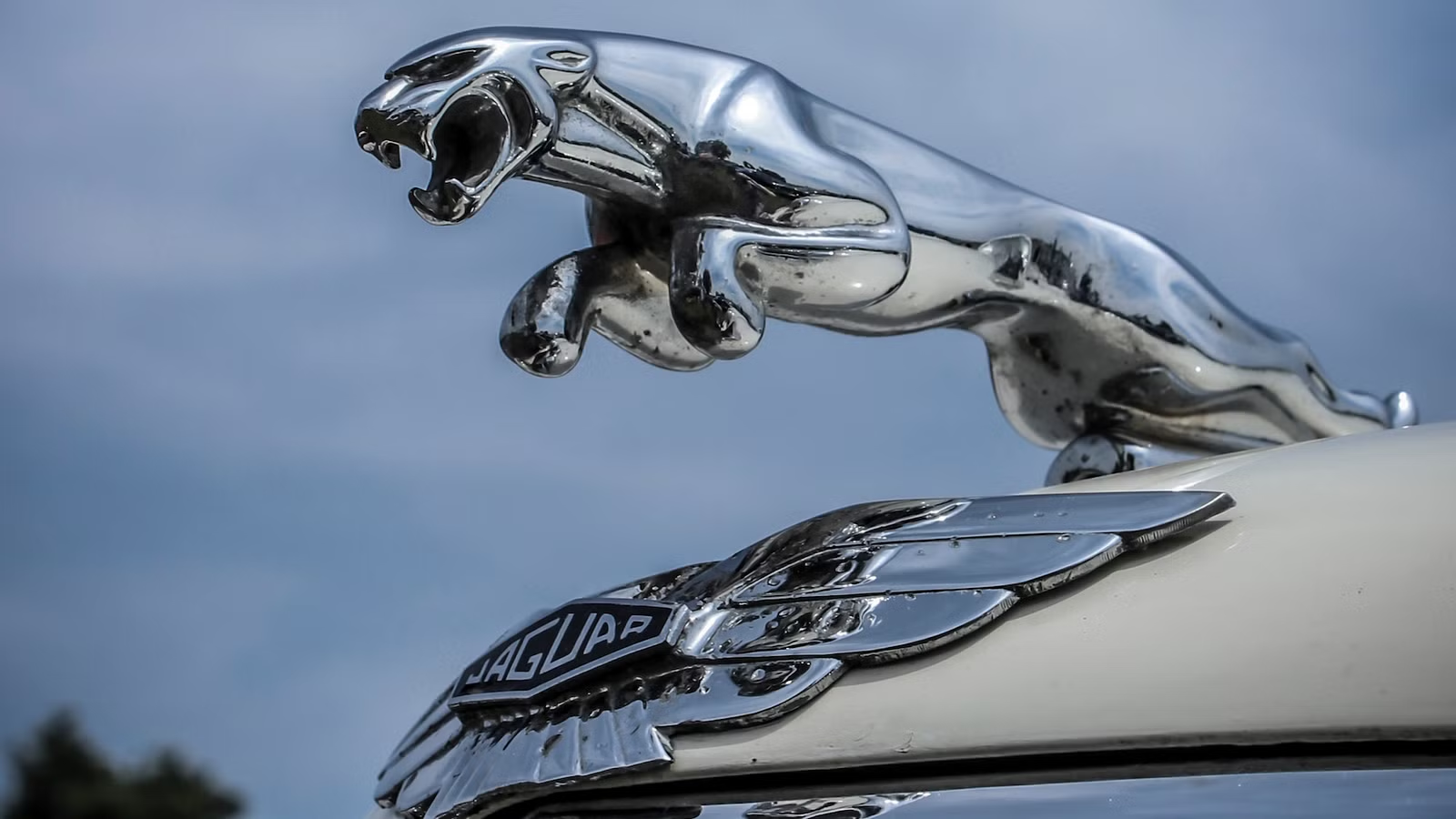
Say hello to the first-generation Jaguar XKR, built between 1999 and 2006 — a car that’s quietly sitting at the bottom of the depreciation curve, ready for smart buyers to swoop in. According to Classic.com, early examples of the XKR regularly sell for as low as $9,000 to $12,000, depending on condition and mileage. To put that into perspective, that’s a fraction of the price of a brand-new Miata.
The XKR’s Flash-Over-Minimalism Approach

And unlike the Miata’s stripped-back philosophy, the XKR serves up a whole buffet of grand touring goodness. We’re talking brilliant Ian Callum-penned styling, hand-finished interiors, and a drivetrain that was borderline exotic when this car was new. At its core is a supercharged 4.0-liter V8 paired to a smooth automatic transmission, delivering effortless acceleration and a soundtrack that can still make your hair stand up today.
The best part? Because it never quite reached the same collector status as the E-Type or the XK120, the first-gen XKR flies under the radar — meaning prices are still firmly planted in “I can’t believe it’s this cheap” territory.
The XKR’s V8 Was Supercharged Eroticism
Jaguar XKR Key Specs
|
Engine |
4.0-liter supercharged V8 |
|
Power |
375-400 hp |
|
Torque |
387 lb-ft |
|
Transmission |
5-speed automatic |
|
0-60 MPH |
5.2 seconds |
Source: supercars.net
Let’s get right into the heart of the matter: that AJ-V8 under the hood. While the naturally aspirated version of this engine found its way into the regular XK8, the XKR turned up the drama by strapping on an Eaton supercharger. The result? 375 horsepower and 387 lb-ft of torque in early models, with later cars bumping that up to 400 horsepower and 408 lb-ft.
Those numbers might not sound earth-shattering today, but remember: this was the late ’90s and early 2000s. At the time, these power figures put the XKR squarely in competition with cars like the BMW M5 and Mercedes-Benz SL55 AMG. And thanks to that supercharged setup, the XKR delivers its grunt with a velvety smoothness that few rivals could match.
The sound? Forget the polite, restrained purr you might expect from a classic Jag. This thing growls, snarls, and wails as the revs climb — with a distinct whine from the blower to remind you that you’re not driving just any V8 coupe. It’s as if Jaguar gave James Bond a muscle car.
Styling That Still Turns Heads Today

The XKR’s looks have aged like fine wine. Designed by Ian Callum (who later went on to pen the Aston Martin DB9), the first-gen XKR channels classic Jaguar cues without feeling like a retro pastiche. Long hood, short deck, aggressive grille, and just the right amount of chrome — it’s elegant without being stuffy.
The R treatment added subtle visual upgrades over the standard XK8: hood louvers, mesh grilles, unique badging, and often larger wheels. The result is a car that looks far more expensive than it actually is.
Step inside, and you’re greeted by real wood veneers, soft leather, and an ambiance that’s unmistakably British. Sure, some of the switchgear might remind you of a ’90s Ford Taurus (because, well, it kind of is), but overall the cabin feels far more upscale than anything you’d expect at this price point.
Why The First-Gen XKR Is Still A Steal Today

With all this performance and style, why isn’t the XKR sitting in collector car territory? Two words: depreciation curve. Like many luxury GT cars of its era, the XKR took a massive hit in resale value once the warranty expired and repair bills loomed large. But here’s the twist — a well-maintained XKR isn’t the nightmare that its reputation might suggest.
The XKR Isn’t Bulletproof, Needless To Say
Common issues like timing chain tensioners and plastic thermostat housings have well-documented fixes, and many cars on the market today have already had these addressed. There’s also a strong enthusiast community that has catalogued most of the major pitfalls, so you’re not flying blind if you decide to take the plunge.
For buyers willing to do a little homework — and maybe turn a wrench once in a while — the first-gen XKR represents a shocking amount of car for the money. This thing delivers Aston Martin vibes for used Honda Civic money.
Just How Cheap Are We Talking?

Here’s where the XKR really embarrasses the Miata. While a new Miata starts north of $29,000, early XKRs can often be found for $9,000 to $12,000. Even later, higher-mileage 4.2-liter cars tend to hover in the $15,000 to $20,000 range.
Price Check (As Per Classic.com Data)
- Cheapest model year observed: 2000 Jaguar XKR Coupe
- Average low sale price: $9,000
- High sale prices for pristine examples: up to $25,000
When you factor in what you’re getting — a supercharged V8, luxury interior, drop-dead gorgeous looks — there’s simply nothing else on the market that offers this much for so little.
But Should You Actually Buy One?

Here’s the real question: Is this bargain-bin British brute right for you? The answer depends on what you’re looking for. If you want the easiest, most reliable sports car experience possible with an open-top driving feel, the Miata is still hard to beat.
But if you’re willing to trade a little peace of mind for way more power, presence, and exclusivity — and if the idea of supercharged V8 noises makes you grin like an idiot — the XKR starts to look like the ultimate used car hack.
Just make sure you get a pre-purchase inspection. Find one with a documented service history. Be ready for a few quirks. But if you’re cool with all that? Congratulations — you’re about to own one of the best-kept secrets in the used car world.
Sources: Mazda, Classic.com, Hagerty, Jaguar.

Related posts



Latest Post


No Comments